In cases of _______, the best next step in diagnosis is a _______ to evaluate the retina.
Age-related macular degeneration (AMD) is characterized by dysfunction of the _______ and accumulation of _______.
In AMD, risk factors include _______, _______, and _______.
The visual distortion where straight lines appear curved is known as _______ and may be an early symptom of _______.
AMD can lead to profound vision loss from retinal geographic atrophy or _______.
The examination findings of an irregular pupil post-cataract surgery may suggest _______ rather than an orbital mass.
While a _______ is useful, the most appropriate next step for diagnosing AMD is a _______.
In patients with _______, immediate initiation of _______ is crucial to prevent complications.
Temporal arteritis may present concomitantly with _______.
The best next step in managing a patient suspected of having _______ is the initiation of _______.
The best next step in diagnosing age-related macular degeneration (AMD) is a _______.
Common risk factors for age-related macular degeneration include _______, _______, and _______.
In advanced stages of AMD, vision loss may result from _______ or _______.
Management of nonexudative (dry) AMD includes _______ and _______.
The incorrect tests for diagnosing AMD include _______ and _______.
Visual field testing plays little role in the diagnosis of _______ but is useful for _______.
In temporal arteritis, presentation may include new headaches and _______ among symptoms which can lead to _______.
Temporal artery biopsy is important for diagnosing _______.
In a patient with a palpable thyroid nodule, the most appropriate next step in management is _______. This is necessary to rule out malignancy, especially in younger patients.
Risk factors for thyroid malignancy include _______, _______, and a _______. Patients with these factors should be assessed more closely.
When a new thyroid nodule is detected, it is essential to measure serum _______ and perform _______ to evaluate the nodule's characteristics.
If a thyroid nodule is found with concerning ultrasound features, it is important to proceed with _______ to evaluate for possible malignancy.
If the TSH level is _______, then _______ is recommended as it assesses for hyperfunctioning nodules and guidelines further management.
In a 17-year-old boy experiencing severe chest pain and sweating, repeated episodes may indicate _______. What is the most likely diagnosis?
Paroxysmal supraventricular tachycardia (PSVT) is characterized by symptoms like _______, _______, and _______. What are common causes?
The initial management for hemodynamically unstable patients with narrow complex tachycardia involves _______. What should be done for stable patients?
For patients experiencing PSVT, vagal maneuvers, such as applying _______ to the face, can help to terminate the arrhythmia.
In patients with PSVT, common potential triggers include _______, _______, _______, and _______.
Symptoms of acute stress disorder include intrusive thoughts and hyperarousal, occurring within _______ of a traumatic event. Name one example of such a traumatic event.
Delusional disorder features persistent _______ for over 1 month without other psychotic symptoms. How are delusions characterized?
The ECG findings in PSVT typically show a narrow _______. What are some common associated symptoms?
Management of PSVT for stable patients can also include antiarrhythmic medications such as _______. In what situation should cardioversion be utilized?
In examining a patient's history, a family history of _______ may suggest a predisposition for heart conditions. What is a common finding during cardiac examination in PSVT patients?
Diagnosis of PSVT may be supported by symptoms such as feeling short of breath and having a pounding heart. A significant psychological impact may lead to limitations in _______.
The anchor is _______. PSVT refers to an abnormally rapid heart rate and rhythm originating from above the ventricles, typically presenting with a _______ on ECG.
In the management of PSVT, if a patient is hemodynamically unstable, _______ is indicated.
For hemodynamically stable patients with PSVT, attempts can be made to terminate the tachyarrhythmia using _______ or medications like _______.
An anchor is _______. It classically presents with dyspnea, chest pain, and syncope in young athletes, often with a family history. The physical exam may reveal a _______.
An anchor is _______. It involves repeated episodes, with substernal chest pain that worsens when lying down and improves with _______.
An anchor is _______. It is characterized by recurrent panic attacks peaking within minutes, symptoms of _______, and avoidance of triggers.
In the case of PSVT, _______, _______, _______, or _______ can provoke an episode.
Acute Stress Disorder occurs within one month of a traumatic event and involves symptoms of _______, _______, and _______.
Delusional Disorder requires the presence of one or more _______ for over one month without other psychotic symptoms such as hallucinations.
The correct EKG finding in PSVT often shows a _______ and symptoms can include _______, _______, and _______.
Management of PSVT can include vagal maneuvers like _______ or use of _______ to convert to sinus rhythm.
Physical exam findings of Hypertrophic Cardiomyopathy include a _______ and a _______ that changes with preload.
In patients with an abdominal aortic aneurysm greater than _______, the estimated rupture rate is _______ per year.
Following rupture of an abdominal aneurysm, _______ of patients die before reaching a hospital, and of those who do reach a hospital, there is a perioperative mortality rate of approximately _______.
The overall risk of mortality from aneurysmal rupture in a given year for patients with a 20% annual rupture risk is estimated at _______.
Among patients who experience ruptured abdominal aortic aneurysms, _______ of them will die.
The mortality rate for patients who undergo elective repair of an abdominal aneurysm is _______.
Despite an abdominal aortic aneurysm risk of _______ annual rupture, the actual risk of mortality from this rupture is _______ due to prehospital and perioperative mortalities.
The best option representing this patient's risk for mortality from rupture of the aneurysm during the next year is _______.
When a patient with an abdominal aortic aneurysm decides not to undergo an operation, understanding the _______ associated with rupture is crucial for informed decision-making.
In patients with medication-induced parkinsonism due to antipsychotics like risperidone, the most appropriate next step in management is _______ of the antipsychotic to alleviate symptoms such as bradykinesia and rigidity.
When treating adverse effects from antipsychotic medications, such as those leading to parkinsonism, the addition of _______ is not the best next step and may only provide transient relief.
For a patient experiencing extrapyramidal side effects from risperidone, increasing benzodiazepines like _______ is not effective and does not address the underlying issue.
Cognitive behavioral therapy is beneficial in many scenarios, but it is not suitable for managing _______ caused by antipsychotic medications like risperidone.
Management of schizoaffective disorder with antipsychotics may lead to _______ due to dopamine receptor antagonism, necessitating adjustments in treatment.
In cases of medication-induced movement disorders, simply adding lithium carbonate is inappropriate because the symptoms arise from _______ of antipsychotic treatments, not from mood stabilization needs.
In patients with metastatic lung cancer presenting with malaise and lethargy, the most appropriate initial pharmacotherapy for hypercalcemia is _______.
Lung cancer, especially squamous cell carcinoma, can lead to hypercalcemia due to production of _______.
Hypercalcemia in cancer patients may manifest with symptoms like bone pain, muscle weakness, and _______.
During the management of hypercalcemia, it's crucial to monitor closely for volume status and _______.
For patients with hypercalcemia and altered mental status, the initial treatment should be _______.
Patients with mild hypercalcemia (<12 mg/dL) and minimal symptoms may not require _______.
In the management of hypercalcemia caused by malignancy, particularly in patients with lung cancer, the initial treatment is _______.
_______ production is commonly associated with squamous cell lung cancer and leads to hypercalcemia.
Symptoms of hypercalcemia include _______, _______, and _______.
In cases of mild hypercalcemia (less than 12 mg/dL) with few symptoms, patients _______.
Patients with a corrected calcium concentration of _______ and altered mental status require immediate treatment for hypercalcemia.
After hydration with saline, treatment options for hypercalcemia may include _______ and bisphosphonates such as _______.
Hydrocortisone is not useful in managing hypercalcemia associated with malignancy but is indicated in _______.
Plicamycin is used rarely for hypercalcemia management due to adverse effects like _______ and _______.
Management of hypercalcemia is determined by the severity of calcium imbalance and symptoms, with severe cases requiring pharmacotherapy even if calcium is below _______.
The use of _______ is critical as the first step in treating hypercalcemia caused by malignancy.
In the case of a patient with severe left groin pain after trauma, the most appropriate next step in management when suspecting a hip fracture is _______.
A 47-year-old man with a 20-year history of ulcerative colitis and on daily _______ is at risk for osteopenia and fractures.
The absence of pain in other joints suggests the issue is localized to the hip, where the mechanism of injury could lead to an _______.
In patients with severe traumatic pain and inability to walk, observation alone is _______ due to the risk of fracture.
When suspecting a hip fracture, a _______ is inappropriate as it is used primarily for evaluating osteoporosis, not acute fractures.
Aspiration of the hip joint should be considered if there is suspicion for _______, not in cases of traumatic hip pain.
For a patient with severe groin pain after a fall and suspicion of a fracture, the most appropriate next step in management is to perform an _______. 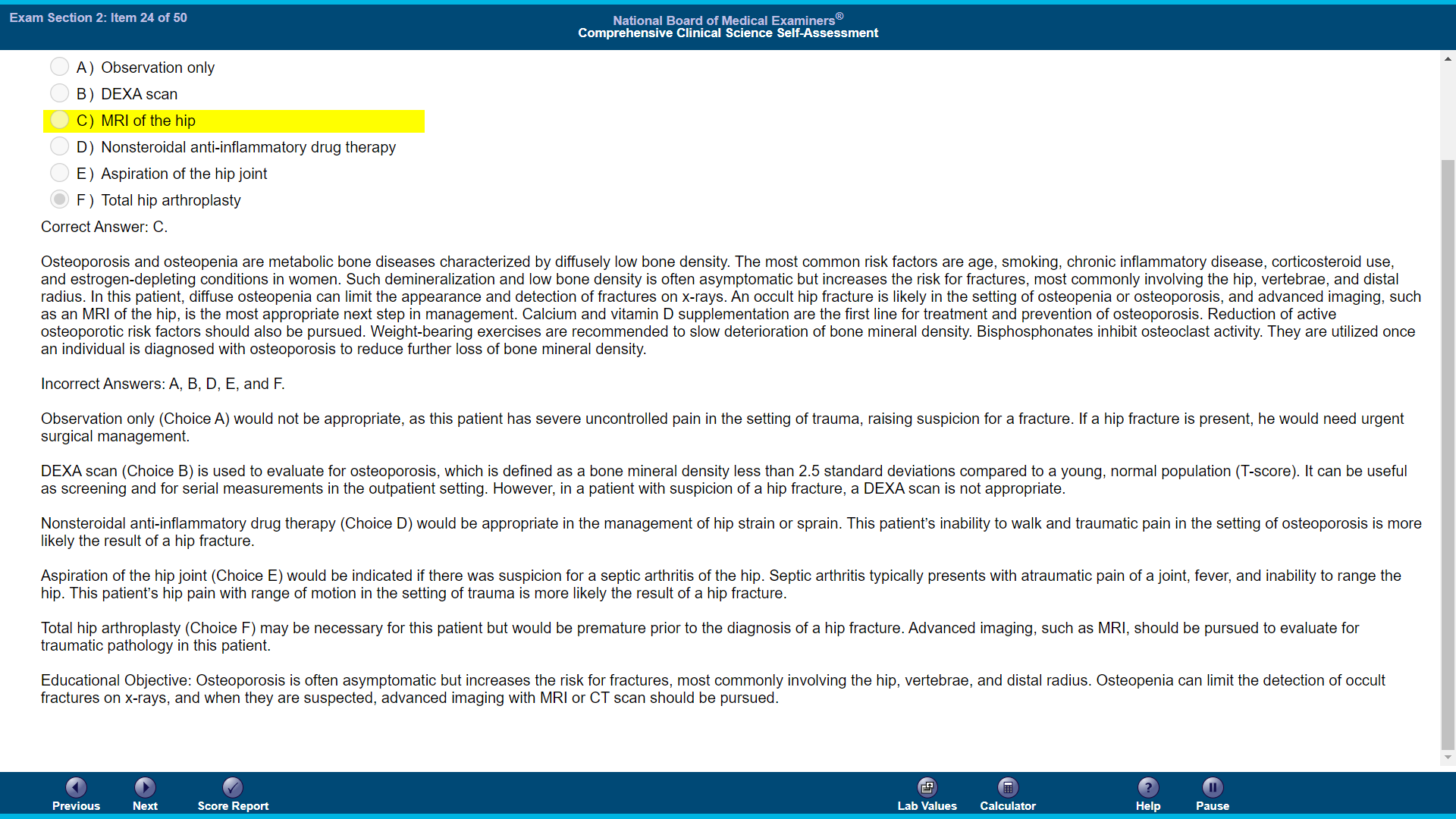
Osteoporosis is characterized by _______ and increases the risk for fractures, commonly involving the _______, _______, and _______.
When demineralization is present, _______ can limit detection of occult fractures on x-rays, necessitating advanced imaging like _______.
First-line treatment for osteoporosis includes _______ and _______ supplementation, along with reduction of risk factors.
If a hip fracture is suspected in a trauma patient, avoiding _______ is crucial as surgical management may be necessary.
A _______ is not appropriate for evaluating suspected hip fractures; it is used to evaluate _______.
For hip pain after trauma with inability to walk, initial management must be aimed at ruling out a _______.
Nonsteroidal anti-inflammatory drug therapy is appropriate for _______, but not for fractures or trauma-related pain.
In a 74-year-old woman with progressive confusion, the most likely diagnosis is _______ due to thiamine deficiency, often associated with alcohol use disorder.
The classic triad of Wernicke encephalopathy includes: _______, _______, and _______ (nystagmus or lateral gaze palsy).
Thiamine deficiency in patients with alcohol use disorder may result in conditions such as _______ and _______.
To prevent _______, all patients with sustained heavy alcohol use should receive _______.
A patient with thiamine deficiency presenting with psychosis and memory issues may be diagnosed with _______.
MRI findings for Wernicke-Korsakoff syndrome may show atrophy of the _______.
Serum thiamine concentration is often _______ in thiamine deficiency, but checking it is not useful for immediate management.
Confabulation is a symptom of _______ where patients verbalize false memories to cope with memory loss.
The classic triad of Wernicke encephalopathy includes _______, _______, and _______.
Wernicke-Korsakoff syndrome is caused by deficiency of _______ (vitamin B1).
To prevent Wernicke-Korsakoff syndrome, patients with chronic _______ should receive _______.
Characteristics of Korsakoff dementia include _______, _______, and _______.
MRI findings in Wernicke-Korsakoff syndrome may show atrophy of the _______.
Thiamine deficiency is often seen in patients with _______, leading to Wernicke-Korsakoff syndrome.
Fluctuating cognitive function and visual hallucinations are characteristics of _______.
Normal-pressure hydrocephalus presents with cognitive impairment, urinary incontinence, and _______.
The best next step in managing a patient suspected of Wernicke-Korsakoff syndrome is to administer _______.
The primary feature that distinguishes normal-pressure hydrocephalus from other dementias is the presence of _______.
The most appropriate next step in pharmacotherapy for a hospitalized patient with hypertension related to significant pain is _______.
Postoperative pain control is essential because inadequately treated pain can lead to _______ and delayed recovery.
In opioid-tolerant patients, a multimodal approach to pain management includes _______.
Patient-controlled analgesia allows a patient to self-administer analgesics, improving _______ and allowing for better pain control.
Switching from acetaminophen-oxycodone to tramadol is likely to worsen a patient's hypertension because tramadol is a _______.
Transitioning to patient-controlled morphine is appropriate in opioid-tolerant patients due to their need for _______.
The classic approach to perioperative pain control should include a combination of _______.
In cases of persistent postoperative hypertension, the first step should be aimed at improving _______ rather than immediate antihypertensive therapy.
Inadequately treated pain in the postoperative patient can lead to _______, _______, and _______.
Patient-controlled analgesia is particularly beneficial for patients who are _______ or unable to take _______.
Patient-controlled analgesia provides small boluses of parenteral opioids with _______ and maximum doses to prevent _______.
Using patient-controlled analgesia, practitioners can calculate total _______ for transitioning patients to an adequate _______.
Poor pain control postoperatively may lead to worsening _______.
Tramadol may provide _______ pain control compared to other analgesics.
When considering pain management options, emphasize the importance of _______ to avoid complications.
Patient-controlled analgesia offers the ability to self-administer medication, significantly impacting the management of _______.
When evaluating a patient with post-vehicle collision hypertension, consider using patient-controlled analgesia if they exhibit signs of inadequate pain management such as _______.
Pain control is crucial in the postoperative setting; inadequate treatment can lead to worsening _______.
In the context of pregnancy, a patient must demonstrate a consistent choice, understanding of risks and benefits, appreciation of significance, and ability to reason in order to meet the criteria for _______.
Despite an IQ of 70, if a patient with a low IQ functions independently and expresses a desire to continue her pregnancy, she does not meet the criteria for _______.
Even among patients with intellectual disability, capacity should be assessed _______ and cannot be assumed to be lacking.
For a patient with decisional capacity who wishes to continue pregnancy after receiving amniocentesis results showing _______, the most appropriate next step is to schedule ongoing _______.
When assessing a patient's capacity, it is critical to judge understanding, appreciation, reasoning, and choice rather than relying on a _______ of competence.
In a patient with chronic _______ after amputation, a bone biopsy is needed to confirm the diagnosis and identify the causal organism.
Chronic _______ can present with symptoms such as increasing pain, tenderness, and redness at the wound site along with purulent drainage.
Elevated serum inflammatory markers like _______ are indicative of infection and are useful in monitoring treatment progress.
When diagnosing chronic _______, an X-ray may show lytic lesions but is not specific enough to confirm the diagnosis.
In cases of chronic osteomyelitis, a bone biopsy is preferable as it provides both diagnosis confirmation and _______ susceptibility testing.
Symptoms associated with chronic _______ include low-grade fever, chills, and unexplained weight loss as part of a slowly progressing infection.
Confirming chronic _______ involves ruling out conditions that present with similar symptoms, such as soft tissue infections.
The clinical decision to perform a _______ in a suspected case of chronic osteomyelitis is based on the need to accurately identify the infection's etiology.
In a 2-year-old girl presenting with truncal ataxia, myoclonus, and abnormal eye movements, one must consider the diagnosis of _______. What is the most likely underlying cause of her symptoms?
Patients with _______ typically exhibit features such as irritability, developmental regression, and unusual eye movements, specifically characterized by _______.
The most common neoplasm associated with Opsoclonus Myoclonus Syndrome is _______. It may arise from any sympathetic nervous tissue and is predominantly found in _______.
Diagnosis of Neuroblastoma is suggested through the presence of increased _______ in the serum and urine. What impacts the treatment and prognosis?
In terms of clinical presentation, abdominal involvement of Neuroblastoma may present with _______ and shows characteristics like a _______ crossing the midline.
Despite presentations of truncal ataxia and myoclonus, conditions like _______, _______, and _______ are less commonly associated with Opsoclonus Myoclonus Syndrome.
What distinguishes Opsoclonus from nystagmus in terms of ocular movement is its rapid, _______ nature and occurrence without an _______.
Opsoclonus myoclonus syndrome (OMS) typically presents in children between age _______ with acute onset of truncal ataxia, myoclonus, and _______, a form of saccadic intrusion.
Ocular saccades are rapid, conjugate, ballistic ocular movements that are used to change the point of gaze fixation. Opsoclonus is characterized by rapid, arrhythmic, multivectorial ocular saccades that occur without an _______.
The underlying cause of opsoclonus myoclonus syndrome is often a paraneoplastic phenomenon associated with _______.
In neuroblastoma, overamplification of the _______ is commonly observed. It arises from neuroendocrine cells of the _______.
Classically, neuroblastoma presents with abdominal pain and distention, weight loss, and _______ due to adrenal involvement, indicated by a firm, nodular mass that crosses the _______.
Diagnosis of neuroblastoma is suggested by the presence of increased _______ in the serum and urine.
Hepatoblastoma is associated with Beckwith-Wiedemann syndrome but does not commonly cause _______.
The most common malignant brain tumor in children, medulloblastoma, presents with increased intracranial pressure symptoms but is not typically associated with _______.
Non-Hodgkin lymphoma presents with constitutional symptoms, but is not a common cause of _______.
Rhabdomyosarcoma does not typically present in the context of opsoclonus myoclonus syndrome, typically showing symptoms like _______ and globe displacement.
The educational objective about opsoclonus myoclonus syndrome states that it often indicates an underlying _______ in children.
According to the educational material, what age is most typical for presenting with opsoclonus myoclonus syndrome? _______.
In the context of neuroblastoma, abdominal symptoms classically included _______ and distension, along with _______.
Neuroblastoma, the most common tumor of the adrenal gland in children, may lead to increased _______ levels suggesting its presence.
In the context of acute infective endocarditis, the development of a new murmur is highly concerning for _______. What is the most appropriate next step in management? - _______
When evaluating a patient with acute infective endocarditis, the presence of _______ can indicate significant cardiac issues such as _______.
In patients with acute bacterial endocarditis, complications may arise from _______ and _______ to cardiac tissue. What is a common cardiac complication? - _______.
In the scenario of a 62-year-old man with acute bacterial endocarditis, a new grade 2/6 diastolic murmur is a sign of potential _______ requiring prompt evaluation with _______.
The management of acute infective endocarditis must include vigilant monitoring of new heart murmurs, as they may indicate _______ and require _______ if severe.
It is important not to initiate _______ solely based on physical examination findings suggestive of cardiac valve dysfunction in the setting of acute infective endocarditis.
For management decisions in infective endocarditis, it is critical to distinguish between cardiac complications like _______ and treatment for associated conditions like _______.
Despite presenting with new symptoms, the best next step in management for a patient with acute infective endocarditis is to perform _______, not initiation of _______.
In the context of pediatric clinical trials, the use of a _______ can be ethically concerning when effective treatments exist, such as _______ for streptococcal pharyngitis.
It is generally acceptable to obtain consent from _______ under certain circumstances when involving minors in research, such as when the other parent is _______ or not reasonably available.
Finder's fees to recruit subjects are often viewed as unethical due to their potential to create _______, but they do not represent the greatest concern compared to the use of a _______ in clinical studies.
The presence of _______ for a condition raises ethical concerns regarding the use of a _______ in clinical trials, especially in pediatric populations.
The ethical dilemma of using a _______ instead of a standard treatment exists when the experimental drug's efficacy cannot be demonstrated without accounting for the _______ from existing treatments.
In clinical trials, the use of a _______ can be ethically questionable when an effective _______ exists for the condition being studied, as it could potentially _______ to participants.
Consent from both parents is generally required in research involving minors, but can be waived when one parent is _______, _______, or _______.
The use of _______ for recruiting subjects in clinical trials can lead to conflicts of interest and may be considered unethical, but the use of a _______ poses a greater concern if effective treatment exists.
Children are considered a _______ in research, but studying certain conditions in minors can be justified if those conditions are more prevalent in this group, such as _______.
When comparing an experimental drug in clinical trials, it's often recommended to use the standard _______ rather than a _______, especially if effective therapies already exist.
Карточек в этом наборе (178)
-
1
In cases of age-related macular degeneration, the best next step in diagnosis is a dilated funduscopic examination to evaluate the retina.
-
2
Age-related macular degeneration (AMD) is characterized by dysfunction of the retinal pigment epithelium and accumulation of macular drusen.
-
3
In AMD, risk factors include age, smoking, and genetics.
-
4
The visual distortion where straight lines appear curved is known as metamorphopsia and may be an early symptom of age-related macular degeneration.
-
5
AMD can lead to profound vision loss from retinal geographic atrophy or choroidal neovascularization.
-
6
The examination findings of an irregular pupil post-cataract surgery may suggest postsurgical changes rather than an orbital mass.
-
7
While a slit-lamp examination is useful, the most appropriate next step for diagnosing AMD is a dilated funduscopic examination.
-
8
In patients with temporal arteritis, immediate initiation of high-dose corticosteroid therapy is crucial to prevent complications.
-
9
Temporal arteritis may present concomitantly with polymyalgia rheumatica.
-
10
The best next step in managing a patient suspected of having temporal arteritis is the initiation of high-dose corticosteroid therapy.
-
11
The best next step in diagnosing age-related macular degeneration (AMD) is a dilated funduscopic examination.
-
12
Common risk factors for age-related macular degeneration include age, smoking, and genetics.
-
13
In advanced stages of AMD, vision loss may result from retinal geographic atrophy or choroidal neovascularization.
-
14
Management of nonexudative (dry) AMD includes antioxidant and vitamin supplementation.
-
15
The incorrect tests for diagnosing AMD include slit-lamp examination and CT scan of the head.
-
16
Visual field testing plays little role in the diagnosis of age-related macular degeneration but is useful for glaucoma.
-
17
In temporal arteritis, presentation may include new headaches and jaw claudication among symptoms which can lead to irreversible blindness.
-
18
Temporal artery biopsy is important for diagnosing temporal arteritis.
-
19
In a patient with a palpable thyroid nodule, the most appropriate next step in management is ultrasonography-guided fine-needle aspiration biopsy. This is necessary to rule out malignancy, especially in younger patients.
-
20
Risk factors for thyroid malignancy include young age, radiation exposure to the head or neck, and a family history of thyroid cancer. Patients with these factors should be assessed more closely.
-
21
When a new thyroid nodule is detected, it is essential to measure serum thyroid-stimulating hormone (TSH) and perform thyroid ultrasonography to evaluate the nodule's characteristics.
-
22
If a thyroid nodule is found with concerning ultrasound features, it is important to proceed with fine-needle aspiration biopsy to evaluate for possible malignancy.
-
23
If the TSH level is low, then 131I scintigraphy is recommended as it assesses for hyperfunctioning nodules and guidelines further management.
-
24
In a 17-year-old boy experiencing severe chest pain and sweating, repeated episodes may indicate paroxysmal supraventricular tachycardia. What is the most likely diagnosis?
-
25
Paroxysmal supraventricular tachycardia (PSVT) is characterized by symptoms like lightheadedness, palpitations, and diaphoresis. What are common causes?
-
26
The initial management for hemodynamically unstable patients with narrow complex tachycardia involves cardioversion. What should be done for stable patients?
-
27
For patients experiencing PSVT, vagal maneuvers, such as applying ice or cold water to the face, can help to terminate the arrhythmia.
-
28
In patients with PSVT, common potential triggers include alcohol, nicotine, caffeine, and psychological stress.
-
29
Symptoms of acute stress disorder include intrusive thoughts and hyperarousal, occurring within 1 month of a traumatic event. Name one example of such a traumatic event.
-
30
Delusional disorder features persistent delusions for over 1 month without other psychotic symptoms. How are delusions characterized?
-
31
The ECG findings in PSVT typically show a narrow QRS complex. What are some common associated symptoms?
-
32
Management of PSVT for stable patients can also include antiarrhythmic medications such as adenosine. In what situation should cardioversion be utilized?
-
33
In examining a patient's history, a family history of myocardial infarction may suggest a predisposition for heart conditions. What is a common finding during cardiac examination in PSVT patients?
-
34
Diagnosis of PSVT may be supported by symptoms such as feeling short of breath and having a pounding heart. A significant psychological impact may lead to limitations in physical activity.
-
35
The anchor is Paroxysmal Supraventricular Tachycardia (PSVT). PSVT refers to an abnormally rapid heart rate and rhythm originating from above the ventricles, typically presenting with a narrow QRS complex on ECG.
-
36
In the management of PSVT, if a patient is hemodynamically unstable, cardioversion is indicated.
-
37
For hemodynamically stable patients with PSVT, attempts can be made to terminate the tachyarrhythmia using vagal maneuvers or medications like adenosine.
-
38
An anchor is Hypertrophic Cardiomyopathy. It classically presents with dyspnea, chest pain, and syncope in young athletes, often with a family history. The physical exam may reveal a systolic murmur.
-
39
An anchor is Idiopathic Recurrent Pericarditis. It involves repeated episodes, with substernal chest pain that worsens when lying down and improves with leaning forward.
-
40
An anchor is Panic Disorder. It is characterized by recurrent panic attacks peaking within minutes, symptoms of sympathetic hyperactivity, and avoidance of triggers.
-
41
In the case of PSVT, alcohol, nicotine, caffeine, or psychological stress can provoke an episode.
-
42
Acute Stress Disorder occurs within one month of a traumatic event and involves symptoms of intrusive thoughts, hyperarousal, and dissociation.
-
43
Delusional Disorder requires the presence of one or more delusions for over one month without other psychotic symptoms such as hallucinations.
-
44
The correct EKG finding in PSVT often shows a narrow QRS complex and symptoms can include palpitations, lightheadedness, and diaphoresis.
-
45
Management of PSVT can include vagal maneuvers like cold water immersion or use of adenosine to convert to sinus rhythm.
-
46
Physical exam findings of Hypertrophic Cardiomyopathy include a laterally displaced apex and a systolic murmur that changes with preload.
-
47
In patients with an abdominal aortic aneurysm greater than 7 cm, the estimated rupture rate is 20% per year.
-
48
Following rupture of an abdominal aneurysm, 50% of patients die before reaching a hospital, and of those who do reach a hospital, there is a perioperative mortality rate of approximately 50%.
-
49
The overall risk of mortality from aneurysmal rupture in a given year for patients with a 20% annual rupture risk is estimated at 15%.
-
50
Among patients who experience ruptured abdominal aortic aneurysms, 75% of them will die.
-
51
The mortality rate for patients who undergo elective repair of an abdominal aneurysm is 5%.
-
52
Despite an abdominal aortic aneurysm risk of 20% annual rupture, the actual risk of mortality from this rupture is 15% due to prehospital and perioperative mortalities.
-
53
The best option representing this patient's risk for mortality from rupture of the aneurysm during the next year is 15%.
-
54
When a patient with an abdominal aortic aneurysm decides not to undergo an operation, understanding the mortality risk associated with rupture is crucial for informed decision-making.
-
55
In patients with medication-induced parkinsonism due to antipsychotics like risperidone, the most appropriate next step in management is decreasing the dosage of the antipsychotic to alleviate symptoms such as bradykinesia and rigidity.
-
56
When treating adverse effects from antipsychotic medications, such as those leading to parkinsonism, the addition of diphenhydramine is not the best next step and may only provide transient relief.
-
57
For a patient experiencing extrapyramidal side effects from risperidone, increasing benzodiazepines like clonazepam is not effective and does not address the underlying issue.
-
58
Cognitive behavioral therapy is beneficial in many scenarios, but it is not suitable for managing extrapyramidal symptoms caused by antipsychotic medications like risperidone.
-
59
Management of schizoaffective disorder with antipsychotics may lead to medication-induced parkinsonism due to dopamine receptor antagonism, necessitating adjustments in treatment.
-
60
In cases of medication-induced movement disorders, simply adding lithium carbonate is inappropriate because the symptoms arise from adverse effects of antipsychotic treatments, not from mood stabilization needs.
-
61
In patients with metastatic lung cancer presenting with malaise and lethargy, the most appropriate initial pharmacotherapy for hypercalcemia is 0.9% Saline.
-
62
Lung cancer, especially squamous cell carcinoma, can lead to hypercalcemia due to production of parathyroid hormone-related peptide (PTHrP).
-
63
Hypercalcemia in cancer patients may manifest with symptoms like bone pain, muscle weakness, and psychological disturbances.
-
64
During the management of hypercalcemia, it's crucial to monitor closely for volume status and electrolyte disturbances.
-
65
For patients with hypercalcemia and altered mental status, the initial treatment should be intravenous normal saline.
-
66
Patients with mild hypercalcemia (<12 mg/dL) and minimal symptoms may not require treatment.
-
67
In the management of hypercalcemia caused by malignancy, particularly in patients with lung cancer, the initial treatment is intravenous normal saline.
-
68
Parathyroid hormone-related peptide (PTHrP) production is commonly associated with squamous cell lung cancer and leads to hypercalcemia.
-
69
Symptoms of hypercalcemia include bone pain, muscle weakness, and psychiatric disturbances.
-
70
In cases of mild hypercalcemia (less than 12 mg/dL) with few symptoms, patients may not require treatment.
-
71
Patients with a corrected calcium concentration of greater than 12 mg/dL and altered mental status require immediate treatment for hypercalcemia.
-
72
After hydration with saline, treatment options for hypercalcemia may include calcitonin and bisphosphonates such as zoledronic acid.
-
73
Hydrocortisone is not useful in managing hypercalcemia associated with malignancy but is indicated in Addisonian crisis.
-
74
Plicamycin is used rarely for hypercalcemia management due to adverse effects like thrombocytopenia and hepatotoxicity.
-
75
Management of hypercalcemia is determined by the severity of calcium imbalance and symptoms, with severe cases requiring pharmacotherapy even if calcium is below 12 mg/dL.
-
76
The use of 0.9% saline is critical as the first step in treating hypercalcemia caused by malignancy.
-
77
In the case of a patient with severe left groin pain after trauma, the most appropriate next step in management when suspecting a hip fracture is MRI of the hip.
-
78
A 47-year-old man with a 20-year history of ulcerative colitis and on daily prednisone is at risk for osteopenia and fractures.
-
79
The absence of pain in other joints suggests the issue is localized to the hip, where the mechanism of injury could lead to an occult fracture.
-
80
In patients with severe traumatic pain and inability to walk, observation alone is not appropriate due to the risk of fracture.
-
81
When suspecting a hip fracture, a DEXA scan is inappropriate as it is used primarily for evaluating osteoporosis, not acute fractures.
-
82
Aspiration of the hip joint should be considered if there is suspicion for septic arthritis, not in cases of traumatic hip pain.
-
83
For a patient with severe groin pain after a fall and suspicion of a fracture, the most appropriate next step in management is to perform an MRI of the hip.
-
84
Osteoporosis is characterized by low bone density and increases the risk for fractures, commonly involving the hip, vertebrae, and distal radius.
-
85
When demineralization is present, osteopenia can limit detection of occult fractures on x-rays, necessitating advanced imaging like MRI.
-
86
First-line treatment for osteoporosis includes calcium and vitamin D supplementation, along with reduction of risk factors.
-
87
If a hip fracture is suspected in a trauma patient, avoiding observation only is crucial as surgical management may be necessary.
-
88
A DEXA scan is not appropriate for evaluating suspected hip fractures; it is used to evaluate osteoporosis.
-
89
For hip pain after trauma with inability to walk, initial management must be aimed at ruling out a fracture.
-
90
Nonsteroidal anti-inflammatory drug therapy is appropriate for hip strain or sprain, but not for fractures or trauma-related pain.
-
91
In a 74-year-old woman with progressive confusion, the most likely diagnosis is Wernicke-Korsakoff syndrome due to thiamine deficiency, often associated with alcohol use disorder.
-
92
The classic triad of Wernicke encephalopathy includes: encephalopathy, ataxia, and oculomotor dysfunction (nystagmus or lateral gaze palsy).
-
93
Thiamine deficiency in patients with alcohol use disorder may result in conditions such as Wernicke encephalopathy and Korsakoff dementia.
-
94
To prevent Wernicke-Korsakoff syndrome, all patients with sustained heavy alcohol use should receive thiamine supplementation.
-
95
A patient with thiamine deficiency presenting with psychosis and memory issues may be diagnosed with Korsakoff dementia.
-
96
MRI findings for Wernicke-Korsakoff syndrome may show atrophy of the mammillary bodies.
-
97
Serum thiamine concentration is often decreased in thiamine deficiency, but checking it is not useful for immediate management.
-
98
Confabulation is a symptom of Korsakoff dementia where patients verbalize false memories to cope with memory loss.
-
99
The classic triad of Wernicke encephalopathy includes encephalopathy, ataxia, and oculomotor dysfunction.
-
100
Wernicke-Korsakoff syndrome is caused by deficiency of thiamine (vitamin B1).
-
101
To prevent Wernicke-Korsakoff syndrome, patients with chronic alcohol use disorder should receive thiamine supplementation.
-
102
Characteristics of Korsakoff dementia include psychosis, anterograde amnesia, and confabulation.
-
103
MRI findings in Wernicke-Korsakoff syndrome may show atrophy of the mammillary bodies.
-
104
Thiamine deficiency is often seen in patients with alcohol use disorder, leading to Wernicke-Korsakoff syndrome.
-
105
Fluctuating cognitive function and visual hallucinations are characteristics of Lewy body dementia.
-
106
Normal-pressure hydrocephalus presents with cognitive impairment, urinary incontinence, and gait instability.
-
107
The best next step in managing a patient suspected of Wernicke-Korsakoff syndrome is to administer thiamine.
-
108
The primary feature that distinguishes normal-pressure hydrocephalus from other dementias is the presence of gait instability.
-
109
The most appropriate next step in pharmacotherapy for a hospitalized patient with hypertension related to significant pain is patient-controlled morphine.
-
110
Postoperative pain control is essential because inadequately treated pain can lead to hypertension and delayed recovery.
-
111
In opioid-tolerant patients, a multimodal approach to pain management includes acetaminophen, local anesthetics, NSAIDs, and opioids.
-
112
Patient-controlled analgesia allows a patient to self-administer analgesics, improving patient satisfaction and allowing for better pain control.
-
113
Switching from acetaminophen-oxycodone to tramadol is likely to worsen a patient's hypertension because tramadol is a weaker opioid.
-
114
Transitioning to patient-controlled morphine is appropriate in opioid-tolerant patients due to their need for larger doses of opioids.
-
115
The classic approach to perioperative pain control should include a combination of acetaminophen, local anesthetics, NSAIDs, and opioids.
-
116
In cases of persistent postoperative hypertension, the first step should be aimed at improving pain control rather than immediate antihypertensive therapy.
-
117
Inadequately treated pain in the postoperative patient can lead to hypertension, delayed recovery, and patient dissatisfaction.
-
118
Patient-controlled analgesia is particularly beneficial for patients who are opioid-tolerant or unable to take oral pain medications.
-
119
Patient-controlled analgesia provides small boluses of parenteral opioids with lockout intervals and maximum doses to prevent overdose.
-
120
Using patient-controlled analgesia, practitioners can calculate total opioid requirements for transitioning patients to an adequate oral regimen.
-
121
Poor pain control postoperatively may lead to worsening blood pressure.
-
122
Tramadol may provide less adequate pain control compared to other analgesics.
-
123
When considering pain management options, emphasize the importance of adequate pain control to avoid complications.
-
124
Patient-controlled analgesia offers the ability to self-administer medication, significantly impacting the management of moderate to severe pain.
-
125
When evaluating a patient with post-vehicle collision hypertension, consider using patient-controlled analgesia if they exhibit signs of inadequate pain management such as hypertension.
-
126
Pain control is crucial in the postoperative setting; inadequate treatment can lead to worsening complications.
-
127
In the context of pregnancy, a patient must demonstrate a consistent choice, understanding of risks and benefits, appreciation of significance, and ability to reason in order to meet the criteria for decisional capacity.
-
128
Despite an IQ of 70, if a patient with a low IQ functions independently and expresses a desire to continue her pregnancy, she does not meet the criteria for intellectual disability.
-
129
Even among patients with intellectual disability, capacity should be assessed on a case-by-case basis and cannot be assumed to be lacking.
-
130
For a patient with decisional capacity who wishes to continue pregnancy after receiving amniocentesis results showing trisomy 21, the most appropriate next step is to schedule ongoing prenatal care.
-
131
When assessing a patient's capacity, it is critical to judge understanding, appreciation, reasoning, and choice rather than relying on a global assessment of competence.
-
132
In a patient with chronic osteomyelitis after amputation, a bone biopsy is needed to confirm the diagnosis and identify the causal organism.
-
133
Chronic osteomyelitis can present with symptoms such as increasing pain, tenderness, and redness at the wound site along with purulent drainage.
-
134
Elevated serum inflammatory markers like C-reactive protein are indicative of infection and are useful in monitoring treatment progress.
-
135
When diagnosing chronic osteomyelitis, an X-ray may show lytic lesions but is not specific enough to confirm the diagnosis.
-
136
In cases of chronic osteomyelitis, a bone biopsy is preferable as it provides both diagnosis confirmation and antibiotic susceptibility testing.
-
137
Symptoms associated with chronic osteomyelitis include low-grade fever, chills, and unexplained weight loss as part of a slowly progressing infection.
-
138
Confirming chronic osteomyelitis involves ruling out conditions that present with similar symptoms, such as soft tissue infections.
-
139
The clinical decision to perform a bone biopsy in a suspected case of chronic osteomyelitis is based on the need to accurately identify the infection's etiology.
-
140
In a 2-year-old girl presenting with truncal ataxia, myoclonus, and abnormal eye movements, one must consider the diagnosis of Opsoclonus Myoclonus Syndrome (OMS). What is the most likely underlying cause of her symptoms?
-
141
Patients with Opsoclonus Myoclonus Syndrome (OMS) typically exhibit features such as irritability, developmental regression, and unusual eye movements, specifically characterized by rapid, chaotic, multidirectional saccades.
-
142
The most common neoplasm associated with Opsoclonus Myoclonus Syndrome is Neuroblastoma. It may arise from any sympathetic nervous tissue and is predominantly found in children.
-
143
Diagnosis of Neuroblastoma is suggested through the presence of increased catecholamine metabolites in the serum and urine. What impacts the treatment and prognosis?
-
144
In terms of clinical presentation, abdominal involvement of Neuroblastoma may present with abdominal pain and shows characteristics like a firm, nodular mass crossing the midline.
-
145
Despite presentations of truncal ataxia and myoclonus, conditions like Hepatoblastoma, Medulloblastoma, and Nephroblastoma are less commonly associated with Opsoclonus Myoclonus Syndrome.
-
146
What distinguishes Opsoclonus from nystagmus in terms of ocular movement is its rapid, arrhythmic nature and occurrence without an intersaccadic interval.
-
147
Opsoclonus myoclonus syndrome (OMS) typically presents in children between age 1 to 3 years with acute onset of truncal ataxia, myoclonus, and opsoclonus, a form of saccadic intrusion.
-
148
Ocular saccades are rapid, conjugate, ballistic ocular movements that are used to change the point of gaze fixation. Opsoclonus is characterized by rapid, arrhythmic, multivectorial ocular saccades that occur without an intersaccadic interval.
-
149
The underlying cause of opsoclonus myoclonus syndrome is often a paraneoplastic phenomenon associated with neuroblastoma.
-
150
In neuroblastoma, overamplification of the MYCN oncogene is commonly observed. It arises from neuroendocrine cells of the sympathetic nervous system.
-
151
Classically, neuroblastoma presents with abdominal pain and distention, weight loss, and failure to thrive due to adrenal involvement, indicated by a firm, nodular mass that crosses the midline.
-
152
Diagnosis of neuroblastoma is suggested by the presence of increased catecholamine metabolites in the serum and urine.
-
153
Hepatoblastoma is associated with Beckwith-Wiedemann syndrome but does not commonly cause opsoclonus myoclonus syndrome.
-
154
The most common malignant brain tumor in children, medulloblastoma, presents with increased intracranial pressure symptoms but is not typically associated with opsoclonus myoclonus syndrome.
-
155
Non-Hodgkin lymphoma presents with constitutional symptoms, but is not a common cause of opsoclonus myoclonus syndrome.
-
156
Rhabdomyosarcoma does not typically present in the context of opsoclonus myoclonus syndrome, typically showing symptoms like proptosis and globe displacement.
-
157
The educational objective about opsoclonus myoclonus syndrome states that it often indicates an underlying neuroblastoma in children.
-
158
According to the educational material, what age is most typical for presenting with opsoclonus myoclonus syndrome? 1 to 3 years.
-
159
In the context of neuroblastoma, abdominal symptoms classically included pain and distension, along with weight loss.
-
160
Neuroblastoma, the most common tumor of the adrenal gland in children, may lead to increased catecholamine levels suggesting its presence.
-
161
In the context of acute infective endocarditis, the development of a new murmur is highly concerning for valve damage. What is the most appropriate next step in management? - Echocardiography
-
162
When evaluating a patient with acute infective endocarditis, the presence of splinter hemorrhages can indicate significant cardiac issues such as valvular insufficiency.
-
163
In patients with acute bacterial endocarditis, complications may arise from septic embolization and direct injury to cardiac tissue. What is a common cardiac complication? - Valvular insufficiency.
-
164
In the scenario of a 62-year-old man with acute bacterial endocarditis, a new grade 2/6 diastolic murmur is a sign of potential valve damage requiring prompt evaluation with echocardiography.
-
165
The management of acute infective endocarditis must include vigilant monitoring of new heart murmurs, as they may indicate direct inflammatory damage and require surgical intervention if severe.
-
166
It is important not to initiate intravenous heparin therapy solely based on physical examination findings suggestive of cardiac valve dysfunction in the setting of acute infective endocarditis.
-
167
For management decisions in infective endocarditis, it is critical to distinguish between cardiac complications like valvular insufficiency and treatment for associated conditions like THROMBOEMBOLIC DISEASE.
-
168
Despite presenting with new symptoms, the best next step in management for a patient with acute infective endocarditis is to perform echocardiography, not initiation of furosemide therapy.
-
169
In the context of pediatric clinical trials, the use of a placebo can be ethically concerning when effective treatments exist, such as penicillins for streptococcal pharyngitis.
-
170
It is generally acceptable to obtain consent from one parent under certain circumstances when involving minors in research, such as when the other parent is deceased or not reasonably available.
-
171
Finder's fees to recruit subjects are often viewed as unethical due to their potential to create conflict of interest, but they do not represent the greatest concern compared to the use of a placebo in clinical studies.
-
172
The presence of effective treatments for a condition raises ethical concerns regarding the use of a placebo in clinical trials, especially in pediatric populations.
-
173
The ethical dilemma of using a placebo instead of a standard treatment exists when the experimental drug's efficacy cannot be demonstrated without accounting for the beneficial effects from existing treatments.
-
174
In clinical trials, the use of a placebo can be ethically questionable when an effective treatment exists for the condition being studied, as it could potentially cause harm to participants.
-
175
Consent from both parents is generally required in research involving minors, but can be waived when one parent is deceased, unknown, or incompetent.
-
176
The use of finder's fees for recruiting subjects in clinical trials can lead to conflicts of interest and may be considered unethical, but the use of a placebo poses a greater concern if effective treatment exists.
-
177
Children are considered a vulnerable population in research, but studying certain conditions in minors can be justified if those conditions are more prevalent in this group, such as streptococcal pharyngitis.
-
178
When comparing an experimental drug in clinical trials, it's often recommended to use the standard treatment rather than a placebo, especially if effective therapies already exist.
Age-Related Macular Degeneration (AMD)
Overview of AMD
- AMD is a common cause of nonreversible blindness in developed countries.
- Characterized by degeneration of the retinal pigment epithelium and accumulation of drusen (yellow deposits).
Symptoms of AMD
- Early stages may be asymptomatic or show metamorphopsia (straight lines appearing curved).
- Advanced stages lead to significant vision loss due to retinal atrophy or choroidal neovascularization.
Diagnosis
- Next step in diagnosis: Dilated funduscopic examination.
- Correct Answer: A.
- Risk factors include age, smoking, and genetics.
Treatment
- Nonexudative AMD may be managed with antioxidant supplements.
- Exudative AMD is treated with intravitreal injections of monoclonal antibodies targeting VEGF.
Thyroid Nodule Management
Thyroid Nodule Evaluation
- Presented with a palpable thyroid nodule in a 27-year-old woman with normal TSH levels.
- Next step in management: Ultrasonography-guided fine-needle aspiration biopsy.
- Correct Answer: E.
- Important to assess nodules for malignancy, especially in younger patients.
Risk Factors for Thyroid Malignancy
- Young age increases risk, along with radiation exposure and family history of thyroid cancer.
Paroxysmal Supraventricular Tachycardia (PSVT)
PSVT Overview
- A 17-year-old presented with a history of acute chest pain and palpitations.
- Most likely diagnosis: Paroxysmal supraventricular tachycardia.
- Correct Answer: G.
- PSVT characterized by a rapid heart rate originating from above the ventricles.
Management
- For stable patients, vagal maneuvers or medications such as adenosine can be employed.
Abdominal Aortic Aneurysm (AAA) Risks
AAA and Mortality Risk
- A 72-year-old man had a 7.2 cm AAA.
- Estimated risk of rupture is 20% per year, with severe mortality post-rupture.
- Calculated annual mortality risk from AAA rupture: 15%.
- Correct Answer: C.
Medication-Induced Parkinsonism
Management of Medication-Induced Symptoms
- A man with schizoaffective disorder on risperidone developed parkinsonian symptoms.
- Next step: Decrease the dosage of risperidone.
- Correct Answer: D.
- Important to monitor for extrapyramidal symptoms and possibly adjust medications.
Management of Hypercalcemia in Cancer Patients
Hypercalcemia Treatment
- A patient with metastatic lung cancer presented with hypercalcemia.
- Initial pharmacotherapy: 0.9% Saline infusion to manage hydration and calcium levels.
- Correct Answer: D.
Osteopenia and Hip Fracture Suspicions
Osteopenia and Fracture Assessment
- A 47-year-old man with severe groin pain showed signs of potential hip fracture.
- Next step: MRI of the hip to evaluate for occult fractures.
- Correct Answer: C.
Wernicke-Korsakoff Syndrome
Diagnosis and Management
- A frail woman presented with confusion and ataxia likely indicating Wernicke-Korsakoff syndrome due to thiamine deficiency.
- Correct Answer: E.
- Immediate thiamine administration is essential to prevent progression.
Postoperative Pain Management
Pain Management Strategies
- A young man in postoperative care exhibited hypertension likely due to unrelieved severe pain.
- Most appropriate management: Patient-controlled morphine.
- Correct Answer: D.
Decision-Making Capacity in Pregnancy
Prenatal Care Decisions
- A pregnant patient with an IQ of 70 wishes to continue her pregnancy despite trisomy 21 findings.
- Appropriate next step: Schedule the patient for ongoing prenatal care.
- Correct Answer: A.
Chronic Osteomyelitis Post-Amputation
Osteomyelitis in Amputees
- A veteran presented with purulent drainage at the amputation site, indicating potential chronic osteomyelitis.
- Next study: Bone biopsy of the wound site confirms diagnosis.
- Correct Answer: A.
Opsoclonus Myoclonus Syndrome
Pediatric Neurological Conditions
- A 2-year-old girl showed signs consistent with neuroblastoma, presenting with truncal ataxia and myoclonus.
- Most likely cause: Neuroblastoma.
- Correct Answer: D.
Infective Endocarditis Management
Management of Endocarditis
- A man with suspected acute bacterial endocarditis developed a new murmur.
- Next step: Echocardiography to assess for valve damage.
- Correct Answer: A.
Ethical Considerations in Clinical Trials
Placebo Ethics in Research
- A study involves children and a placebo for streptococcal treatment.
- Greatest ethical concern: Use of placebo when effective therapies exist.
- Correct Answer: D.