What are the reproductive processes that lead to new individuals?
How do variations occur during reproduction?
Do asexual organisms show variations?
What is a key benefit of sexual reproduction?
In asexual reproduction, individuals are very similar, with only minor differences due to _______.
In sexual reproduction, individuals from the second generation will inherit differences from the _______.
What leads to variations in species?
Pollution
Environmental changes
Immigration
Reproductive processes
What does inheritance provide to the next generation?
What happens in sexual reproduction regarding diversity?
Why do not all variations have equal chances of surviving?
What does figure 8.1 illustrate?
Depending on the nature of variations, different individuals will have different _______ in their environment.
What small inaccuracies are responsible for variations in asexual reproduction?
What is a benefit of bacteria that can withstand heat?
What influences the survival of variants in populations?
If trait A exists in 10% and trait B in 60% of a population, which trait likely arose earlier?
How do variations in a species promote survival?
What determines the process of inherited traits?
How does a child inherit characteristics from parents?
What traits can suddenly change in human offspring?
Mendel's experiments show that both parents contribute _______ amounts of genetic material to the child.
What is indicated by the presence of different earlobe types?
What did students observe in Activity 8.1?
What is the significance of correlating earlobe types with parents?
What diagram shows the differences between earlobe types?
How does the percentage of earlobe types relate to inheritance?
Who is known as the father of modern genetics?
Where did Mendel study science and mathematics?
What plant did Mendel use for his inheritance studies?
What two traits of garden peas did Mendel investigate?
What is the first generation of offspring called in Mendel's experiments?
What surprising result did Mendel find in the F1 generation regarding plant height?
What does Mendel's findings suggest about tallness and shortness traits?
What is the ratio of tall to short plants expected in the F2 generation?
What is the hypothesis Mendel proposed about traits inheritance?
Mendel found that traits are inherited through two copies of factors which we now call _______.
In the F1 generation of Mendel's experiment, the ratio of tall plants was _______.
What trait is expressed when at least one 'T' allele is present?
Short plants
Wrinkled seeds
Medium-height plants
Tall plants
What is the expected ratio of TT, Tt, and tt in the F2 generation?
1:2:1
3:1
2:2
1:3
What diagram shows Mendelian inheritance of traits over two generations?
Карточек в этом наборе (40)
-
1
What are the reproductive processes that lead to new individuals?
Reproductive processes give rise to new individuals that are similar but subtly different.
-
2
How do variations occur during reproduction?
Variations occur during both asexual and sexual reproduction, with sexual reproduction maximizing variations.
-
3
Do asexual organisms show variations?
Asexual organisms show very minor differences due to inaccuracies in DNA copying.
-
4
What is a key benefit of sexual reproduction?
Sexual reproduction generates greater diversity among individuals.
-
5
In asexual reproduction, individuals are very similar, with only minor differences due to DNA copying inaccuracies.
-
6
In sexual reproduction, individuals from the second generation will inherit differences from the first generation.
-
7
What leads to variations in species?
Pollution
Environmental changes
Immigration
Reproductive processes
-
8
What does inheritance provide to the next generation?
Inheritance provides a common basic body design and subtle changes for the next generation.
-
9
What happens in sexual reproduction regarding diversity?
Sexual reproduction leads to greater diversity among individuals compared to asexual reproduction.
-
10
Why do not all variations have equal chances of surviving?
Different individuals have varying chances of survival based on the nature of their variations.
-
11
What does figure 8.1 illustrate?
Figure 8.1 illustrates the creation of diversity over succeeding generations.
-
12
Depending on the nature of variations, different individuals will have different chances of surviving in their environment.
-
13
What small inaccuracies are responsible for variations in asexual reproduction?
Minor differences are due to inaccuracies in DNA copying.
-
14
What is a benefit of bacteria that can withstand heat?
They will survive better in a heat wave.
-
15
What influences the survival of variants in populations?
Environmental factors influence the selection of variants.
-
16
If trait A exists in 10% and trait B in 60% of a population, which trait likely arose earlier?
Trait B likely arose earlier.
-
17
How do variations in a species promote survival?
Variations increase adaptability to environmental changes.
-
18
What determines the process of inherited traits?
The rules of heredity define how traits are inherited.
-
19
How does a child inherit characteristics from parents?
Through equal contributions of genetic material from both parents.
-
20
What traits can suddenly change in human offspring?
Children can have variations in traits such as earlobe type.
-
21
Mendel's experiments show that both parents contribute equal amounts of genetic material to the child.
-
22
What is indicated by the presence of different earlobe types?
It shows genetic variation in human populations.
-
23
What did students observe in Activity 8.1?
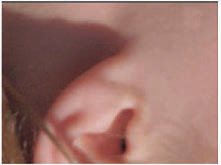
Students observed free and attached earlobes in their classmates.
-
24
What is the significance of correlating earlobe types with parents?
It helps suggest inheritance rules for earlobe types.
-
25
What diagram shows the differences between earlobe types?
A diagram comparing free and attached earlobes.
-
26
How does the percentage of earlobe types relate to inheritance?
It allows students to identify patterns in heredity.
-
27
Who is known as the father of modern genetics?
Gregor Johann Mendel
-
28
Where did Mendel study science and mathematics?
University of Vienna
-
29
What plant did Mendel use for his inheritance studies?
Garden peas
-
30
What two traits of garden peas did Mendel investigate?
- Round/wrinkled seeds
- Tall/short plants
-
31
What is the first generation of offspring called in Mendel's experiments?
F1 generation
-
32
What surprising result did Mendel find in the F1 generation regarding plant height?
All plants were tall.
-
33
What does Mendel's findings suggest about tallness and shortness traits?
Tallness is dominant over shortness.
-
34
What is the ratio of tall to short plants expected in the F2 generation?
3:1
-
35
What is the hypothesis Mendel proposed about traits inheritance?
Two copies of factors (genes) control traits.
-
36
Mendel found that traits are inherited through two copies of factors which we now call genes.
-
37
In the F1 generation of Mendel's experiment, the ratio of tall plants was 100%.
-
38
What trait is expressed when at least one 'T' allele is present?
Short plants
Wrinkled seeds
Medium-height plants
Tall plants
-
39
What is the expected ratio of TT, Tt, and tt in the F2 generation?
1:2:1
3:1
2:2
1:3
-
40
What diagram shows Mendelian inheritance of traits over two generations?

Heredity Overview
Reproductive processes create new individuals that are similar yet distinct, particularly evident in sexually reproducing species. Key aspects include:
- Asexual reproduction produces minimal variation, e.g., bacteria.
- Sexual reproduction enhances diversity among offspring.
The figure depicts how variations accumulate over generations.
Accumulation of Variation
- Inheritance provides a base body design but introduces subtle differences in the next generation.
- Environmental factors affect survival rates of variations, playing a role in evolution.
Key Question: Why do some variations survive better than others?
Heredity and Traits
Heredity is responsible for the transmission of traits across generations. Key points include:
- Traits are influenced by both parents' genetic material.
- Activity: Observe earlobes of peers and correlate with parental traits.
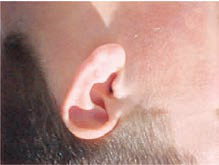
Free vs. Attached Earlobes: Observed variations in human populations.
Mendel's Contributions
Gregor Mendel established foundational rules of inheritance through experiments with pea plants:
- Crossed tall and short plants (dominant vs. recessive traits).
-
First-generation (F1) all tall, second-generation (F2) showed a 3:1 ratio of tall to short.
-
Conclusion: Traits are inherited as units (now known as genes).
- Figure Reference: Mendelian inheritance shows genotype ratios.
Key Mendelian Concepts
- Traits are visible in either dominant (T) or recessive (t) configurations.
- Dominance: A single dominant allele is sufficient for expression.
- Inheritance Ratios: Resulting genotypes from F2 generation are in a predictable ratio (1:2:1 for TT, Tt, tt).
Further Exploration: Confirm observed ratios through experimentation.