What are the primary functional characteristics of the human upper limb?
In which anatomical structure are the fine motor skills of the upper limb especially marked?
Name the major joints that contribute to the positioning of the hand for functional efficiency.
Which of the following is considered a primary functional capacity of the upper limb?
Manipulation
Locomotion
Digestion
Respiration
Which joint connects the arm to the shoulder complex?
Midcarpal joint
Glenohumeral joint
Distal radioulnar joint
Interphalangeal joint
What are the three primary bone groups found in the hand?
What are the joints involved in the movement of the hand and fingers?
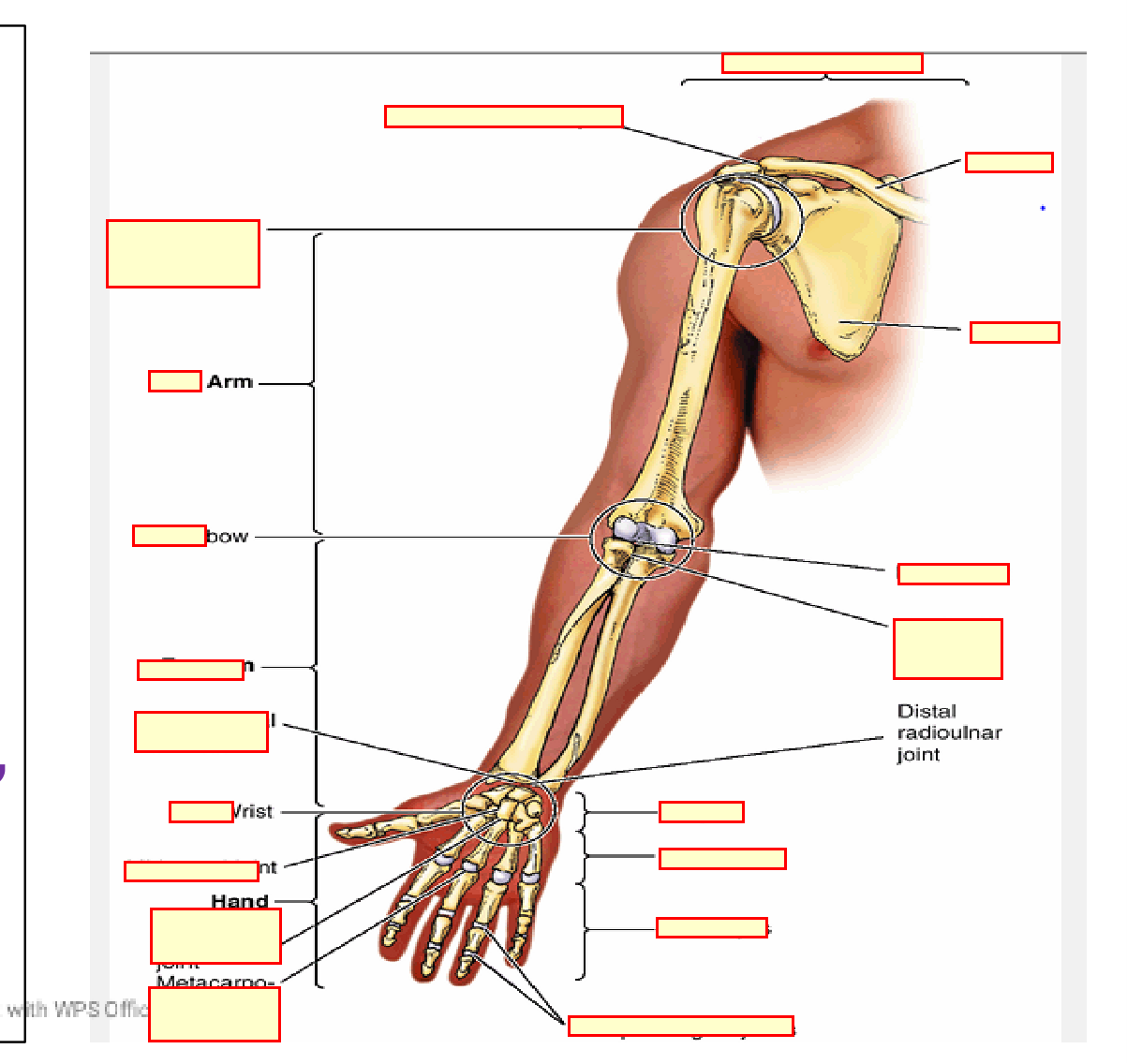
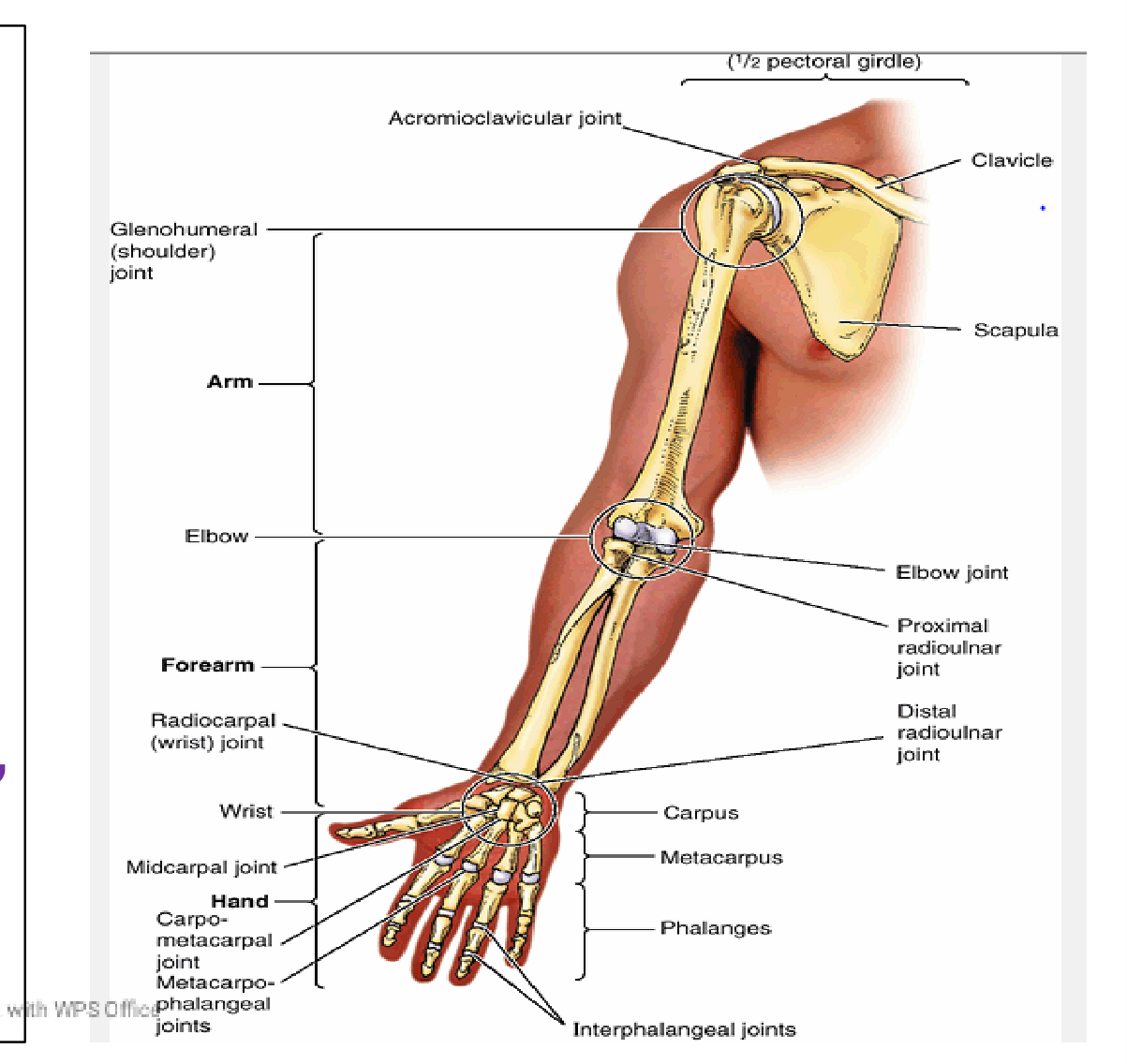
What three regions are included in the shoulder?
Which bones form the pectoral (shoulder) girdle?
What structure completes the pectoral girdle anteriorly?
How is the pectoral girdle structured posteriorly?
Where is the arm (brachium) located in the upper limb?
Which bone is the arm (brachium) centered around?
Which bones contribute to the bony ring of the pectoral girdle?
Humerus and radius
Radius and ulna
Femur and tibia
Scapulae and clavicles
Which two bones are located in the forearm?
Where is the forearm located in relation to the upper limb joints?
What are the two anatomical regions of the forearm?
What are the three bony components of the hand?
What are the external components that compose the hand?
What type of digit is found in the hand?
What sensory information is the hand richly supplied to detect?
What is the common name for the clavicle bone?
What kind of bone is the clavicle classified as?
How are the medial and lateral ends of the clavicle shaped?
Which term describes the overall shape of the clavicle's shaft?
Gentle S-shaped curve
C-shaped arch
Straight linear shaft
U-shaped bend
Describe the curvature of the clavicle shaft's two distinct segments.
What feature is present on the inferior aspect of the clavicle's shaft?
Which of these is a noted landmark on the inferior surface of the clavicle?
Greater trochanter
Subclavian groove
Coronoid process
Radial tuberosity
What is the characteristic shape of the sternal end of the clavicle?
How is the medial two-thirds of the clavicle shaped when viewed anteriorly?
Which specific features are located on the inferior surface of the clavicle?
What is the typical anatomical position of the clavicle within the body?
Which bone is the first to begin the ossification process in the human body?
What is unique about the ossification process of the clavicle compared to other bones?
Which long bone is characterized by having two primary centers of ossification?
Which is the first bone in the human body to begin the process of ossification?
Which long bone is unique for ossifying in membrane?
Which long bone lacks a medullary cavity?
Clavicle
Humerus
Tibia
Femur
How is the clavicle positioned within the human body?
Which bone is considered subcutaneous throughout its entire extent?
Femur
Scapula
Clavicle
Humerus
What is the primary role of the clavicle in allowing range of motion for the upper limb?
How does the clavicle contribute to the process of respiration?
What is the protective role of the clavicle regarding the cervicoaxillary canal?
How does the clavicle handle mechanical impacts to the upper limb?
Which bone is the first to begin the process of ossification during fetal development?
When does the secondary ossification center of the sternal end of the clavicle typically fuse with the shaft?
What type of ossification accounts for the development of the greater part of the clavicle?
Which end of the clavicle is considered the growing end of the bone?
What is the shape of the medial end of the clavicle?
Which joint is formed by the articulation of the medial end of the clavicle with the manubrium?
With which specific feature of the manubrium does the medial end of the clavicle articulate?
Where does the first costal cartilage attach to the clavicle?
What is found on the inferior surface of the sternal end of the clavicle?
Which ligament attaches to the rough oval depression located on the inferior surface of the sternal end of the clavicle?
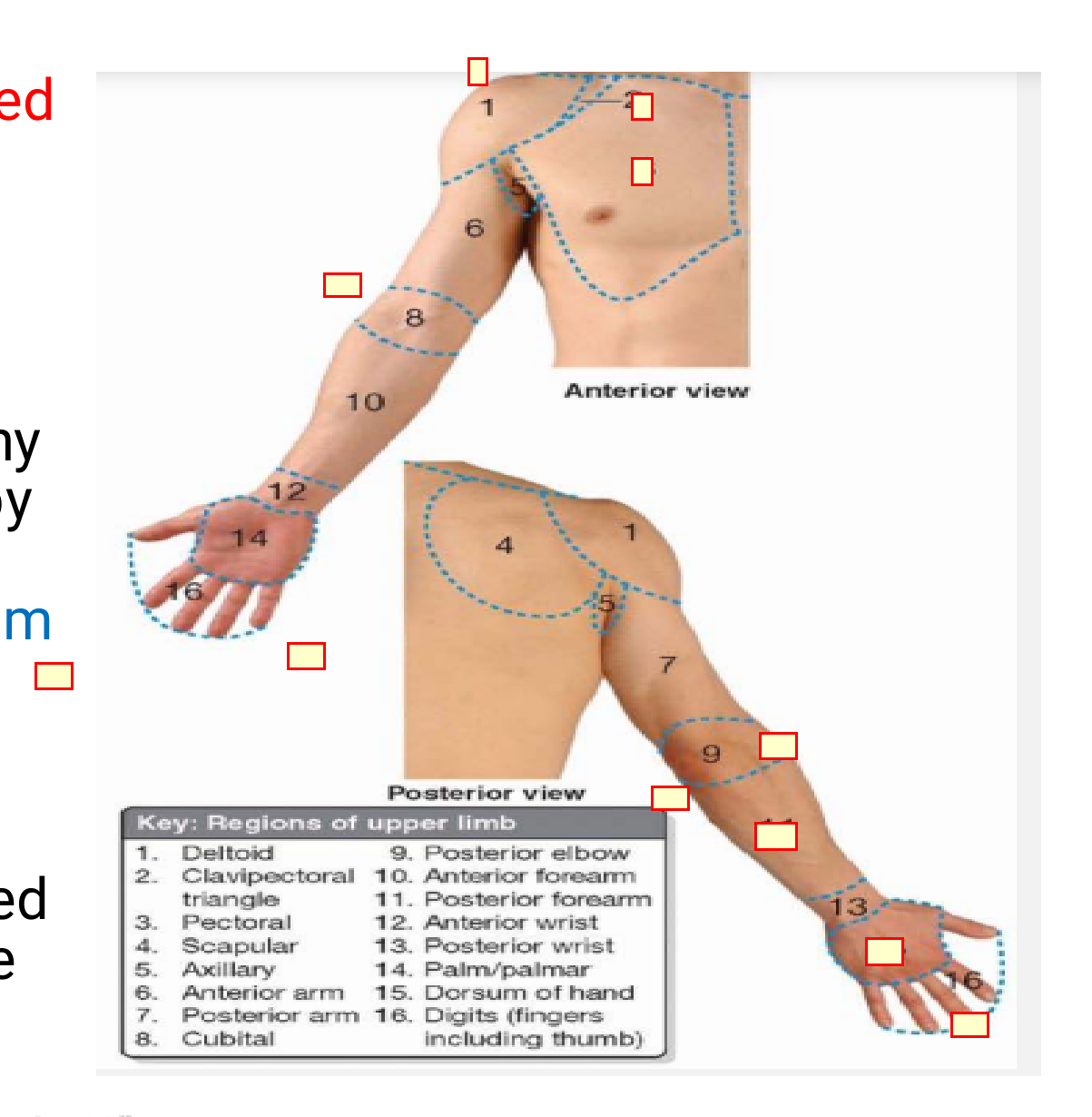
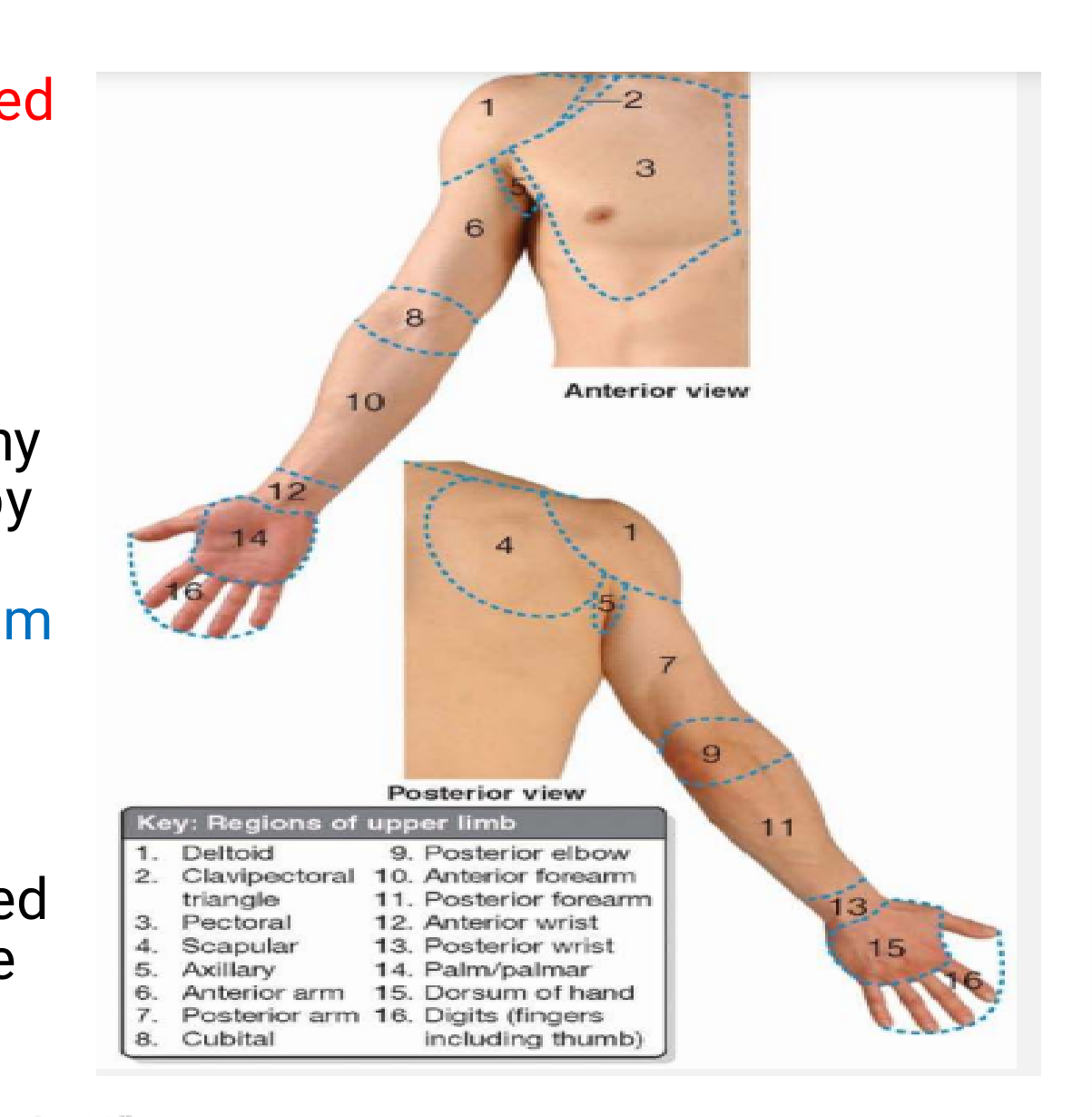
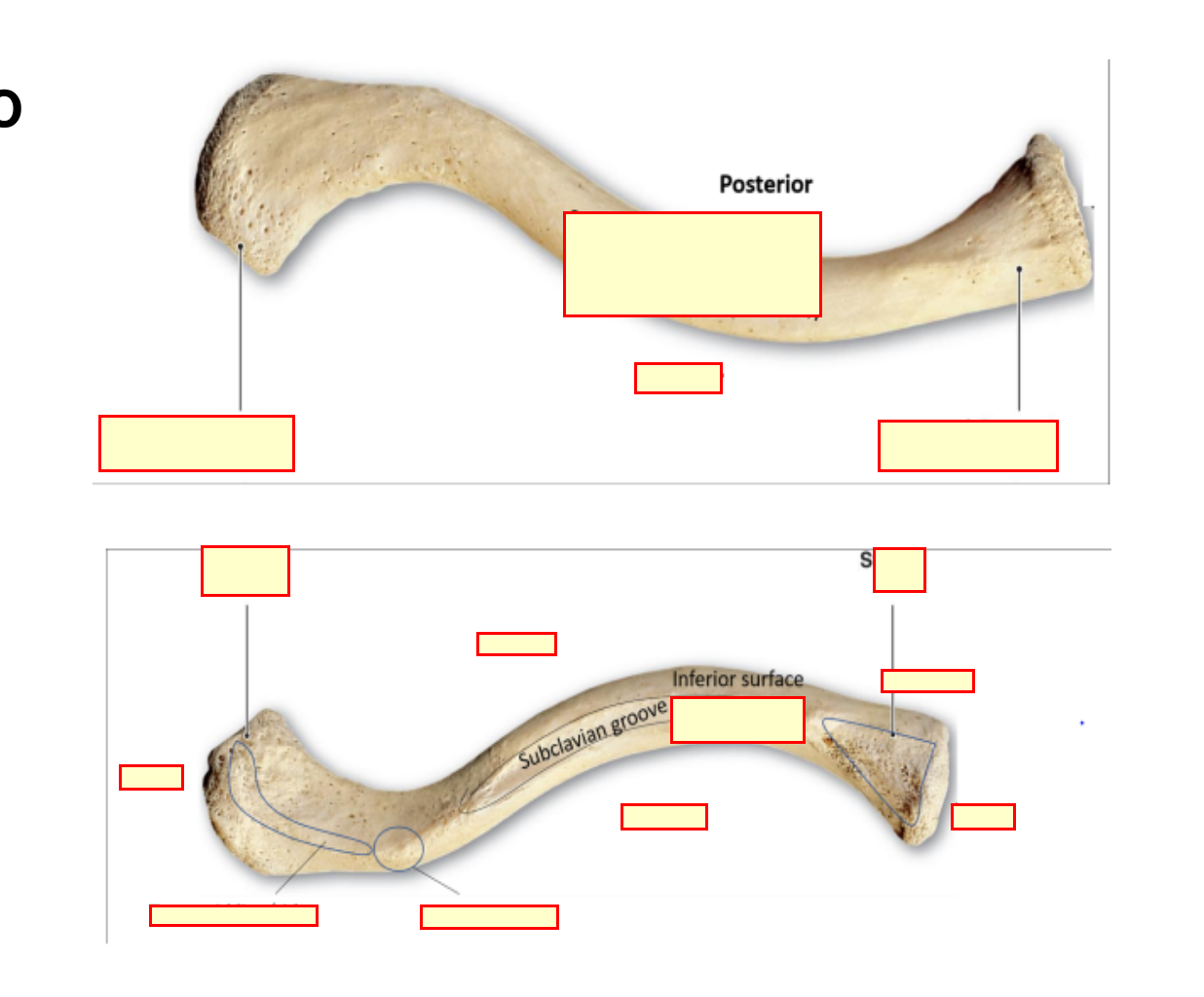
Bu destedeki kartlar (59)
-
1
What are the primary functional characteristics of the human upper limb?
Mobility and the ability to grasp, strike, and perform fine motor skills (manipulation).
-
2
In which anatomical structure are the fine motor skills of the upper limb especially marked?
The hand.
-
3
Name the major joints that contribute to the positioning of the hand for functional efficiency.
- Scapulothoracic joint
- Glenohumeral joint
- Elbow joint
- Radio-ulnar joint
- Wrist joint
-
4
Which of the following is considered a primary functional capacity of the upper limb?
Manipulation
Locomotion
Digestion
Respiration
-
5
Which joint connects the arm to the shoulder complex?
Midcarpal joint
Glenohumeral joint
Distal radioulnar joint
Interphalangeal joint
-
6
What are the three primary bone groups found in the hand?
- Carpus
- Metacarpus
- Phalanges
-
7
What are the joints involved in the movement of the hand and fingers?
- Carpometacarpal joint
- Metacarpophalangeal joints
- Interphalangeal joints
-
8
-
9
What three regions are included in the shoulder?
- Pectoral region
- Scapular region
- Lateral supraclavicular region
-
10
Which bones form the pectoral (shoulder) girdle?
- Scapulae
- Clavicles
-
11
What structure completes the pectoral girdle anteriorly?
The manubrium of the sternum.
-
12
How is the pectoral girdle structured posteriorly?
It is incomplete posteriorly.
-
13
Where is the arm (brachium) located in the upper limb?
It is located between the shoulder and the elbow.
-
14
Which bone is the arm (brachium) centered around?
The humerus.
-
15
Which bones contribute to the bony ring of the pectoral girdle?
Humerus and radius
Radius and ulna
Femur and tibia
Scapulae and clavicles
-
16
Which two bones are located in the forearm?
The ulna and radius.
-
17
Where is the forearm located in relation to the upper limb joints?
It is positioned between the elbow and the wrist.
-
18
What are the two anatomical regions of the forearm?
The anterior and posterior regions.
-
19
What are the three bony components of the hand?
The carpus, metacarpus, and phalanges.
-
20
What are the external components that compose the hand?
The wrist, palm, dorsum of the hand, and digits.
-
21
What type of digit is found in the hand?
An opposable thumb.
-
22
What sensory information is the hand richly supplied to detect?
Touch, pain, and temperature.
-
23
What is the common name for the clavicle bone?
The beauty bone.
-
24
What kind of bone is the clavicle classified as?
It is a modified long bone.
-
25
How are the medial and lateral ends of the clavicle shaped?
The medial end is quadrilateral, while the lateral end is flattened.
-
26
Which term describes the overall shape of the clavicle's shaft?
Gentle S-shaped curve
C-shaped arch
Straight linear shaft
U-shaped bend
-
27
Describe the curvature of the clavicle shaft's two distinct segments.
The medial two-thirds are convex forward, while the lateral one-third is concave forward.
-
28
What feature is present on the inferior aspect of the clavicle's shaft?
A shallow groove.
-
29
Which of these is a noted landmark on the inferior surface of the clavicle?
Greater trochanter
Subclavian groove
Coronoid process
Radial tuberosity
-
30
What is the characteristic shape of the sternal end of the clavicle?
Quadrilateral
-
31
How is the medial two-thirds of the clavicle shaped when viewed anteriorly?
Convex
-
32
Which specific features are located on the inferior surface of the clavicle?
- Subclavian groove
- Conoid tubercle
- Trapezoid line
-
33
What is the typical anatomical position of the clavicle within the body?
It is placed horizontally.
-
34
Which bone is the first to begin the ossification process in the human body?
The clavicle
-
35
What is unique about the ossification process of the clavicle compared to other bones?
It is the only bone that undergoes ossification in the membrane.
-
36
Which long bone is characterized by having two primary centers of ossification?
The clavicle
-
37
Which is the first bone in the human body to begin the process of ossification?
The clavicle
-
38
Which long bone is unique for ossifying in membrane?
The clavicle
-
39
Which long bone lacks a medullary cavity?
Clavicle
Humerus
Tibia
Femur
-
40
How is the clavicle positioned within the human body?
It is placed horizontally
-
41
Which bone is considered subcutaneous throughout its entire extent?
Femur
Scapula
Clavicle
Humerus
-
42
What is the primary role of the clavicle in allowing range of motion for the upper limb?
It serves as a strut that keeps the limb away from the thorax, providing the arm with maximum freedom of motion.
-
43
How does the clavicle contribute to the process of respiration?
By fixing the strut in position, it enables the elevation of the ribs required for deep inspiration.
-
44
What is the protective role of the clavicle regarding the cervicoaxillary canal?
It forms one of the boundaries of the canal, protecting the neurovascular bundle that supplies the upper limb.
-
45
How does the clavicle handle mechanical impacts to the upper limb?
It acts to transmit shocks resulting from traumatic impacts from the upper limb to the axial skeleton.
-
46
Which bone is the first to begin the process of ossification during fetal development?
The clavicle.
-
47
When does the secondary ossification center of the sternal end of the clavicle typically fuse with the shaft?
By 25 years of age.
-
48
What type of ossification accounts for the development of the greater part of the clavicle?
Intramembranous ossification.
-
49
Which end of the clavicle is considered the growing end of the bone?
The medial end.
-
50
What is the shape of the medial end of the clavicle?
The medial end is quadrangular.
-
51
Which joint is formed by the articulation of the medial end of the clavicle with the manubrium?
The sternoclavicular joint.
-
52
With which specific feature of the manubrium does the medial end of the clavicle articulate?
The clavicular notch.
-
53
Where does the first costal cartilage attach to the clavicle?
On the inferior aspect of the medial end.
-
54
What is found on the inferior surface of the sternal end of the clavicle?
A rough oval depression for the costoclavicular ligament.
-
55
Which ligament attaches to the rough oval depression located on the inferior surface of the sternal end of the clavicle?
The costoclavicular ligament.
-
56
-
57
-
58
-
59
Osteology of the Upper Limb: Introduction
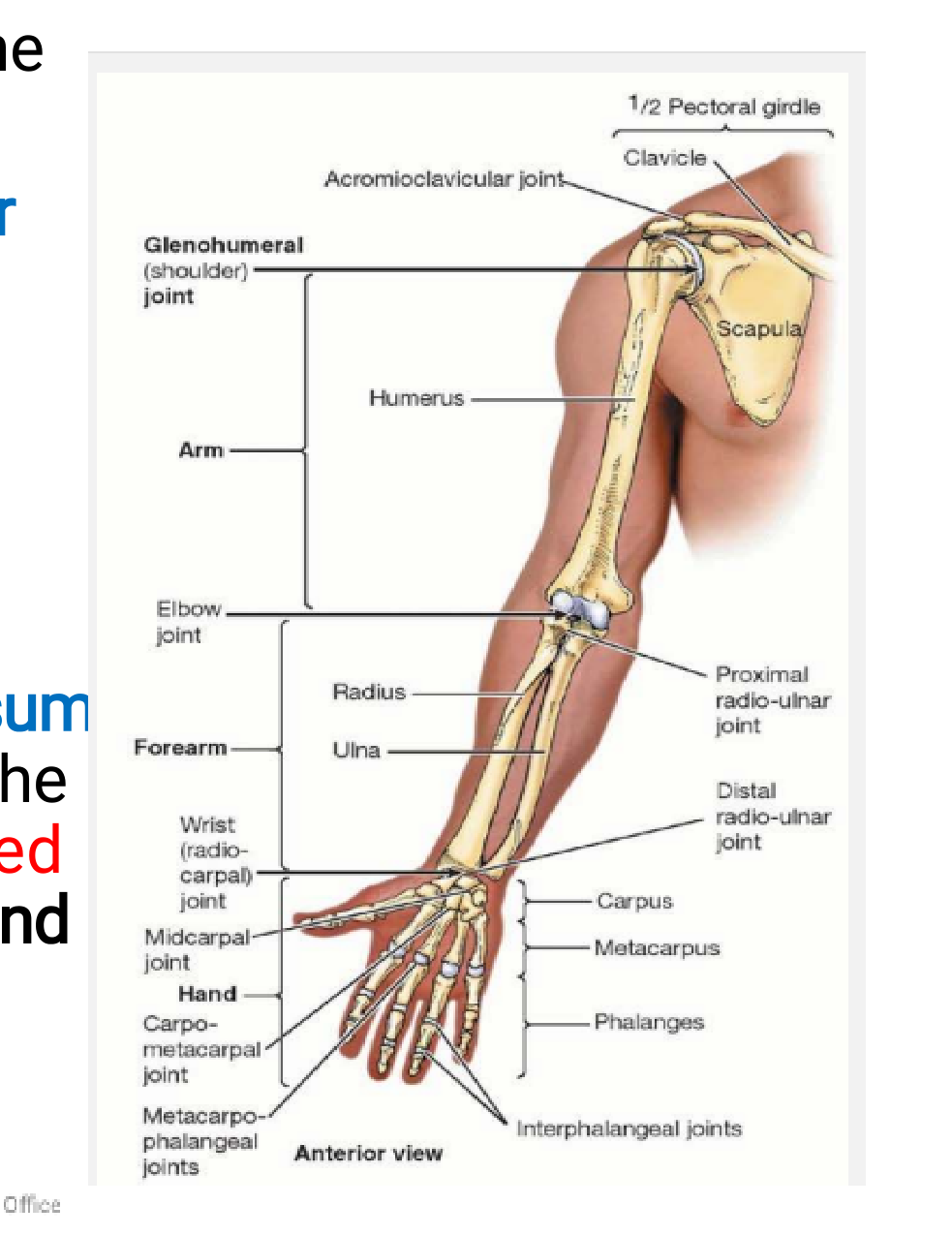
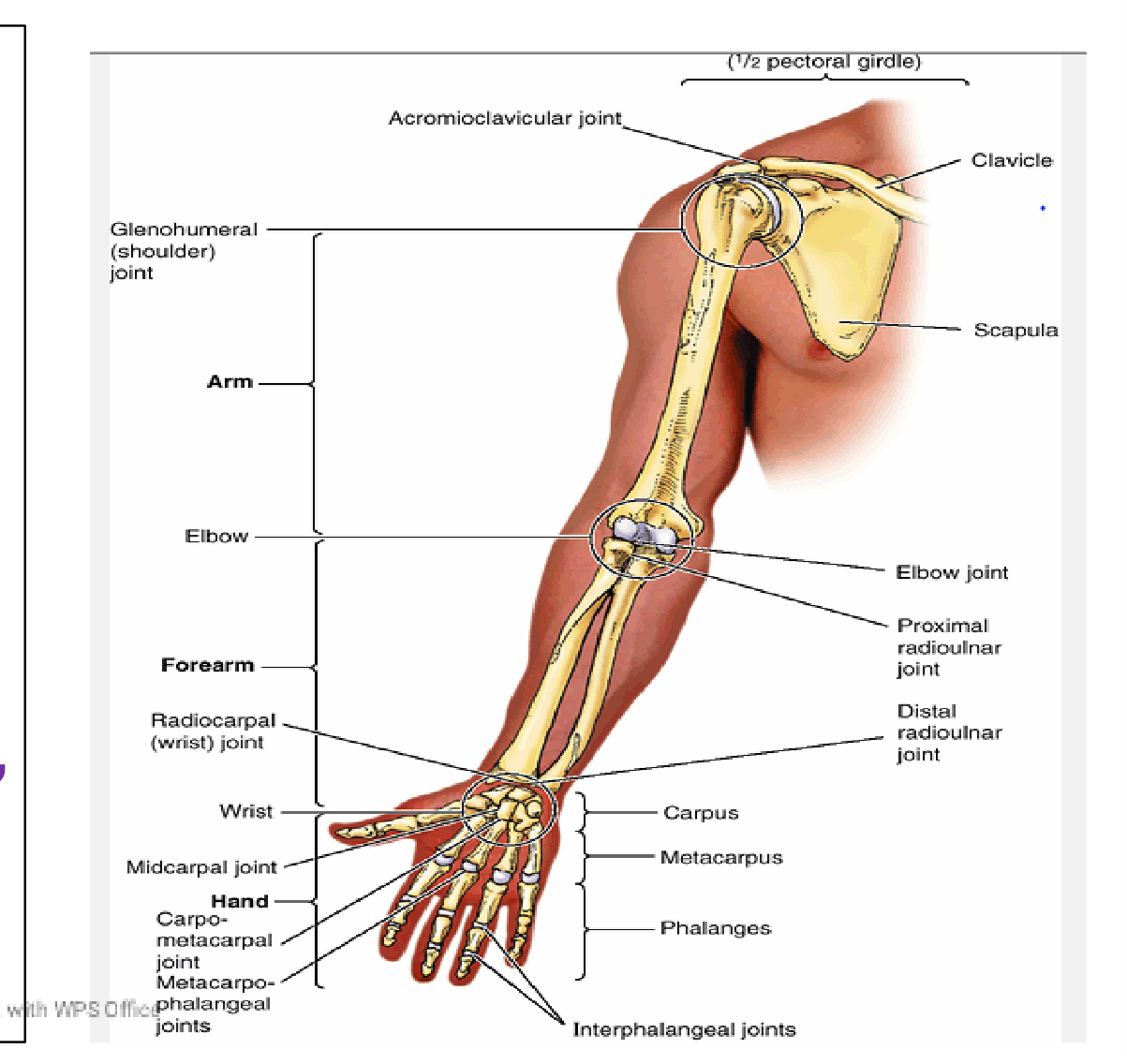
The upper limb is designed for high mobility and the ability to manipulate objects via grasping and striking. Its effectiveness depends on placing the hand in optimal positions through coordinated movements at the: * Scapulothoracic joint * Glenohumeral (shoulder) joint * Elbow joint * Radio-ulnar joints * Wrist joint
Anatomy and Regions
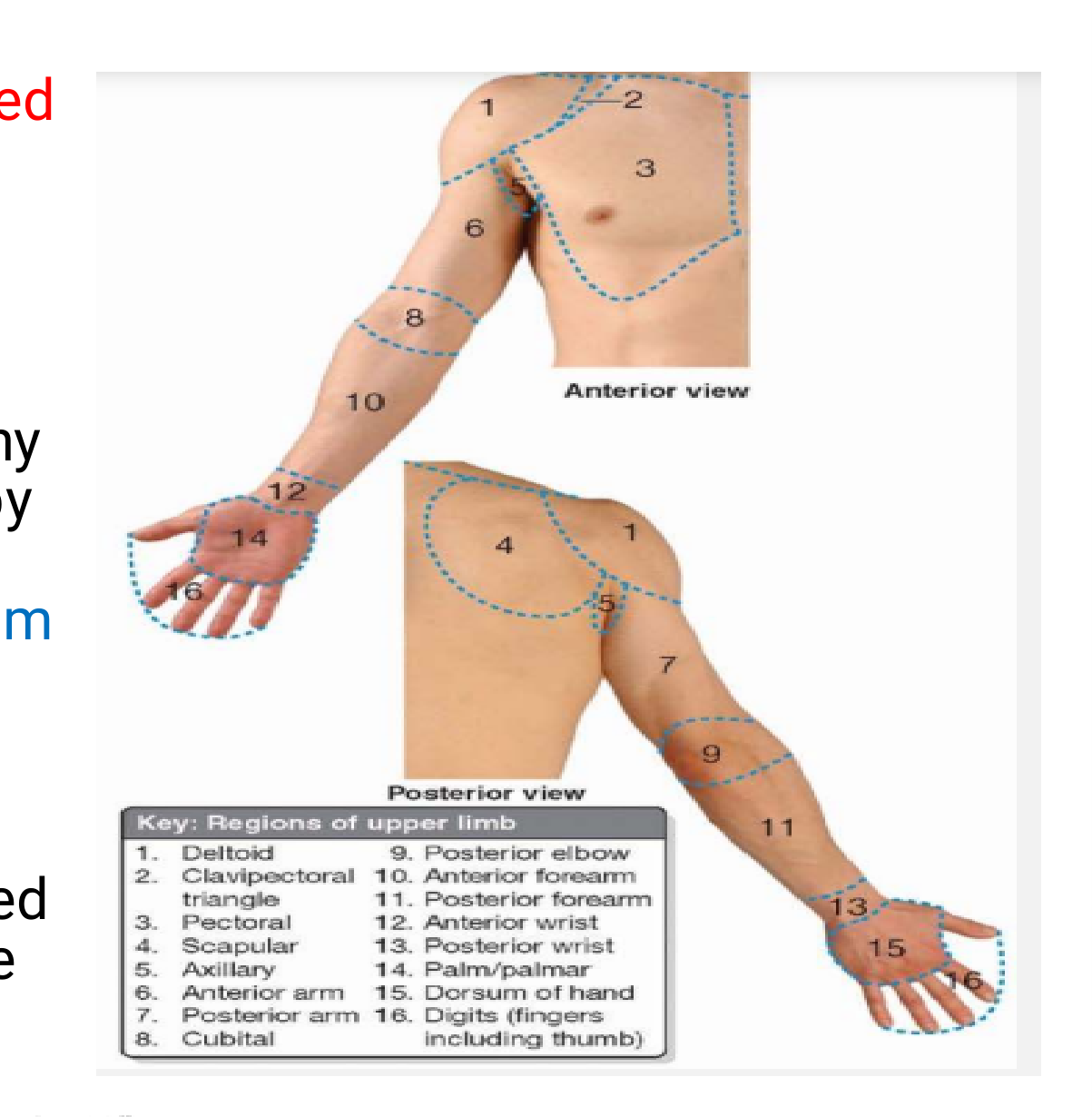
The upper limb is divided into four main segments:
- Shoulder (Pectoral Girdle): Includes the pectoral, scapular, and lateral supraclavicular regions. The girdle is a bony ring, incomplete posteriorly, formed by the scapulae and clavicles, and completed anteriorly by the manubrium of the sternum.
- Arm (Brachium): The region between the shoulder and elbow, centered around the humerus.
- Forearm: The region between the elbow and wrist, containing the radius and ulna.
- Hand: Distal to the forearm, containing the carpus, metacarpus, and phalanges. It includes the wrist, palm, dorsum, and digits (fingers and thumb).
The Clavicle (Collar Bone)
The clavicle acts as a modified long bone that functions as a strut, suspending the scapula and free limb away from the thorax for maximum range of motion.
Key Features
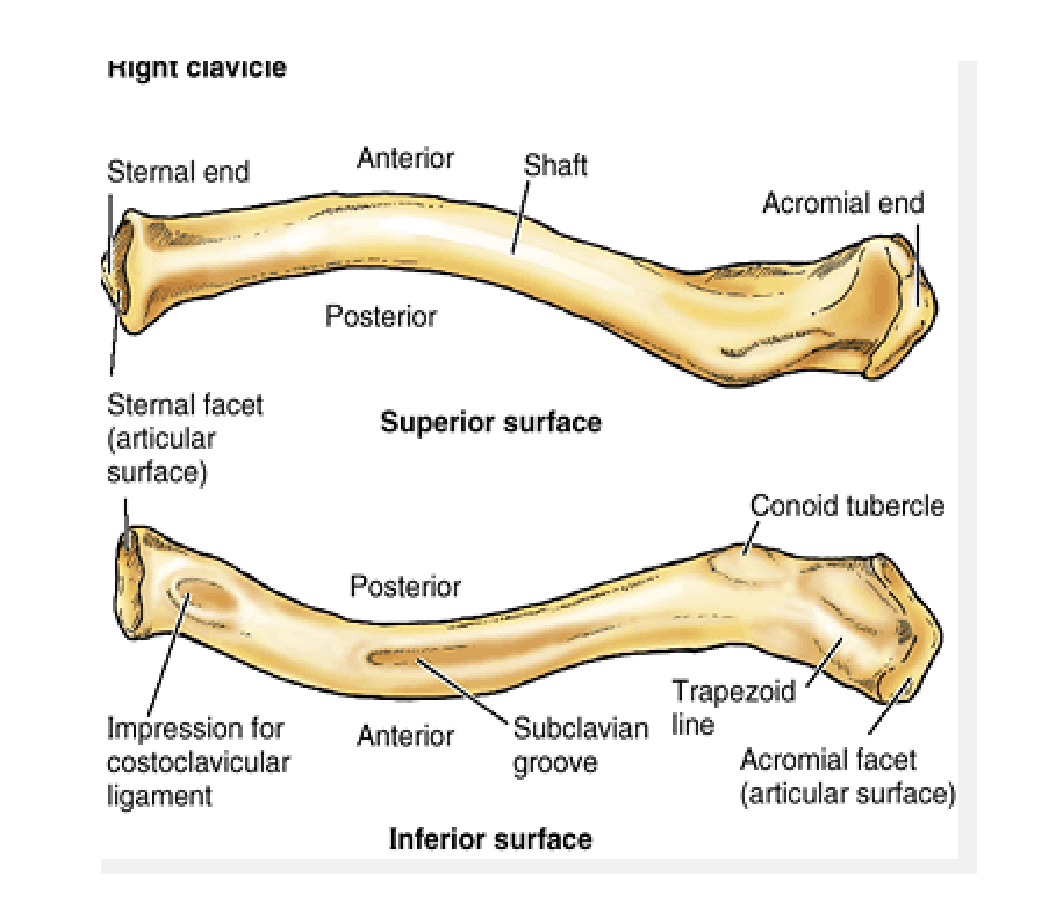
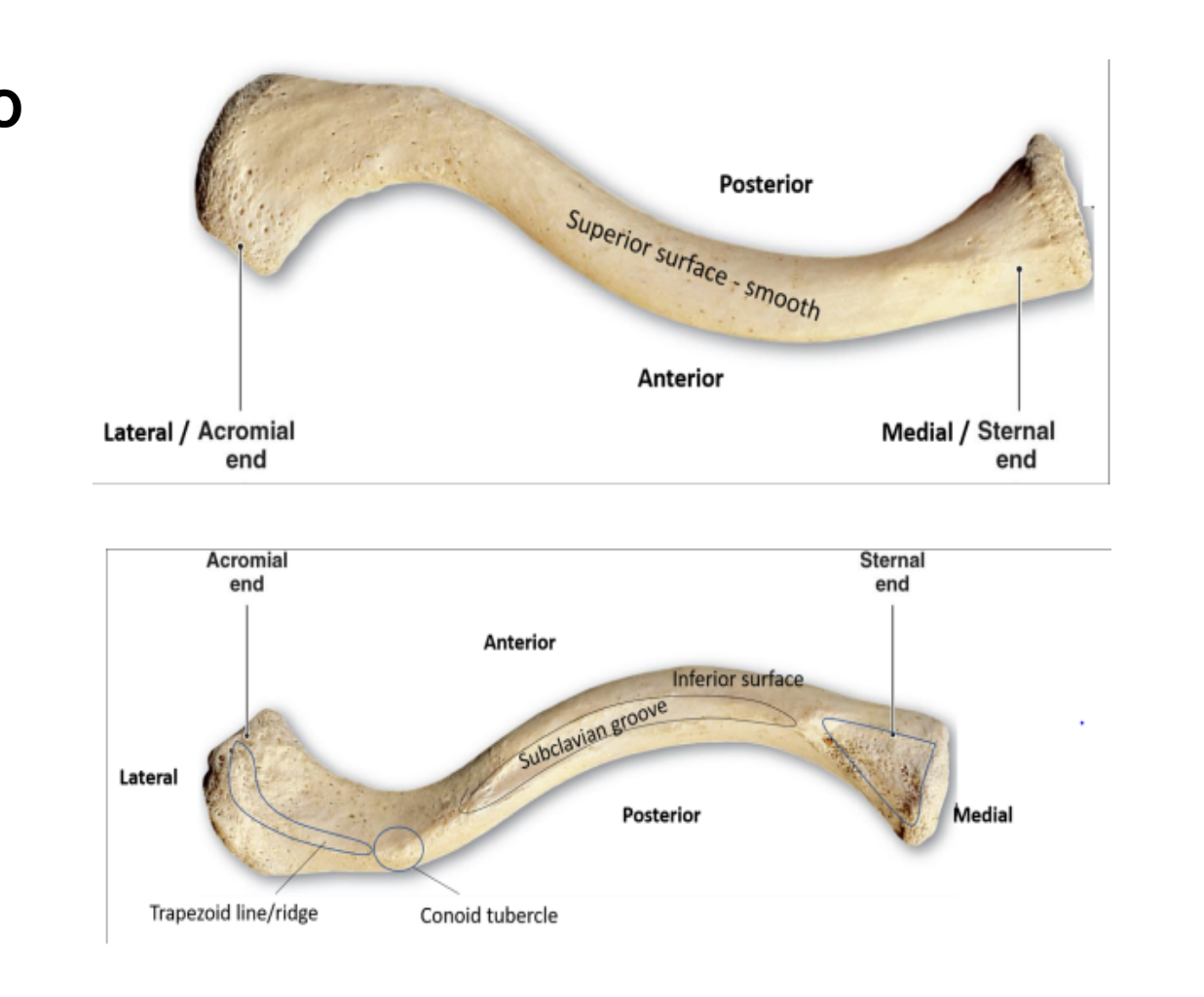
- Structure: Consists of a shaft and two ends (medial sternal end and lateral acromial end).
- Shape: Presents a gentle S-shaped curve (convex forward in the medial two-thirds, concave forward in the lateral third).
- Unique Characteristics:
- The first bone in the body to begin ossification.
- The only long bone that ossifies in a membrane (intramembranous ossification).
- The only long bone lacking a medullary cavity.
- Subcutaneous throughout its entire length.
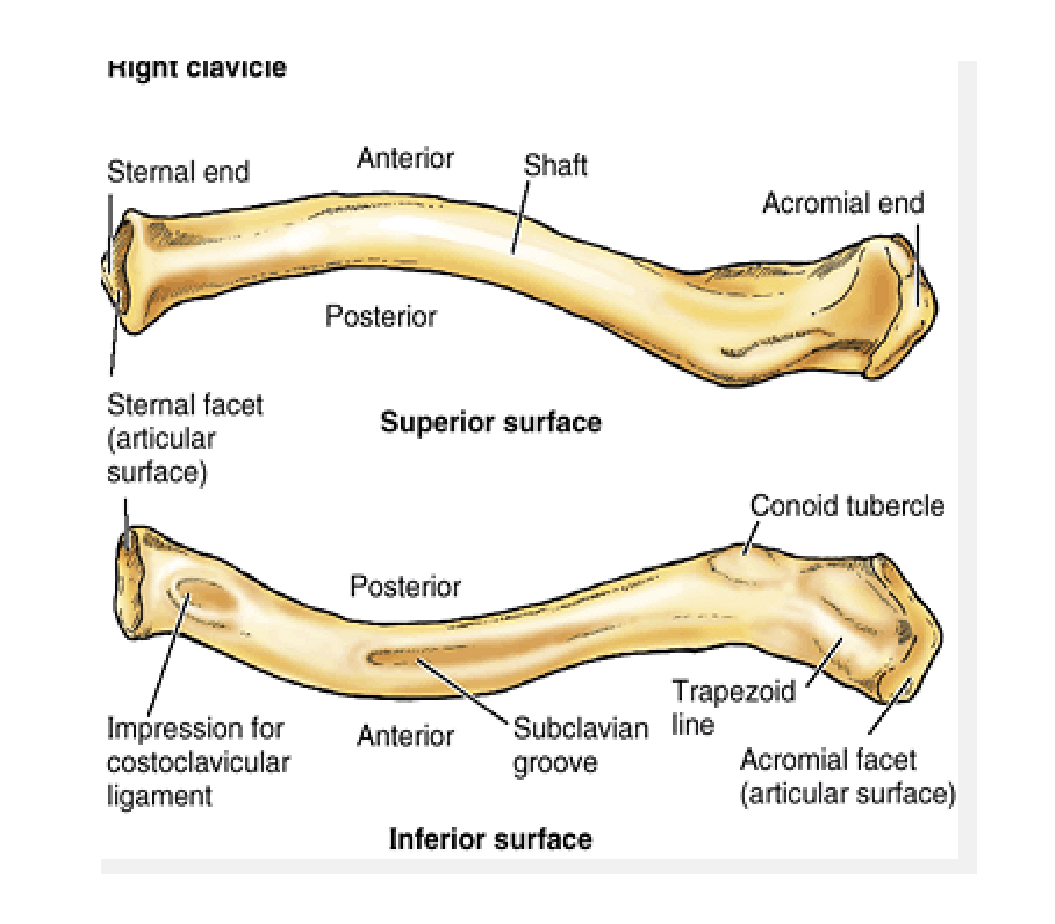
Side Determination and Positioning
- Medial end: Quadrilateral and articulates with the manubrium to form the sternoclavicular joint.
- Lateral end: Flattened.
- Inferior surface: Features a shallow groove for the subclavius muscle, the conoid tubercle, and the trapezoid line.
- Anatomical Position: Placed horizontally in the body.
Functions
- Strut: Holds the limb away from the thorax to increase mobility; helps elevate ribs during deep inspiration.
- Protection: Forms one of the boundaries of the cervicoaxillary canal, protecting the neurovascular bundle supplying the limb.
- Shock Absorption: Transmits traumatic impacts from the upper limb to the axial skeleton.
Ossification
- Begins at 6 weeks of fetal life in the shaft (primary centers).
- The sternal end has a secondary center that fuses between 15–20 years of age, with complete fusion by 25 years.
- The medial end is the primary growing end.