더 많은 기능을 잠금 해제하려면 가입하세요
- 이 덱을 계정에 저장하기
- 간격 반복으로 플래시카드 공부하기
- Anki(.apkg) 또는 PDF로 내보내기
- 문서 최대 100페이지까지 처리 가능
- PDF와 문서에서 이미지 추출
- PDF와 문서에서 더 정확한 텍스트 추출
- 더 발전된 AI 모델로 더 나은 플래시카드 생성
What is the ploidy of most adult animals?
Which mode of reproduction is most common in animals?
What type of meiosis do most animals exhibit?
What is the chromosome equation for fertilization?
When do most animal tissues form?
What early embryonic process produces an eight-cell stage after fertilization?
Name the three primary germ layers formed during gastrulation.
Are most animals diploid or haploid and what is their common mode of reproduction?
What type of meiosis is listed for animals?
What does the eight-cell stage undergo to form the next embryonic structure?
What is a blastula's basic structure?
What is the typical ploidy of adult animals that reproduce sexually?
What type of meiosis do animals with sexual reproduction undergo?
Write the fertilization chromosome equation for gamete fusion.
Which early embryonic stage follows cleavage and precedes gastrulation?
What key event occurs during gastrulation in early embryos?
Name the three primary germ layers formed during early embryogenesis.
What is the typical ploidy of most animals?
What is the usual mode of reproduction in most animals?
What type of meiosis do animals exhibit?
When do most animals develop tissues?
Name the three primary germ layers that form during gastrulation.
What two structures are labeled in the gastrula diagram that relate to the forming gut and its opening?
이 덱의 플래시카드 (23)
-
life-cycle ploidy
-
reproduction animals
-
meiosis gametes
-
fertilization ploidy
-
embryogenesis development
-
What early embryonic process produces an eight-cell stage after fertilization?
- Cleavage (early embryonic cell divisions)
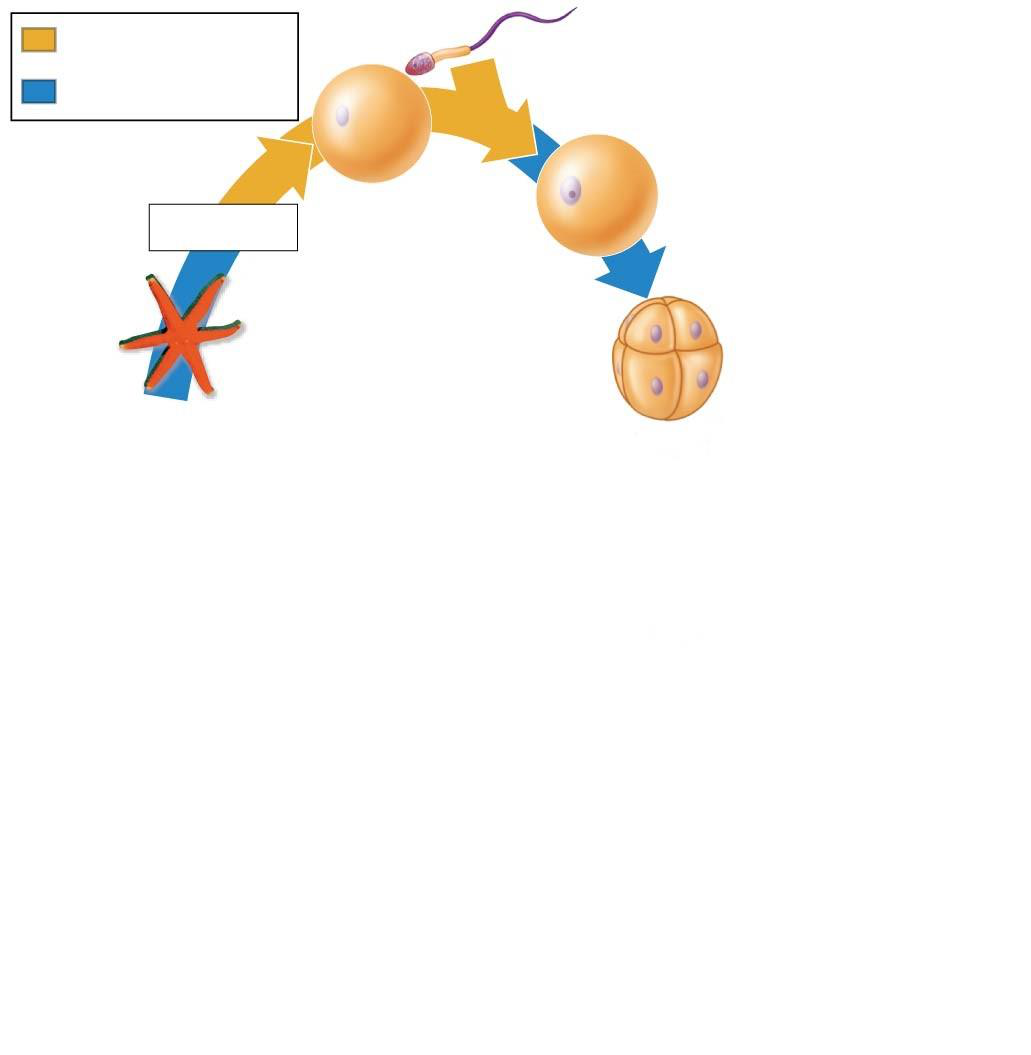 cleavage embryology
 -
germ-layers gastrulation
-
Are most animals diploid or haploid and what is their common mode of reproduction?
- Most animals are diploid
- Reproduction: sexual
life-cycle reproduction -
meiosis genetics
-
What does the eight-cell stage undergo to form the next embryonic structure?
- Further cleavage to form a blastula
cleavage embryology -
What is a blastula's basic structure?
- A hollow ball of cells with an internal cavity called the blastocoel
blastula embryology -
life-cycle ploidy
-
meiosis reproduction
-
fertilization chromosomes
-
embryogenesis stages
-
What key event occurs during gastrulation in early embryos?
Formation of a blastopore and initial germ-layer formation
gastrulation embryology -
germ-layers development
-
ploidy animals
-
reproduction animals
-
meiosis animals
-
development embryogenesis
-
germlayers gastrulation
-
What two structures are labeled in the gastrula diagram that relate to the forming gut and its opening?
- Archenteron (primitive gut)
- Blastopore
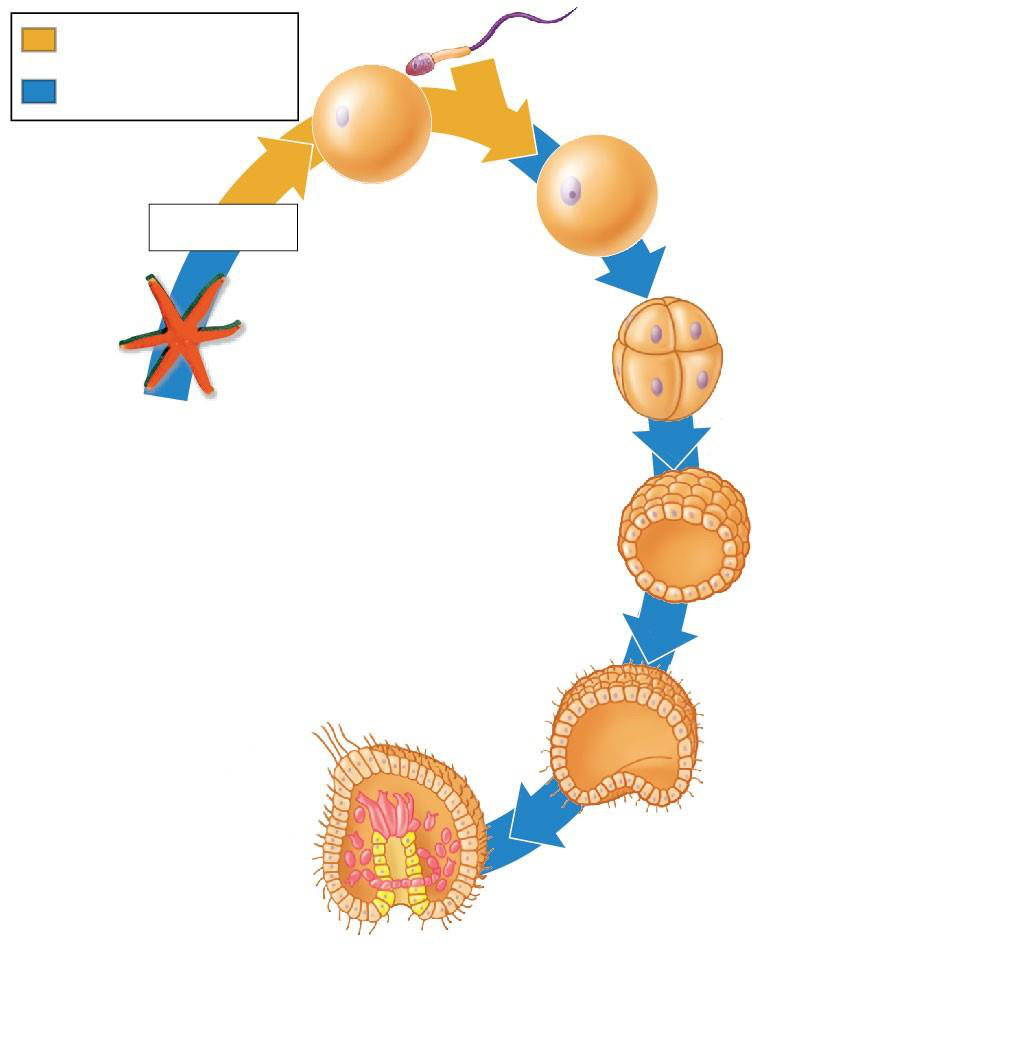 gastrula embryology diagram
Overview
- The basic animal life cycle: adults (usually diploid) produce haploid gametes by gametic meiosis; gametes fuse at fertilization to form a diploid zygote that undergoes cleavage and embryogenesis.
- Most animals are diploid (\(2n\)) as adults and have a diplontic life cycle (gametic meiosis).
Key terms & definitions
- Diploid (\(2n\)): two sets of chromosomes (typical adult condition).
- Haploid (\(n\)): one set of chromosomes (gametes).
- Gametic meiosis: meiosis produces gametes; only gametes are haploid.
- Fertilization: fusion of two gametes: \(n + n = 2n\).
- Cleavage: rapid, repeated cell divisions of the zygote without overall growth, producing the multicellular embryo.
- Blastula: a hollow ball of cells with a fluid-filled cavity called the blastocoel.
- Gastrulation: cell movements that form germ layers and create the primitive gut (the archenteron) and the blastopore.
Stepwise life-cycle & early development
- Adult (somatic) stage: usually diploid (\(2n\)). Somatic cells are produced by mitosis.
- Meiosis (gametogenesis): germ cells undergo meiosis to make haploid gametes (\(n\)).
- Fertilization: sperm and egg fuse to form a diploid zygote (\(2n\)).
- Cleavage:
- Rapid mitotic divisions without cell growth.
- Typical stages: 2-cell, 4-cell, 8-cell.
- Cleavage partitions the zygote cytoplasm into many blastomeres.
Alt: Life cycle from meiosis to zygote formation.
- Blastula formation:
- Continued cleavage produces a blastula: a hollow sphere of cells surrounding the blastocoel.
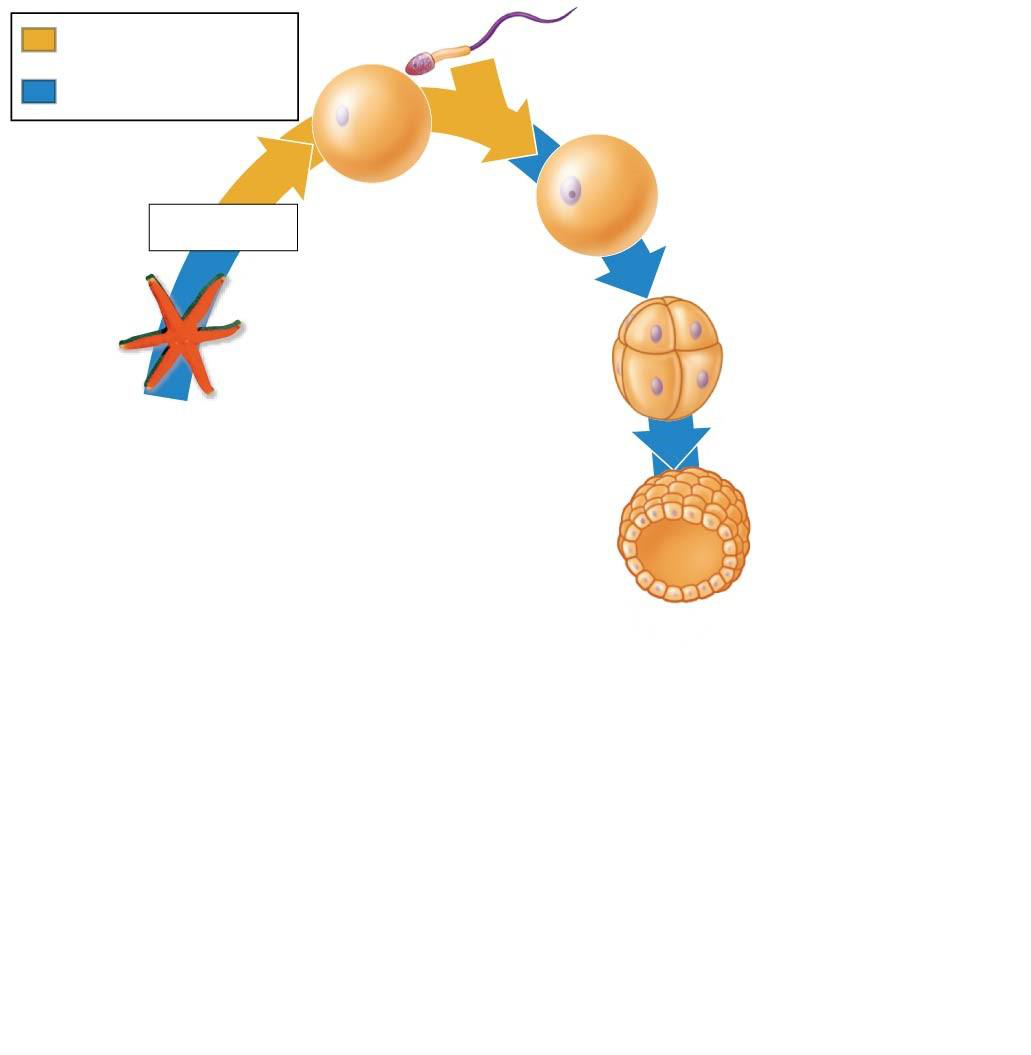 Alt: Eight-cell stage to blastula (hollow ball with blastocoel).
- Gastrulation:
- Cells move inward to form the archenteron (primitive gut) and establish germ layers.
- The opening formed is the blastopore; its fate differs among animal groups (e.g., protostomes vs deuterostomes).
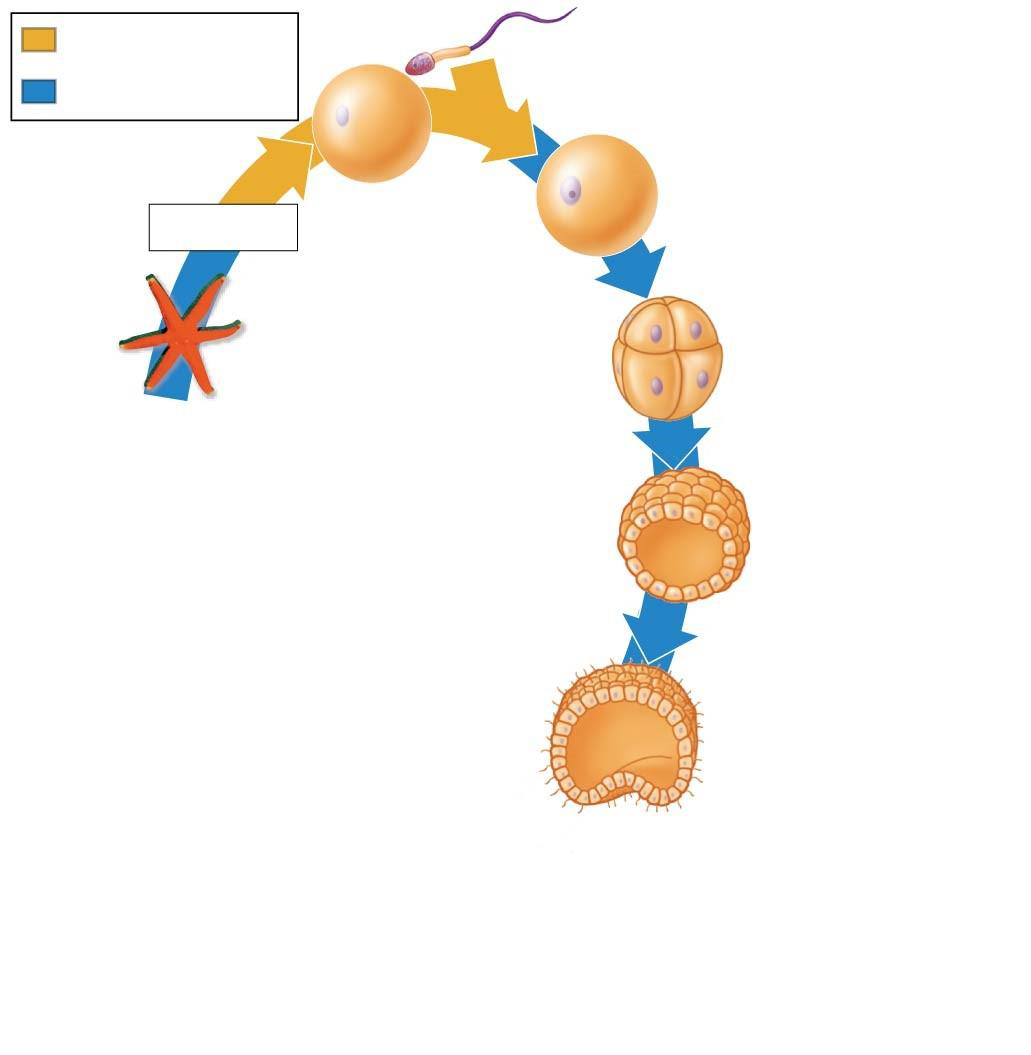 Alt: Transition from blastula to early gastrula with blastopore.
- Later gastrula & germ-layer differentiation:
- Three primary germ layers form in many animals:
- Ectoderm: epidermis, nervous system.
- Endoderm: lining of gut and associated organs (e.g., liver, lungs).
- Mesoderm (when present): muscles, skeleton, circulatory system.
- The archenteron becomes the gut; germ layers give rise to tissues and organs during organogenesis.
Alt: Later gastrula showing ectoderm, endoderm, and mesoderm.
Important relationships & comparisons
- Life-cycle ploidy: somatic cells \(=2n\), gametes \(=n\); fertilization restores \(2n\).
- Gametic meiosis (diplontic) is the dominant pattern in animals; contrasts with haplontic or alternation of generations in other kingdoms.
- Gastrulation is a major developmental milestone because it establishes body plan layers and axes.
Quick study tips
- Memorize the sequence: meiosis → fertilization → cleavage → blastula → gastrulation → organogenesis.
- Be able to label diagrams: blastocoel, blastopore, archenteron, and the three germ layers.
- Remember typical derivatives of each germ layer (ectoderm: nervous/skin; mesoderm: muscles/blood; endoderm: gut lining).
One-line summary
- Early animal development converts a single diploid zygote into a multicellular embryo through cleavage, blastula formation, and gastrulation, setting up germ layers and the body plan.