Save your deck before it's gone
These flashcards aren't stored yet — they'll disappear when you leave. Create a free account to keep them, and unlock everything below.
- Save this deck to your account
- Study with spaced repetition
- Export to Anki (.apkg) or PDF
- Process documents up to 100 pages
- Images extracted from your PDFs
- Sharper text extraction & a more advanced AI model
Name common tablet excipient categories used in tablet formulations.
- Binder
- Filler-Diluent
- Coating
- Disintegrant
- Lubricant / Glidant
- Solubilizer
What are three standard physical tests used to evaluate tablets?
- Friability
- Hardness
- Disintegration
What is a tablet in pharmaceutics?
- A mixture of active substances and excipients, usually in powder form, pressed or compacted into a solid.
What proportion of prescriptions are solid dosage forms, and what proportion of those are compressed tablets?
- About two-thirds of all prescriptions are dispensed as solid dosage forms
- Half of these solid dosage forms are compressed tablets
What are the two basic physical types of tablets?
- Molded
- Compressed
Name common tablet formulations, coatings, or release forms.
- Immediate release
- Multiple compressed
- Film coated
- Gelatin coated
- Enteric coated
- Sugar coated
- Buccal/Sublingual
- Chewable
- Effervescent
- Lozenge
- Melt Extrusion
- Delayed/Extended/Controlled release
What is an excipient in a tablet formulation?
- Excipient: 'A largely inert substance that is added to a drug formulation to improve administration or absorption.' (FDA: pharmaceutical necessity)
Name major tablet excipient types and their primary function.
- Binder: forms granules and improves tablet compaction
- Disintegrant: speeds disintegration and dissolution
- Lubricant: reduces adhesion to tooling
- Filler (Diluent): increases volume
- Glidant: improves powder flow
- Coating: protects from moisture; can control dissolution
- Solubilizer: improves drug solubility
Name the main tablet routes of administration listed.
- Oral
- Sublingual
- Buccal
- Vaginal
- Rectal
What are the main sequential steps of tablet manufacture?
- Dispensing (weighing and measuring)
- Size reduction
- Blending and mixing
- Granulation (wet or dry) and dryin
- Compression and Tablet Dedusting
- Coating if applicable
- Packaging
After granulation (wet or dry) and dryin, what is the next tablet manufacturing step?
- Compression and Tablet Dedusting
What tablet manufacturing process is indicated by the heading in the figure?
- Dry granulation
What are the key requirements for direct compression of a tablet powder blend?
- Tableting without prior granulation
- API sensitive to heat/moisture: yes
- Requires appropriate compressibility, good flowability, and stable homogeneity (no demixing)
- Suitable powder blend achievable via excipient selection
How do wet granulation and dry granulation differ regarding API sensitivity and excipient selection?
- Wet granulation: API not sensitive to heat/moisture; suitable powder blend through excipient selection not required
- Dry granulation: API sensitive to heat/moisture; suitable powder blend achievable via excipient selection
What are the main advantages of direct compression for tablet manufacturing?
- Continuous manufacturing (CM) suitable
- Highly efficient process
- Reduced strain on API (suitable for sensitive APIs)
- Less time- and resource-intensive
- Reduced number of process steps
- Solvent-free
How do dry and wet granulation differ in methods and key benefits?
- Dry granulation: CM suitable; solvent-free
- Wet granulation: Strong binding; improves compressibility; broad application range; methods include high shear (HS), twin screw (TS), fluid bed (FB); HS and FB widely established in large-scale manufacturing; CM suitable (TS, FB)
What is a primary disadvantage of using direct compression (DC) or dry granulation for tablet manufacture?
- May require DC grades of excipients, which can increase raw material prices
What are the main disadvantages of wet granulation listed for tablet manufacture?
- Use of organic solvents
- High equipment footprint and operating costs due to mandatory drying
- Residual solvent risk
Which flow properties are evaluated for pharmaceutical powders and granules?
- Angle of repose
- Bulk density
- Tapped density
- Carr's compressibility index
- Hausner ratios
Name three main parts visible in the tablet press mechanism.
- Top punch
- Bottom punch
- Powder
Why do tablets larger than 800 mg present a problem?
- Tablets larger than 800 mg are increasingly difficult to swallow
What content-uniformity challenge arises with low API loading in tablets?
- Content uniformity becomes challenging when the API is less than approximately 5% of the tablet
What does the term 'depth of bisect' refer to in tablet bisecting?
Splitting
Name a tablet attribute listed as relevant to tablet bisect.
- Tablet size
What are the United States Pharmacopoeia (USP) requirements for oral drug products?
- Description (appearance)
- Identification
- Strength (assay)
- Impurities (organic, inorganic, residual solvents)
Which specific USP evaluation tests are listed for tablets?
- Dissolution <711> & <724>
- Volatile content (Loss on drying) <731>
- Disintegration <701>
- Tablet friability <1216>
- Breaking force <1217>
- Uniformity <905>
What appearance features are required or evaluated for pharmaceutical tablets?
- Printed/embossed characters required by FDA
- Checked for discoloration, mottling, specks, chips, cracks
What are key considerations about tablet odor during analysis?
- USP 23/NF 18 discusses taste & odor
- Odor may aid identification of causative agent
- Analyst safety is a concern with potent/volatile drugs
What are common tablet defects listed in the notes?
- Picking & sticking
- Capping & lamination
- Orange peel
- Erosion
- Roughness
- Bridging
Match each tablet defect to its stated cause.
- Picking & sticking: occurs during compression
- Capping & lamination: excessive compression force
- Orange peel / Roughness: excessive drying during film coating
- Erosion: soft tablets
- Bridging: insufficient flow during film coating
What is the current USP <905> weight variation threshold for applying the test?
Applied when the active is 25 mg or more and comprises 25% or more by weight of the dosage form.
What sample size and procedure does USP <905> specify for weight variation testing?
Select not less than 30 dosage units; weigh 10 tablets and use assay results to calculate active content assuming homogeneous distribution.
What is the difference between weight uniformity and content uniformity for tablets?
- Weight uniformity: assay individual tablet weight
- Content uniformity: assay quantity of drug in a single dosage unit
What was the overall percentage of half-tablets that fell outside the proxy USP specification for drug content in the tablet-splitting study?
- 23.9% of 180 half-tablets differed from sample mean by a percentage outside the proxy USP specification
What are tablet thickness specifications typically based on?
- Set specifications based on development history
- Regulatory filing criteria not generally required
What are the main ramifications of tablet thickness variability?
- Weight and compressibility variability
- Altered disintegration/dissolution due to porosity changes
- Packaging issues, especially unit dose cavities and re-work for additional coating
What is tablet friability and what commonly causes it?
- Resistance to abrasion of tablets
- Caused by manufacturing, transportation, and patient handling
What is the formula for friability percentage and what do the variables mean?
- \(F (\%) = (W_o - W) \times 100\)
- W_o: original weight
- W: weight after the experiment
- Tablets are tumbled in a rotating drum during testing
What is 'breaking force' for a solid tablet?
The resistance of a solid to local permanent deformation.
What does the 'Diametral Compression Test' (crushing strength) cause and what testing limitation is noted?
- The compact fails in tension during the diametral compression test
- Early testing methods showed strain-rate dependence causing variability
- Not to be confused with shear failure
What two subtopics are listed under 'Tablet Hardness'?
- Hardness vs. Pmax
- Uniformity of Void [Density] Distribution
What three image types accompany the 'Tablet Hardness' section?
- Line graph of tensile strength vs. an unspecified parameter
- Contour plots of void distribution for single and double ended compaction
- Close-up photo of a hardness tester with a dial indicator
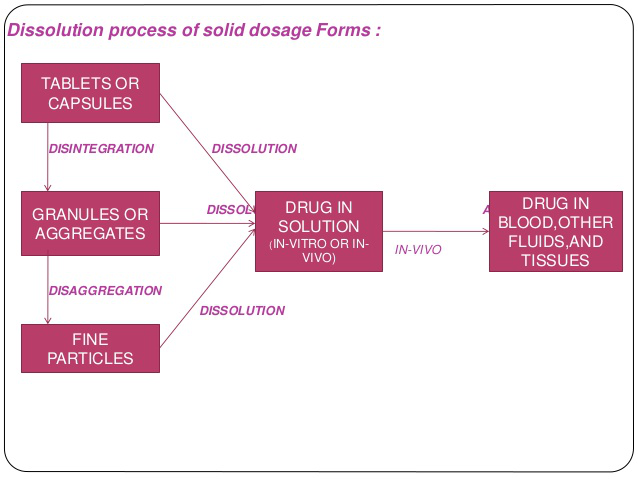
What is the sequence of physical stages in the dissolution process of a solid oral dosage form?
- Tablet or capsule
- Granules or aggregates
- Fine particles
- Drug in solution
- Drug in blood, other fluids, and tissues
What are the final compartments reached by the drug after dissolution from a solid dosage form?
- Drug in solution
- Drug in blood, other fluids, and tissues
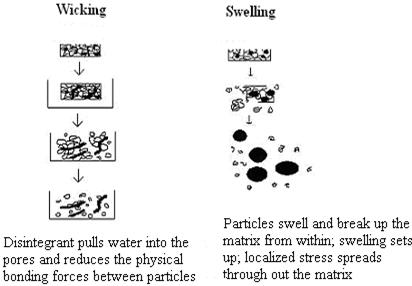
What are the two simultaneous processes involved in tablet disintegration?
- Fluid penetration
- Particle separation
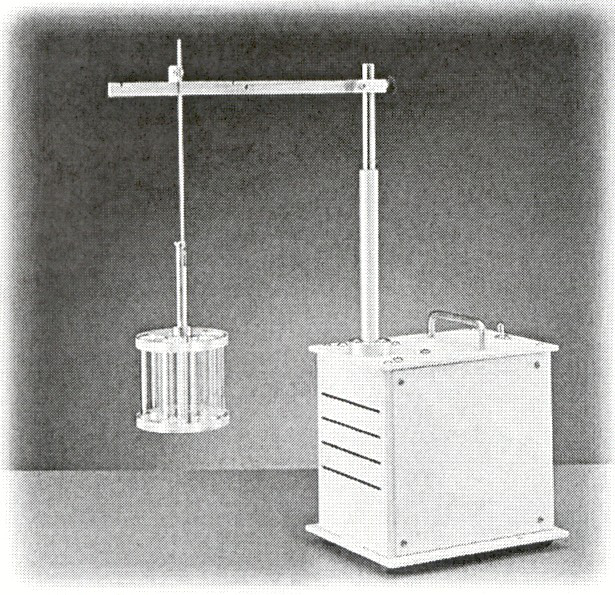
List the key parameters of the basket-rack assembly used for disintegration testing.
- 10-mesh No. 23 (0.025-inch) wire cloth
- Temperature 35°C to 39°C
- 29 to 32 cycles per minute
- Six tablets, one per tube
What is the definition of disintegration for tablets?
Disintegration is the state in which any residue of the unit, except fragments of insoluble coating or capsule shell, remaining on the screen is a soft mass having no palpably firm core.
What are the acceptable tablet disintegration times for common tablet types?
- Uncoated: 10–30 min
- Coated: up to 2 h
- Sublingual: ≤ 5 min
- Enteric coated: no disintegration in gastric fluid (1 h); disintegrate in intestinal fluid within specified time
What is the primary aim of in vitro dissolution testing?
To provide a representative prediction of the product's in vivo bioavailability
What are other key purposes of in vitro dissolution testing?
- Assess lot-to-lot quality
- Guide development of new formulations
- Formulate generics of branded products
- Ensure product quality after formulation or process changes
What are the four BCS categories and their solubility/permeability characteristics?
- I: High solubility and high permeability
- II: Low solubility and high permeability
- III: High solubility and low permeability
- IV: Low solubility and low permeability
What does the Biopharmaceutics Classification System (BCS) correlate and why?
BCS correlates combinations of a drug's solubility (high or low) and its intestinal permeability (high or low) as a possible basis for predicting the likelihood of achieving a successful in vivo-in vitro correlation (IVIVC).
What is the Type 2 dissolution apparatus and which dosage forms is it used for?
- Paddle apparatus
- Orally disintegrating and chewable tablets, capsules, and suspensions
Which dissolution apparatus types are used for transdermal patches?
- Type 5: Paddle over disk
- Type 6: Rotating cylinder
- Type 7: Reciprocating holder (for non-disintegrating tablets and transdermal patches)
What are the two common USP dissolution apparatus types described and their primary agitation elements?
- Apparatus 1: rotating basket
- Apparatus 2: paddle
What are the standard dissolution test conditions for screen material, temperature, and rotation speed range?
- Screen: 40 mesh, type 316 SS
- Temperature: 37°C
- Rotation: 25–150 rpm
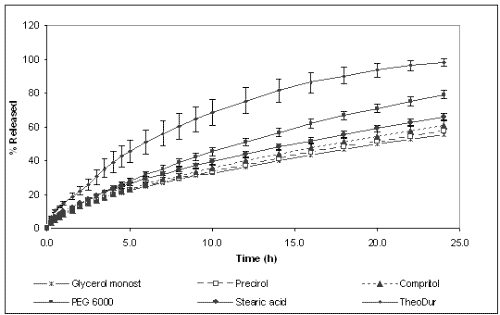
What are the dissolution requirements for divalproex sodium ER at 3, 9, 12 and 24 hours (500 mg and 250 mg doses)?
- 3 hours: 10%–30%
- 9 hours: 35%–55% (500 mg) / 35%–60% (250 mg)
- 12 hours: 45%–70% (500 mg) / 45%–75% (250 mg)
- 24 hours: NLT 75%
What in vitro dissolution procedure is specified for divalproex sodium ER tablet testing?
- Initial stage: 45 minutes in acid stage medium (0.1 N hydrochloric acid)
- Second stage: replace acid medium with buffer stage medium (pH 5.5 phosphate/SDS/NaOH)
- 'NLT' means 'Not less than'
What routine microbiological monitoring targets are mentioned for nonsterile environments?
- Total count of viable aerobic microorganisms
- Total combined molds and yeasts
Name specified objectionable microorganisms listed for testing in USP <62> for nonsterile products.
- Staphylococcus aureus
- Pseudomonas aeruginosa
- Escherichia coli
- Salmonella enterica (Typhimurium or Abony)
- Candida albicans
- Clostridium sporogenes
What is done when microorganisms are detected in pharmaceutical materials or products?
They typically undergo characterization, which may include identification and strain typing as appropriate.
Which specified microorganisms are tested for in nonsterile pharmaceutical products?
- Staphylococcus aureus
- Pseudomonas aeruginosa
- Escherichia coli
- Salmonella enterica (serovar Typhimurium or serovar Abony)
- Candida albicans
- Clostridium sporogenes
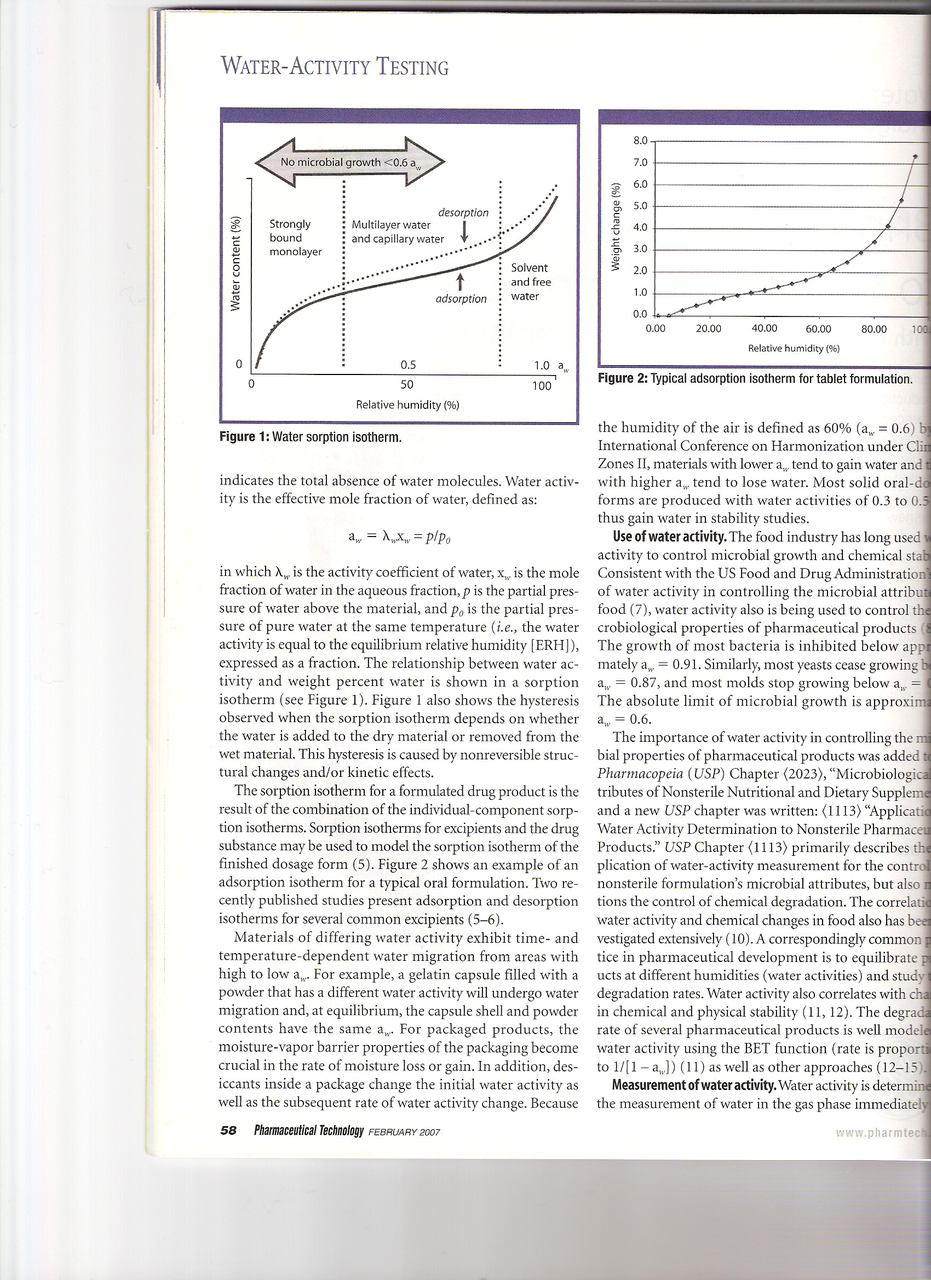
What is water activity defined as?
- Effective mole fraction of water
What is the approximate absolute water activity limit for microbial growth?
- Approximately 0.6
What three factors determine human perception of color?
- Spectral energy of the illumination
- Object characteristics
- Visual sensitivity
What is the CIE 1931 contribution to colorimetry and which tristimulus values does it define?
- CIE 1931 standardizes color specification
- Tristimulus values: X, Y, Z
What are the microbial limits and specified organism requirement for aqueous and nonaqueous preparations for oral use?
- Nonaqueous oral: TAMC \(10^{3}\); TYMC \(10^{2}\); Absence of Escherichia coli (1 g or 1 mL)
- Aqueous oral: TAMC \(10^{2}\); TYMC \(10^{1}\); Absence of Escherichia coli (1 g or 1 mL)
What are the microbial limits and specified organism requirements for oromucosal, gingival, cutaneous, and nasal preparations?
- Oromucosal/gingival: TAMC \(10^{2}\); TYMC \(10^{1}\); Absence of Staphylococcus aureus (1 g or 1 mL) and Pseudomonas aeruginosa (1 g or 1 mL)
- Cutaneous/nasal: TAMC \(10^{2}\); TYMC \(10^{1}\); Absence of Staphylococcus aureus (1 g or 1 mL)
What are the permitted microbial limits for auricular, vaginal, transdermal patch, and inhalation routes?
- Total Aerobic Microbial Count: \(10^{2}\) cfu/g or cfu/mL
- Total Combined Yeasts/Molds Count: \(10^{1}\) cfu/g or cfu/mL
Which specified microorganisms must be absent in 1 g or 1 mL for inhalation preparations?
- Staphylococcus aureus
- Pseudomonas aeruginosa
- Bile-tolerant Gram-negative bacteria
Which quality-control checks must be performed in the pharmacy for final dosage forms?
- Final dosage form weight verification: ±10% ideal
- Component weight verification: ±10% ideal
- Visual verification: appearance, uniformity, pharmaceutical elegance, defects
- Odor/flavor
Which analytical tests are indicated as outsourceable to a laboratory?
- HPLC
- GC
- Dissolution
Flashcards in this deck (72)
-
Name common tablet excipient categories used in tablet formulations.
- Binder
- Filler-Diluent
- Coating
- Disintegrant
- Lubricant / Glidant
- Solubilizer
excipients tablets -
What are three standard physical tests used to evaluate tablets?
- Friability
- Hardness
- Disintegration
evaluation quality -
What is a tablet in pharmaceutics?
- A mixture of active substances and excipients, usually in powder form, pressed or compacted into a solid.
tablets definition -
What proportion of prescriptions are solid dosage forms, and what proportion of those are compressed tablets?
- About two-thirds of all prescriptions are dispensed as solid dosage forms
- Half of these solid dosage forms are compressed tablets
pharmaceutics tablets -
What are the two basic physical types of tablets?
- Molded
- Compressed
tablets types -
Name common tablet formulations, coatings, or release forms.
- Immediate release
- Multiple compressed
- Film coated
- Gelatin coated
- Enteric coated
- Sugar coated
- Buccal/Sublingual
- Chewable
- Effervescent
- Lozenge
- Melt Extrusion
- Delayed/Extended/Controlled release
formulations coatings release -
What is an excipient in a tablet formulation?
- Excipient: 'A largely inert substance that is added to a drug formulation to improve administration or absorption.' (FDA: pharmaceutical necessity)
excipients pharmaceutics -
Name major tablet excipient types and their primary function.
- Binder: forms granules and improves tablet compaction
- Disintegrant: speeds disintegration and dissolution
- Lubricant: reduces adhesion to tooling
- Filler (Diluent): increases volume
- Glidant: improves powder flow
- Coating: protects from moisture; can control dissolution
- Solubilizer: improves drug solubility
excipients functions -
Name the main tablet routes of administration listed.
- Oral
- Sublingual
- Buccal
- Vaginal
- Rectal
pharmacology routes -
What are the main sequential steps of tablet manufacture?
- Dispensing (weighing and measuring)
- Size reduction
- Blending and mixing
- Granulation (wet or dry) and dryin
- Compression and Tablet Dedusting
- Coating if applicable
- Packaging
manufacturing tablets -
After granulation (wet or dry) and dryin, what is the next tablet manufacturing step?
- Compression and Tablet Dedusting
compression tablets -
What tablet manufacturing process is indicated by the heading in the figure?
- Dry granulation
granulation manufacturing -
What are the key requirements for direct compression of a tablet powder blend?
- Tableting without prior granulation
- API sensitive to heat/moisture: yes
- Requires appropriate compressibility, good flowability, and stable homogeneity (no demixing)
- Suitable powder blend achievable via excipient selection
granulation direct_compression -
How do wet granulation and dry granulation differ regarding API sensitivity and excipient selection?
- Wet granulation: API not sensitive to heat/moisture; suitable powder blend through excipient selection not required
- Dry granulation: API sensitive to heat/moisture; suitable powder blend achievable via excipient selection
granulation wet_granulation dry_granulation -
What are the main advantages of direct compression for tablet manufacturing?
- Continuous manufacturing (CM) suitable
- Highly efficient process
- Reduced strain on API (suitable for sensitive APIs)
- Less time- and resource-intensive
- Reduced number of process steps
- Solvent-free
granulation directcompression manufacturing -
How do dry and wet granulation differ in methods and key benefits?
- Dry granulation: CM suitable; solvent-free
- Wet granulation: Strong binding; improves compressibility; broad application range; methods include high shear (HS), twin screw (TS), fluid bed (FB); HS and FB widely established in large-scale manufacturing; CM suitable (TS, FB)
granulation drygranulation wetgranulation -
What is a primary disadvantage of using direct compression (DC) or dry granulation for tablet manufacture?
- May require DC grades of excipients, which can increase raw material prices
granulation cost -
What are the main disadvantages of wet granulation listed for tablet manufacture?
- Use of organic solvents
- High equipment footprint and operating costs due to mandatory drying
- Residual solvent risk
granulation wet -
Which flow properties are evaluated for pharmaceutical powders and granules?
- Angle of repose
- Bulk density
- Tapped density
- Carr's compressibility index
- Hausner ratios
pharmaceutics flow -
Name three main parts visible in the tablet press mechanism.
- Top punch
- Bottom punch
- Powder
tablet compression mechanism -
Why do tablets larger than 800 mg present a problem?
- Tablets larger than 800 mg are increasingly difficult to swallow
tablets swallowability -
What content-uniformity challenge arises with low API loading in tablets?
- Content uniformity becomes challenging when the API is less than approximately 5% of the tablet
tablets formulation -
What does the term 'depth of bisect' refer to in tablet bisecting?
Splitting
tablets bisect -
Name a tablet attribute listed as relevant to tablet bisect.
- Tablet size
tablets size -
What are the United States Pharmacopoeia (USP) requirements for oral drug products?
- Description (appearance)
- Identification
- Strength (assay)
- Impurities (organic, inorganic, residual solvents)
usp quality -
Which specific USP evaluation tests are listed for tablets?
- Dissolution <711> & <724>
- Volatile content (Loss on drying) <731>
- Disintegration <701>
- Tablet friability <1216>
- Breaking force <1217>
- Uniformity <905>
tablets tests -
What appearance features are required or evaluated for pharmaceutical tablets?
- Printed/embossed characters required by FDA
- Checked for discoloration, mottling, specks, chips, cracks
appearance quality -
What are key considerations about tablet odor during analysis?
- USP 23/NF 18 discusses taste & odor
- Odor may aid identification of causative agent
- Analyst safety is a concern with potent/volatile drugs
odor safety -
What are common tablet defects listed in the notes?
- Picking & sticking
- Capping & lamination
- Orange peel
- Erosion
- Roughness
- Bridging
pharmacy tablet_defects -
Match each tablet defect to its stated cause.
- Picking & sticking: occurs during compression
- Capping & lamination: excessive compression force
- Orange peel / Roughness: excessive drying during film coating
- Erosion: soft tablets
- Bridging: insufficient flow during film coating
pharmacy causes -
What is the current USP <905> weight variation threshold for applying the test?
Applied when the active is 25 mg or more and comprises 25% or more by weight of the dosage form.
usp905 weightvariation -
What sample size and procedure does USP <905> specify for weight variation testing?
Select not less than 30 dosage units; weigh 10 tablets and use assay results to calculate active content assuming homogeneous distribution.
usp905 sampling -
What is the difference between weight uniformity and content uniformity for tablets?
- Weight uniformity: assay individual tablet weight
- Content uniformity: assay quantity of drug in a single dosage unit
quality uniformity -
What was the overall percentage of half-tablets that fell outside the proxy USP specification for drug content in the tablet-splitting study?
- 23.9% of 180 half-tablets differed from sample mean by a percentage outside the proxy USP specification
tablet_splitting statistics -
What are tablet thickness specifications typically based on?
- Set specifications based on development history
- Regulatory filing criteria not generally required
thickness specifications -
What are the main ramifications of tablet thickness variability?
- Weight and compressibility variability
- Altered disintegration/dissolution due to porosity changes
- Packaging issues, especially unit dose cavities and re-work for additional coating
thickness quality -
What is tablet friability and what commonly causes it?
- Resistance to abrasion of tablets
- Caused by manufacturing, transportation, and patient handling
pharmaceutics friability -
What is the formula for friability percentage and what do the variables mean?
- \(F (\%) = (W_o - W) \times 100\)
- W_o: original weight
- W: weight after the experiment
- Tablets are tumbled in a rotating drum during testing
pharmaceutics friability testing -
What is 'breaking force' for a solid tablet?
The resistance of a solid to local permanent deformation.
breaking-force definition -
What does the 'Diametral Compression Test' (crushing strength) cause and what testing limitation is noted?
- The compact fails in tension during the diametral compression test
- Early testing methods showed strain-rate dependence causing variability
- Not to be confused with shear failure
diametral-compression testing failure-modes -
What two subtopics are listed under 'Tablet Hardness'?
- Hardness vs. Pmax
- Uniformity of Void [Density] Distribution
tablet hardness -
What three image types accompany the 'Tablet Hardness' section?
- Line graph of tensile strength vs. an unspecified parameter
- Contour plots of void distribution for single and double ended compaction
- Close-up photo of a hardness tester with a dial indicator
tablet images -
What is the sequence of physical stages in the dissolution process of a solid oral dosage form?
- Tablet or capsule
- Granules or aggregates
- Fine particles
- Drug in solution
- Drug in blood, other fluids, and tissues
dissolution pharmaceutics -
What are the final compartments reached by the drug after dissolution from a solid dosage form?
- Drug in solution
- Drug in blood, other fluids, and tissues
dissolution pharmacokinetics -
What are the two simultaneous processes involved in tablet disintegration?
- Fluid penetration
- Particle separation
disintegration pharmaceutics -
List the key parameters of the basket-rack assembly used for disintegration testing.
- 10-mesh No. 23 (0.025-inch) wire cloth
- Temperature 35°C to 39°C
- 29 to 32 cycles per minute
- Six tablets, one per tube
disintegration testing -
What is the definition of disintegration for tablets?
Disintegration is the state in which any residue of the unit, except fragments of insoluble coating or capsule shell, remaining on the screen is a soft mass having no palpably firm core.
disintegration pharmaceutics -
What are the acceptable tablet disintegration times for common tablet types?
- Uncoated: 10–30 min
- Coated: up to 2 h
- Sublingual: ≤ 5 min
- Enteric coated: no disintegration in gastric fluid (1 h); disintegrate in intestinal fluid within specified time
disintegration tablets -
What is the primary aim of in vitro dissolution testing?
To provide a representative prediction of the product's in vivo bioavailability
dissolution pharmaceutics -
What are other key purposes of in vitro dissolution testing?
- Assess lot-to-lot quality
- Guide development of new formulations
- Formulate generics of branded products
- Ensure product quality after formulation or process changes
dissolution quality -
What are the four BCS categories and their solubility/permeability characteristics?
- I: High solubility and high permeability
- II: Low solubility and high permeability
- III: High solubility and low permeability
- IV: Low solubility and low permeability
bcs pharmacology -
What does the Biopharmaceutics Classification System (BCS) correlate and why?
BCS correlates combinations of a drug's solubility (high or low) and its intestinal permeability (high or low) as a possible basis for predicting the likelihood of achieving a successful in vivo-in vitro correlation (IVIVC).
bcs ivivc -
What is the Type 2 dissolution apparatus and which dosage forms is it used for?
- Paddle apparatus
- Orally disintegrating and chewable tablets, capsules, and suspensions
dissolution apparatus -
Which dissolution apparatus types are used for transdermal patches?
- Type 5: Paddle over disk
- Type 6: Rotating cylinder
- Type 7: Reciprocating holder (for non-disintegrating tablets and transdermal patches)
dissolution transdermal -
What are the two common USP dissolution apparatus types described and their primary agitation elements?
- Apparatus 1: rotating basket
- Apparatus 2: paddle
dissolution apparatus -
What are the standard dissolution test conditions for screen material, temperature, and rotation speed range?
- Screen: 40 mesh, type 316 SS
- Temperature: 37°C
- Rotation: 25–150 rpm
dissolution conditions -
What are the dissolution requirements for divalproex sodium ER at 3, 9, 12 and 24 hours (500 mg and 250 mg doses)?
- 3 hours: 10%–30%
- 9 hours: 35%–55% (500 mg) / 35%–60% (250 mg)
- 12 hours: 45%–70% (500 mg) / 45%–75% (250 mg)
- 24 hours: NLT 75%
dissolution pharmaceutics -
What in vitro dissolution procedure is specified for divalproex sodium ER tablet testing?
- Initial stage: 45 minutes in acid stage medium (0.1 N hydrochloric acid)
- Second stage: replace acid medium with buffer stage medium (pH 5.5 phosphate/SDS/NaOH)
- 'NLT' means 'Not less than'
dissolution testing -
What routine microbiological monitoring targets are mentioned for nonsterile environments?
- Total count of viable aerobic microorganisms
- Total combined molds and yeasts
microbiology monitoring -
Name specified objectionable microorganisms listed for testing in USP <62> for nonsterile products.
- Staphylococcus aureus
- Pseudomonas aeruginosa
- Escherichia coli
- Salmonella enterica (Typhimurium or Abony)
- Candida albicans
- Clostridium sporogenes
microbiology pathogens -
What is done when microorganisms are detected in pharmaceutical materials or products?
They typically undergo characterization, which may include identification and strain typing as appropriate.
microbiology characterization -
Which specified microorganisms are tested for in nonsterile pharmaceutical products?
- Staphylococcus aureus
- Pseudomonas aeruginosa
- Escherichia coli
- Salmonella enterica (serovar Typhimurium or serovar Abony)
- Candida albicans
- Clostridium sporogenes
microbiology testing -
What is water activity defined as?
- Effective mole fraction of water
wateractivity definition -
What is the approximate absolute water activity limit for microbial growth?
- Approximately 0.6
microbiology wateractivity -
What three factors determine human perception of color?
- Spectral energy of the illumination
- Object characteristics
- Visual sensitivity
color perception -
What is the CIE 1931 contribution to colorimetry and which tristimulus values does it define?
- CIE 1931 standardizes color specification
- Tristimulus values: X, Y, Z
cie colorimetry -
What are the microbial limits and specified organism requirement for aqueous and nonaqueous preparations for oral use?
- Nonaqueous oral: TAMC \(10^{3}\); TYMC \(10^{2}\); Absence of Escherichia coli (1 g or 1 mL)
- Aqueous oral: TAMC \(10^{2}\); TYMC \(10^{1}\); Absence of Escherichia coli (1 g or 1 mL)
microbiology oral -
What are the microbial limits and specified organism requirements for oromucosal, gingival, cutaneous, and nasal preparations?
- Oromucosal/gingival: TAMC \(10^{2}\); TYMC \(10^{1}\); Absence of Staphylococcus aureus (1 g or 1 mL) and Pseudomonas aeruginosa (1 g or 1 mL)
- Cutaneous/nasal: TAMC \(10^{2}\); TYMC \(10^{1}\); Absence of Staphylococcus aureus (1 g or 1 mL)
microbiology topical -
What are the permitted microbial limits for auricular, vaginal, transdermal patch, and inhalation routes?
- Total Aerobic Microbial Count: \(10^{2}\) cfu/g or cfu/mL
- Total Combined Yeasts/Molds Count: \(10^{1}\) cfu/g or cfu/mL
microbiology limits -
Which specified microorganisms must be absent in 1 g or 1 mL for inhalation preparations?
- Staphylococcus aureus
- Pseudomonas aeruginosa
- Bile-tolerant Gram-negative bacteria
microbiology inhalation -
Which quality-control checks must be performed in the pharmacy for final dosage forms?
- Final dosage form weight verification: ±10% ideal
- Component weight verification: ±10% ideal
- Visual verification: appearance, uniformity, pharmaceutical elegance, defects
- Odor/flavor
qualitycontrol pharmacy -
Which analytical tests are indicated as outsourceable to a laboratory?
- HPLC
- GC
- Dissolution
analytical outsourcing
Tablet Manufacture & Evaluation — PHAR 5220 (concise study notes)
Definition & importance
- Tablet: a solid dosage form of API(s) + excipients compressed or molded from powders.
- Widely used: ~two-thirds of prescriptions are solids; half of those are compressed tablets.
Advantages / Disadvantages (key points)
- Advantages: convenient, accurate dosing, stable, tastemasking, flexible release (immediate, sustained, enteric).
- Disadvantages: possible degradation/first-pass metabolism, GI interactions, swallowing difficulty, systemic side effects.
Types of tablets (major categories)
- Based on manufacture: molded, compressed (direct compression, dry granulation, wet granulation).
- By function/coating: immediate release, multiple/compressed, film/enteric/sugar coated, buccal/sublingual, chewable, effervescent, lozenge, extended/controlled release.
Core tablet composition — excipients & roles
- API (active pharmaceutical ingredient).
- Excipients (typical % ranges & function):
- Binder (4–6%): forms granules e.g., acacia, PVP, HPMC.
- Disintegrant (3–6%): promotes breakup, e.g., croscarmellose, crospovidone.
- Lubricant (0.25–1%): reduces tooling adhesion, e.g., magnesium stearate.
- Filler/diluent (5–80%): increases tablet bulk, e.g., lactose, microcrystalline cellulose.
- Glidant (<2%): improves powder flow, e.g., colloidal silicon dioxide.
-
Flavors, colorants, compression enhancers (e.g., microcrystalline cellulose).
-
Takeaway: choose excipients to balance flow, compressibility, disintegration, and stability.
Routes of administration (tablets)
- Oral, sublingual, buccal, vaginal, rectal — route affects onset, local vs systemic action.
Manufacture: main process steps
- Dispensing (weighing)
- Size reduction (milling)
- Blending/mixing
- Granulation (wet or dry) or direct compression
- Drying (if wet granulation)
- Compression (tablet press)
- Coating (optional)
- Packaging
Granulation methods — selection summary
- Direct compression (DC): simplest; solvent-free; needs good-flowing, compressible powders; suited to moisture/heat-sensitive APIs.
- Dry granulation: roller compaction; solvent-free; used when API sensitive to moisture/heat but requires equipment.
-
Wet granulation: uses binder solution; improves compressibility and blend uniformity; higher equipment and drying cost; risk of residual solvents.
-
Decision basis: API sensitivity to moisture/temperature, powder flow/compressibility, raw material variability, equipment availability.
Powder & granule flow properties (evaluation)
- Key tests: angle of repose, bulk density, tapped density, Carr's compressibility index, Hausner ratio.
- These predict fill uniformity and compressibility for tableting.
Tablet compression & tooling
- Tablet press fills dies with powder/granules and uses top and bottom punches to compress in stages (fill, pres-press, main compression, ejection).
- Control variables: fill depth, compression force, dwell time, punch/die condition.
Alt: Tablet hardness tester image
Tablet shape, size, and splitting
- Many shapes available; larger tablets (>~800 mg) harder to swallow.
- Scored tablets allow splitting but can cause content nonuniformity — splitting may produce halves outside USP proxies for content.
- Match tablet size/shape to dose and patient factors (e.g., geriatric swallowability).
Key evaluation tests & USP standards (overview)
- General quality attributes: appearance, identification, assay (strength), impurities, dissolution, disintegration, friability, breaking force, uniformity.
- USP references: e.g., dissolution <711>/<724>, disintegration <701>, friability <1216>, breaking force <1217>, uniformity of dosage units <905>.
Weight variation vs content uniformity
- Weight uniformity: measure tablet mass; used when formulation is homogeneous and API is a significant portion of tablet weight.
- Content uniformity: assay individual units for API amount; required when API is potent or low % of tablet weight.
- Note: Good blend homogeneity makes weight uniformity predictive of content uniformity; splitting undermines uniformity.
Thickness
- Set during development; affects weight, porosity, disintegration/dissolution, and packaging fit.
Friability
- Measures resistance to abrasion (manufacture, transport, handling).
-
Use a rotating drum; calculate percent weight loss after test as friability.
-
Formula:
where \(W_o\) is the initial weight and \(W\) is the weight after testing.
Breaking force / Hardness
- Breaking force (crushing strength): resistance to failure under diametral compression; relates to compaction conditions and formulation.
- Hardness is strain-rate dependent; use validated instruments and report method details (dwell time, geometry).
Disintegration
- Two simultaneous processes: fluid penetration (wicking) and particle separation (swelling/wetting).
- Typical USP conditions: basket-rack at 35–39°C, 29–32 cycles/min; six tablets tested.
- Typical acceptance times: uncoated ~10–30 min; coated up to 2 h; sublingual ≤5 min; enteric: no gastric disintegration (1 h) but disintegrates in intestinal fluid.
Alt: Wicking and swelling during disintegration
Dissolution — purpose & apparatus
- Purpose: in vitro predictor of in vivo bioavailability, development tool, batch quality control, and generics equivalence.
Alt: Dissolution process flowchart
- Common apparatus (USP):
- Type 1 — Basket (tablets, capsules)
- Type 2 — Paddle (disintegrating/chewable tablets, capsules)
- Type 3 — Reciprocating cylinder (tablets, granules)
- Type 4 — Flow-through cell (all forms)
- Types 5–7 — specialized (patches, non-disintegrating forms)
Alt: Dissolution apparatus (vessels and paddle/basket)
- Control variables: medium composition/pH, temperature (usually 37±0.5°C), agitation (rpm), sink conditions, and sample handling.
Biopharmaceutics Classification System (BCS) — quick table
| BCS Class | Solubility | Permeability |
|---|---|---|
| I | High | High |
| II | Low | High |
| III | High | Low |
| IV | Low | Low |
- BCS helps predict IVIVC and guide dissolution testing needs.
Microbiology & water activity
- Nonsterile products must meet microbial limits (USP <1111>, <62>) and absence of specified pathogens for certain routes.
- Maintain environmental control, sanitation, and monitoring; control water activity to inhibit microbial growth (microbial growth limit ~aw 0.6).
Alt: Factors influencing nonsterile product microbiology
Color & appearance
- Color depends on illumination, materials, and human perception (CIE tristimulus system used for objective color measures).
- Appearance, embossing/printing, and odor are part of acceptance criteria and identification.
Common tablet defects (what to watch for)
- Picking & sticking, capping & lamination, twinning, orange peel (coating), erosion, roughness, bridging — mostly linked to poor formulation, moisture control, or process settings.
Quality control & documentation (pharmacy-level vs lab)
- In pharmacy: weight verification (±10% target), component checks, visual inspection (uniformity, defects), odor/flavor check.
- Lab tests (outsourced): HPLC assay, GC, dissolution profiling, microbial testing.
Practical tips for exams and labs
- Know excipient purpose and typical % ranges.
- Be able to choose a granulation method based on API sensitivity and powder properties.
- Remember friability formula and USP tests/durations for disintegration/dissolution basics.
- When asked about QC, separate in-house checks (visual, weight) from lab assays (assay, dissolution, impurities).
References for deeper study: Ansel’s Pharmaceutical Dosage Forms (chapters on tablets), USP compendia sections cited above.