In children over the age of 6 weeks, the vaccine that prevents invasive H. influenzae infections, including meningitis, is _______. This is crucial for vaccination in children who attend daycare.
For a 1-year-old boy with fever, vomiting, and neck stiffness, the clinical presentation is most consistent with meningitis due to _______. This highlights the importance of Hib vaccination.
Children adopted from other countries should have their vaccination status confirmed and receive _______ as indicated based on their current health status.
The recommended vaccine series for Haemophilus influenzae type b begins as early as _______ of age, with a booster between _______.
In cases of suspected meningitis in unvaccinated children, always consider _______ as a potential cause due to the outbreak risk in daycare settings.
Among the vaccines listed, which vaccine is most critical to prevent meningitis in children? The answer is _______.
In patients with _______, there is an increased risk of infection with _______ due to impaired immune responses.
A patient presenting with a negative PPD skin test despite having _______ infection likely suffers from _______.
Severe combined immunodeficiency syndrome (SCID) is characterized by a near-complete deficiency of _______ and increases susceptibility to infections.
The absence of HLA-DR molecules on lymphocytes as seen in _______ leads to ineffective T lymphocyte responses.
Infection with _______, Pneumocystis jiroveci, and Cryptococcus species are indicative of _______.
Failure to thrive and recurrent infections in children can suggest impaired _______ as a significant issue.
To rule out _______, clinicians should consider underlying genetic or acquired immunodeficiency causes, such as _______.
In patients with newly diagnosed _______, it is recommended to receive the yearly _______ along with both _______.
Patients who are not immune to _______, as indicated by a negative hepatitis B surface antibody, should receive a series of _______.
In patients with CD4 counts less than _______, prophylaxis against _______ is necessary, but only if antibodies are _______.
Prophylaxis for _______ is only indicated in patients with CD4 counts less than _______.
The best pharmacotherapy during the next year for an asymptomatic 27-year-old man with HIV is vaccinations including _______, _______, and _______.
In managing a sickle cell crisis with an oxygen saturation of _______, the best next step is to provide _______.
Patients with sickle cell disease often develop pain due to _______ across the body. Pain management should include both _______ and _______.
Aggressive management of pain in sickle cell crises involves administering fluids and analgesics to counteract triggers, such as _______, _______, or _______.
Recognizing decreased oxygen saturation in sickle cell patients is crucial, as it can lead to complications such as _______.
The administration of _______ is appropriate for patients with frequent pain crises but is not effective in the _______.
If a sickle cell patient shows signs of pain or crises (e.g., abdominal pain), ensure to check for signs of _______ and manage accordingly.
Despite the presence of symptoms, intravenous _______ is not indicated unless specific concerns for _______ or _______ arise.
In patients with sickle cell disease, administering intravenous _______ is not necessary unless there are signs of _______ or bacterial pneumonia.
In cases of severe abdominal pain related to sickle cell crises, typical presentations include diffuse pain in the _______ and _______.
A patient with sickle cell disease may exhibit a hemoglobin concentration of _______ and a leukocyte count of _______ during a pain crisis.
In the case of a 62-year-old man with neurologic symptoms and a history of type 2 diabetes, which medication is most likely worsening his condition? The options are: - _______ - _______ - _______ - _______ - _______. Correct answer: _______.
Metoclopramide is a _______ that can cause parkinsonism. This condition manifests with: - _______ - _______ - _______ - _______.
When managing medication-induced parkinsonism, the first step is to _______. If this is not feasible, consider adding _______, such as _______.
D2 antagonism in the basal ganglia can lead to symptoms like _______, _______, and _______.
In a clinical scenario involving a patient with shuffling gait and decreased arm swing, consider whether medications like _______ are contributing to symptoms of _______.
For a patient on multiple medications, awareness of which drugs can affect _______ is crucial to prevent worsening of neurologic conditions.
In patients with _______, annual brain MRI is recommended to monitor for the development of _______ and the growth of _______.
A 13-year-old girl diagnosed with _______ should have an annual brain MRI starting at age _______ due to the high incidence of _______.
Patients with neurofibromatosis type 2 are typically screened for _______, _______, _______, and _______.
Annual screenings for NF2 do NOT include _______ and _______ as part of the regular protocol.
In neurofibromatosis type 2, a _______ is warranted but does not need to occur _______.
The gene associated with neurofibromatosis type 2 is located on chromosome _______ and encodes the tumor suppressor _______.
In cases of _______, the most appropriate next step in management for a child presenting with low-grade fever, sore throat, and oral ulcers is _______.
HFMD is caused by _______, which is transmitted primarily through _______ routes.
The symptoms of HFMD typically include painful oral ulcers, _______ on the palms and soles, and a _______.
In children with HFMD, hospitalization is necessary if _______ or _______ complications develop or if the child is unable to maintain adequate _______.
Acyclovir therapy is not effective for coxsackievirus infections due to the lack of the enzyme _______ required to activate it.
Throat culture is unnecessary in HFMD as it is primarily a _______.
In a case of pediatric shoulder pain with an x-ray showing bony disorganization, the most appropriate next step in management is to perform an _______ of the left upper extremity.
Osteosarcoma, the most common primary osseous malignancy in children, typically presents with bone pain and may show _______ on histology.
In a pediatric patient, pain and swelling around the bone, especially in long bones, can indicate _______.
Corticosteroid therapy should not be used as a first step in the management of osteosarcoma without confirming the _______.
Electromyography is indicated in cases of suspected _______ but not in cases of suspected malignancy like osteosarcoma.
Arteriography should be considered in cases where there is suspicion of _______ or other vascular issues, not in suspected osteosarcoma.
Osteosarcoma is the most common primary osseous malignancy in children characterized by _______. Its radiological appearance includes _______ and _______ visible on x-ray.
For osteosarcoma, the most appropriate imaging to further delineate the lesion is _______.
The typical treatment approach for osteosarcoma generally involves a _______ strategy.
An 8-year-old boy presents with pain in his left shoulder and arm. The most appropriate next step in management includes performing an _______ of the left upper extremity. 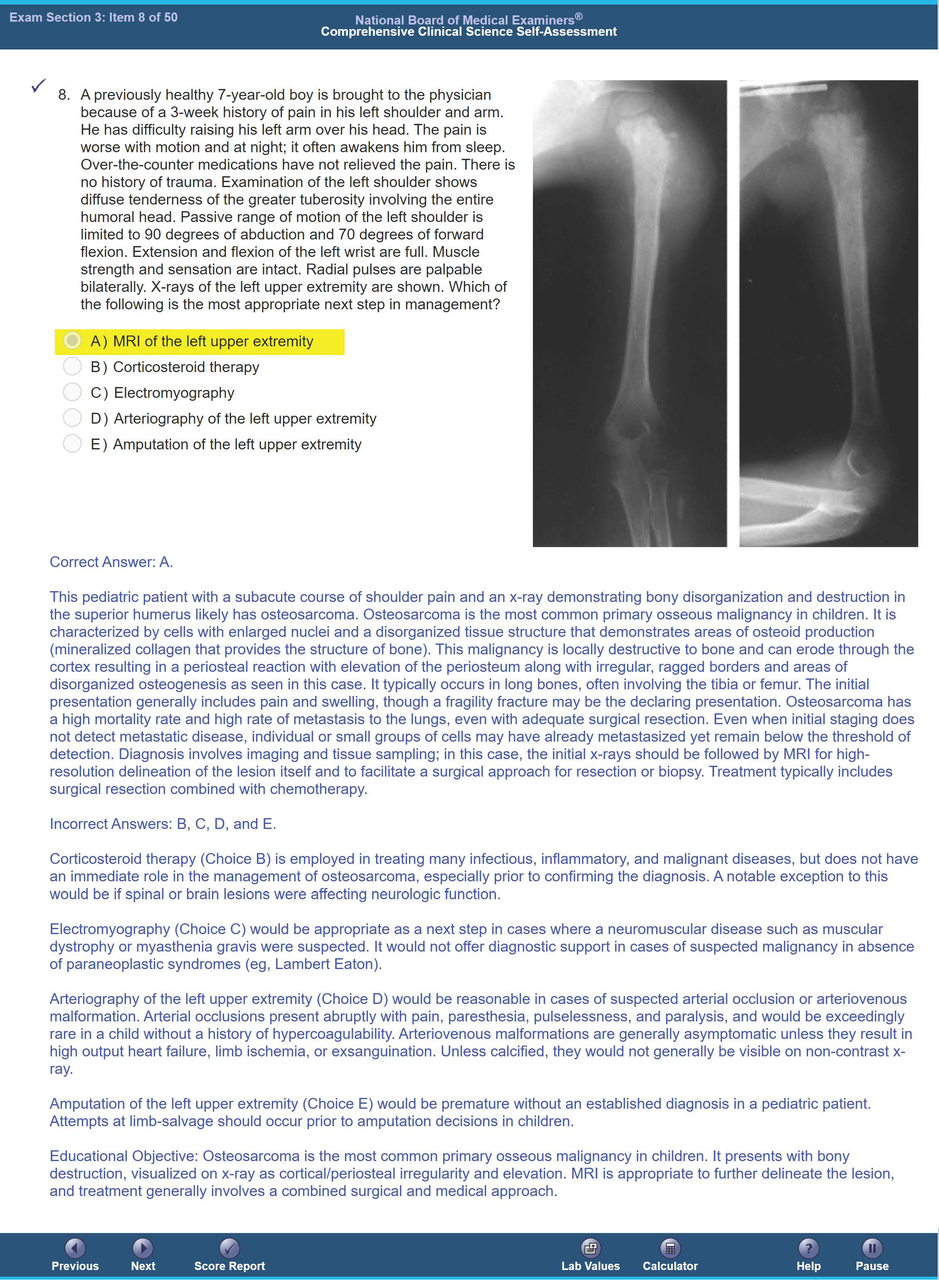
Chondromalacia patella presents with symptoms of knee pain and instability, especially when the knee is held in _______ such as ascending stairs. Diagnosis is primarily _______, though MRI can be used in unclear cases.
For a diagnosis of _______, the pain is commonly exacerbated by _______ and sitting with the knee in flexion. Treatment typically involves _______ methods like rest and physical therapy.
When evaluating knee pain in older adults, particularly in those who are _______, consider chondromalacia patella as a common diagnosis, especially with a patient's history of _______.
In cases of knee pain, the absence of _______ during examination may support a diagnosis of chondromalacia patella, as opposed to injuries like meniscus tears, which usually present with _______.
In the context of knee injuries, the _______ is typically associated with acute injuries and often comes with _______ following a sudden load on the knee.
For a patient experiencing shooting pain and paresthesia in the distribution of a lumbar nerve root, consider _______; this differs from the symptoms of _______ which does not involve these symptoms.
Medial meniscus tears often present with _______ pain and _______, distinguishing them from conditions like chondromalacia patella, which is characterized by _______ pain.
Prepatellar bursitis typically causes _______ and _______ over the anterior knee, presenting differently compared to chondromalacia patella which shows _______ on the patella.
In cases of _______ inflammation, what condition commonly triggers it? Think of overuse, especially in _______ or _______.
The main treatments for _______ inflammation include _______, _______, and _______.
What important movement does the _______ normally allow as it glides over the surface of the _______?
A common clinical finding in patients with _______ issues is a _______ in the knee. What age group might be particularly affected by this?
In the management of knee pain, if an MRI reveals lesions, one must consider whether the root cause is linked to _______, particularly in _______.
On a multiple-choice question concerning a 62-year-old woman with severe knee pain, what should be included in the differential for conditions like _______?
When evaluating knee injuries, one must be aware of associated conditions such as _______ and _______.
What is a common treatment modality for _______ resulting from peripatellar cartilage inflammation?
In athletes, particularly again during _______, peripatellar cartilage inflammation can occur. Explore treatment options including _______.
In a patient with a history of _______ presenting with fever and hypotension, the most appropriate initial antibiotic therapy for suspected _______ includes coverage for _______.
Fever, leukocytosis, and hypotension in a patient with a prior _______ raises concern for septic shock and possible _______.
Intravenous _______ and _______ are preferred initial antibiotic treatments in patients presenting with high-risk factors, including history of _______ and splenectomy.
In the context of septic shock, delaying antibiotic therapy can lead to increased morbidity and mortality, making it crucial to start early, especially in patients with symptoms like _______, _______, and _______.
Normal results in a _______ and chest x-ray can accompany cases of suspected _______, highlighting the importance of recognizing systemic infection signs, like _______.
For a patient with acute symptoms suggestive of infection and a history of high-risk behaviors, initial therapy should cover for both _______ and _______.
The clinical scenario of a febrile patient with recent _______ should prompt consideration of conditions such as _______ and appropriate antibiotic coverage.
In cases of _______ and _______, septic shock can occur, especially in patients with a history of _______ or _______.
The imperative treatment for patients with septic shock is early use of _______ that should cover _______.
In a clinical scenario with a 27-year-old woman presenting with fever and cough, the best next step in antibiotic therapy is to administer _______ and _______.
In cases of _______, the most appropriate initial treatment is _______ to quickly correct the arrhythmia.
A patient with an irregular, narrow-complex tachyarrhythmia lacking P-waves is likely experiencing _______. In unstable cases, cardioversion is preferred over _______ drugs like amiodarone, diltiazem, or labetalol.
For a patient presenting with hypotension and a heart rate over 100 beats/minute due to _______, it is critical to administer _______ as the best next step.
Administration of diltiazem or labetalol is recommended for _______ experiencing atrial fibrillation with rapid ventricular response. However, they are not suitable for unstable cases.
Carotid sinus massage is effective in slowing down _______ but does NOT have a role in treating atrial fibrillation with rapid ventricular response.
In a patient presenting with acute chest pain and new _______, cardiac catheterization is the most appropriate next step to rule out _______.
Patients with _______ present with new onset chest pain and _______ but normal cardiac biomarkers.
When presented with anterior chest pain that is refractory to nitroglycerin, one should be alerted to the possibility of _______.
Despite normal serum troponin I and myoglobin concentrations, a clinician should consider _______ of cardiac biomarkers in acute coronary syndrome.
Patients diagnosed with _______ require treatment with full-dose anticoagulation and _______ followed by cardiac catheterization.
An ECG showing _______ raises concern for ischemic heart disease in patients with chest pain.
Cardiac stress testing methods, like _______, are typically not first-line in acute coronary syndrome until ruled out.
Patients with suspected acute coronary syndrome should undergo _______ rather than non-invasive imaging initially.
In assessing an 82-year-old woman with shortness of breath, an appropriate initial pharmacotherapy after administering furosemide is _______.
The 2/6 holosystolic murmur best heard at the apex in the left lateral decubitus position is indicative of _______.
In the case of left-sided congestive heart failure, typical symptoms include _______, _______, and _______.
Physical examination findings of _______, _______, and _______ are associated with heart failure.
ACE inhibitors like _______ are first-line therapy in congestive heart failure as they are known to decrease _______.
Digoxin is used for symptomatic relief in systolic heart failure but does not decrease _______.
In advanced heart failure scenarios, medications like dobutamine and milrinone are used only in cases of _______.
Nifedipine, as a calcium-channel blocker, primarily treats _______ and is not indicated for heart failure management.
Nitroprusside is utilized for _______ but is not indicated in the management of chronic heart failure.
In a case of a patient with a nonproductive cough worsening at night and episodes of vomiting, the most appropriate next step in diagnosis for suspected _______ is a _______.
Pertussis presents in three stages: the initial _______, the _______, and the _______.
The paroxysmal stage of _______ can cause severe complications such as _______, _______, and _______.
Pertussis toxin leads to impaired recruitment of _______ and affects the production of _______.
The diagnosis of _______ is confirmed by polymerase chain reaction (PCR) amplification of _______ DNA.
Vaccination against _______ provides protection that wanes over time, necessitating booster doses every _______.
A negative PPD test indicates no previous infection with _______; however, pertussis presents differently than chronic conditions such as _______.
In order to diagnose _______, the most appropriate test is the _______ test.
The primary clinical symptom of _______ is severe _______ which may lead to _______.
Symptoms of _______ can be accompanied by _______, _______, or _______.
Treatment for _______ includes antibiotics, specifically _______, and supportive care.
An X-ray of the chest may show _______, but it is less specific than _______ for diagnosing _______.
In schools in the United States, exposure to _______ is commonly seen among _______.
In the management of asthma exacerbations, the most appropriate next step for a patient with episodes of coughing, wheezing, and chest tightness is _______.
Asthma is characterized by _______ of the bronchi due to hyperreactivity and airway _______.
Short-acting inhaled ẞ-adrenergic agonists, such as _______, are first-line therapy for the management of _______.
For patients with intermittent asthma, allergy skin testing is not typically required unless there is concern for a _______.
Chest x-ray is typically _______ in the setting of asthma and is primarily useful for the diagnosis of _______.
_______ may be used for the diagnosis of exercise-induced asthma, which is not indicated in a young, healthy patient at low risk for coronary artery disease.
Oral antibiotics like _______ are not beneficial in asthma exacerbations unless there is an _______.
Increased diffusion capacity for carbon monoxide in asthma patients may occur due to _______ and lung hyperinflation.
The educational objective regarding asthma management emphasizes that asthma exacerbations should be managed by maintaining oxygenation and rapidly reversing _______.
In a drowning case involving a child, the most crucial indicator of a good prognosis is _______ in the intensive care unit.
Drowning can lead to hypoxemia, which may cause _______ and subsequent cerebral edema.
Prolonged hypoxia from drowning increases the risk of end organ dysfunction, including _______ and cardiac arrhythmias.
A child with a return of spontaneous circulation and pulse greater than 100/min en route does not guarantee a _______ in drowning.
Hypoxemia consequences include aspiration, respiratory distress, and _______.
Hypoxic management in acute respiratory distress is essential to prevent _______.
The appearance of _______ on chest imaging may result from fluid exposure in drowning incidents.
Management of hypoxia in drowning cases must include appropriate _______ and ventilation strategies.
In cases of _______, the diagnosis is confirmed by measuring the _______ of ascitic fluid through a _______.
A total leukocyte count of greater than _______ or more than _______ in ascitic fluid is generally diagnostic of _______.
In patients with cirrhosis, _______ commonly occurs due to translocated enteric flora, often including _______.
Despite abdominal tenderness, the best next step in a suspected case of _______ is obtaining a _______ through paracentesis.
When evaluating ascitic fluid for infection, Gram stain is not sensitive, but common pathogens include _______, _______, and _______.
In patients with _______ and _______, the clinical presentation of _______ often includes fever and diffuse abdominal pain.
When treating _______, first-line therapy includes antibiotics with coverage for _______.
In a diagnosis of neutrophilia, a cell count greater than _______ indicates potential concern.
For neutrophils, any count of _______ or greater represents a condition needing further assessment.
When assessing abdominal conditions, a measurement of cell count and differential of abdominal fluid can confirm a diagnosis; consider using the following tests: - _______ - _______ - _______.
In a clinical scenario of a 42-year-old man found unconscious, which test is essential for diagnosis confirmation? Options include: - _______ - _______.
“Management of respiratory distress in neonates” represents an essential core concept in pediatrics related to increased neutrophil counts and potential infections, such as when observing >_______.
For a patient diagnosed with _______, the most appropriate initial management step is _______ due to its anti-inflammatory effects. This condition is characterized by subacute or chronic bloody diarrhea, abdominal pain, and colonoscopic evidence of continuous mucosal inflammation.
In ulcerative colitis, the risk of developing _______ increases due to chronic inflammation of the colon. Therefore, regular surveillance is necessary.
If a patient with ulcerative colitis does not respond to _______, second-line treatments like _______ or _______ may be considered for management due to their severe disease indications.
In cases of ulcerative colitis, an examination may reveal abdominal _______, and laboratory tests may show elevated _______ indicating inflammation.
For patients with ulcerative colitis experiencing severe symptoms, options like _______ or _______ might be necessary for management to control inflammation.
The presence of _______ is important in ruling out other causes of bloody diarrhea in patients suspected of ulcerative colitis.
For a patient with ulcerative colitis, the best initial medical management is _______.
The primary mechanism of action of _______ is to reduce the production of _______ and _______.
Total parenteral nutrition is associated with risks including _______, _______, and _______.
In patients with sulfa allergies, _______ is typically well-tolerated compared to _______.
A key finding in ulcerative colitis may include chronic _______ and _______.
In the management of ulcerative colitis, it is crucial to know that Total parenteral nutrition should be avoided except when _______ is required.
Ulcerative colitis is characterized by findings during colonoscopy that may include ulcers and mucosal inflammation, contrasting with infections like _______.
The management for abdominal pain and bloody stools in a 26-year-old woman might involve considering _______ among other options.
For patients with a first-degree relative who had colon cancer, colorectal cancer screening should begin at age _______ or at age _______, whichever is earlier.
The United States Preventive Services Task Force (USPSTF) recommends routine colorectal cancer screening for average-risk patients starting at age _______ and continuing until age _______.
Colonoscopy remains the _______ for colorectal cancer screening because it allows for direct visualization and excision of polyps throughout the colon.
Screening for colon cancer using stool DNA tests is less _______ and _______ compared to colonoscopy and is also more costly.
In patients at average risk of colon cancer, the best next step for screening at age 47 is _______ for colonoscopy.
The recommended frequency for colorectal cancer screening for individuals at increased risk due to family history is every _______.
Flexible sigmoidoscopy is not preferable to colonoscopy because it only provides visualization of the _______.
For a patient aged 47 undergoing a routine health maintenance examination, the most appropriate recommendation for colon cancer screening is _______.
The recommended age to begin colon cancer screening for average-risk individuals is _______.
In the assessment of secondary hypertension, it is essential to evaluate for underlying conditions such as _______ and _______.
In managing respiratory distress in neonates, priority should be given to ensuring adequate _______.
Vaccine-preventable conditions in pediatrics include _______, _______, and _______.
Common causes of abdominal pain that must be assessed include _______ and _______.
The most likely diagnosis for a 72-year-old woman with a 3-day history of bright red rectal bleeding, left-sided lower abdominal cramps, and a history of diverticular disease is _______.
Patients with _______ typically present with acute abdominal pain and cramping associated with _______.
Ischemic colitis can occur due to _______ or _______.
To diagnose _______, angiographic evaluation is required to assess the _______ of the mesenteric arteries.
The treatment for _______ in ischemic colitis may include _______, _______, and/or _______.
In ischemic colitis, bowel necrosis or perforation may require _______ or _______.
Diverticulitis typically presents with left lower quadrant abdominal pain, fever, and tenderness due to _______ or inflammation of colonic diverticula.
Colon cancer is unlikely in a patient with a negative colonoscopy within the last _______.
Unlike mesenteric venous thrombosis, ischemic colitis typically presents _______ rather than subacutely.
Symptoms of _______ include constipation, abdominal bloating, and distension due to twisting of the sigmoid mesentery.
For the clinical scenario involving a 72-year-old woman with rectal bleeding and abdominal cramps, the best next step is to consider _______ as the most likely diagnosis.
Ischemic colitis refers to inadequate blood supply to the _______, which can lead to bowel wall _______, loss of immune barriers, and bowel _______.
Patients with ischemic colitis typically present with acute abdominal _______ and cramping associated with _______ if bowel necrosis has occurred.
A common presentation of ischemic colitis includes a patient who is a _______ with lower abdominal cramps and bright red rectal bleeding. What is the most likely diagnosis?
In a case of postoperative complications after cholecystectomy, the most appropriate next step in diagnosis when jaundice and abdominal pain are present is _______.
Following a laparoscopic cholecystectomy, symptoms such as fever, abdominal pain, and jaundice typically indicate _______ or _______.
Laboratory findings showing leukocytosis and elevated total bilirubin post-cholecystectomy suggest complications such as _______ or _______.
In conjunction with ERCP, it is indicated to utilize _______ to evaluate for fluid collections post-cholecystectomy.
Despite the presentation of abdominal pain and fever after cholecystectomy, an _______ is typically only considered after less invasive means are ruled out.
A HIDA scan is primarily used to diagnose _______, contradicting its application in biliary leaks where ERCP is preferred.
Post-cholecystectomy complications can manifest by day _______ with signs like fever, abdominal pain, and jaundice.
In a patient with acute interstitial nephritis (AIN) caused by medication, such as nafcillin, the most appropriate next step in management is to _______ nafcillin therapy.
Acute interstitial nephritis can be characterized by various findings, including increased creatinine and _______.
Common causes of acute interstitial nephritis (AIN) include hypersensitivity reactions to medications such as _______, _______, and _______.
Signs of acute interstitial nephritis may include _______, _______, and _______.
If a patient with diabetes mellitus experiences creatinine elevation after starting nafcillin, it is important to _______ the antibiotic to prevent further kidney damage.
In cases of acute kidney injury due to medications, the treatment usually involves _______ and _______.
The presence of _______ in blood tests can indicate acute interstitial nephritis when associated with increased serum creatinine.
A patient with acute interstitial nephritis may present with symptoms such as _______ and _______.
Increased serum creatinine concentration and eosinophilia in a patient suggest systemic involvement potentially due to _______ acute interstitial nephritis.
It is inappropriate to continue current medications like nafcillin in a patient showing signs of acute interstitial nephritis; it should be _______.
In a patient with _______, leakage of urine is typically associated with the overwhelming urge to void, often occurring when they step out of a car.
Urge incontinence is commonly associated with _______ or overactivity, leading to an urge to urinate followed by leakage.
When evaluating incontinence, it's crucial to rule out a _______ especially when symptoms are new in onset.
In women, _______ is triggered by an increase in intra-abdominal pressure, such as during sneezing or lifting.
The best treatment methods for _______ include pelvic floor strengthening, weight loss, and medications like _______.
Overflow incontinence can occur due to _______ resulting in urinary retention and a high post-void residual volume.
A _______ presents with painless urinary leakage from the bladder into the vagina, typically following pelvic surgery.
Urge incontinence symptoms, such as urgency and urinary leakage, can arise from neurological issues like _______ or spinal cord injuries.
In the case of a 32-year-old woman at 18 weeks' gestation with complications from Zika virus, the best next step in pharmacotherapy is _______. This is due to the absence of effective treatments for _______ (CZS).
Maternal Zika virus infection during pregnancy can result in _______ (CZS), characterized by notable abnormalities such as _______ and _______.
Zika virus (ZIKV) is predominantly spread by the _______ mosquito in endemic tropical climates such as _______ and _______.
Congenital Zika syndrome (CZS) is especially risky to the fetus during the _______ of pregnancy, with specific developmental abnormalities detectable by _______.
Despite maternal infection with ZIKV, there is currently _______ for the prevention or treatment of CZS.
Folic acid supplementation is beneficial for preventing _______, but it does not provide treatment for CZS resulting from ZIKV infection.
In overweight and obese patients with a family history of diabetes, undiagnosed _______ should be considered.
The most appropriate screening test for a pregnant woman with a BMI ≥25 kg/m² and a family history of diabetes at her first prenatal visit is the _______.
The glucose tolerance test is typically performed between 24 and 28 weeks' gestation but can be done earlier if there is _______.
Maternal glucose tolerance testing helps prevent complications such as _______ and _______ in pregnancy.
TSH measurement is not routinely recommended during pregnancy due to natural suppression caused by _______.
Quadruple screening for fetal abnormalities is not done until _______ gestation.
Serum herpes simplex antibody testing is unnecessary in a patient who has a _______.
Serum lipid studies are not recommended during pregnancy, especially when _______.
At the first prenatal visit for a pregnant woman with a history of _______, the recommended screening test is a _______.
Patients with a history of _______ should be screened for diabetes mellitus at their _______.
Both gestational and pregestational _______ can lead to significant maternal and fetal _______.
For a patient with a history of _______, it's crucial to conduct a _______ early in the prenatal care.
The most appropriate lab test for a woman at 12 weeks' gestation with previous gestational diabetes is a _______.
If a woman has a history of _______ or _______, she should be screened for glucose levels during her initial prenatal visit.
In the case of a 17-year-old patient experiencing severe right nipple pain during breast-feeding, the most appropriate recommendation is _______ to achieve a proper latch.
Nipple pain that begins in the first few days of breast-feeding is most commonly caused by _______.
If repositioning the newborn's mouth does not alleviate severe nipple pain, what is a possible next step? Consider _______ and possible pumping.
Despite nipple pain, _______ should continue first on the unaffected side until proper latching is achieved.
Acetaminophen therapy for nipple pain is an adjunct but does not address the underlying cause of _______.
The optimal source of nutrition for the growth and healthy development of infants is _______, not formula feeding.
A common mistake in breastfeeding management is switching to _______ prematurely when proper latching techniques have not been fully explored.
Engaging with _______ can help alleviate nipple pain and promote sustained breastfeeding.
For cracked or abraded nipples, treatment may include the application of _______ or the use of warm/cool compresses for relief.
Common causes of premature termination of breastfeeding include factors like _______ and difficulty achieving a proper latch.
In a young nulligravid woman with irregular menstrual cycles and heavy menses, _______ is the most likely cause. Anovulation can lead to irregular intervals of menstruation associated with heavy vaginal bleeding due to persistent endometrial development. Is cyclic progesterone therapy beneficial for managing anovulation?
Cyclic progesterone therapy acts to inhibit follicle-stimulating hormone (FSH) and luteinizing hormone (LH) and maintain the endometrial lining. This therapy is particularly important when managing _______. What happens when _______ is withdrawn?
The presence of glandular endometrial tissue in the myometrium generally indicates _______. It is less likely to occur in a young nulligravid patient, who usually presents with _______ and pelvic pain.
In patients with _______, severe menstrual bleeding is uncommon, despite presenting with abnormal bleeding and bruising. What findings would suggest this condition?
In patients with _______, or uterine fibroids, manifestations may include abnormal uterine bleeding and pelvic pain, often presenting in middle-aged women. Which findings would you expect upon examination?
Patients with _______ commonly present with mucocutaneous bleeding and prolonged bleeding post-trauma or surgery. However, it may not explain irregular menstruation—what else should be evaluated?
When evaluating a young nulligravid woman for heavy menstrual bleeding, one must consider _______ as a leading cause due to irregular hormone regulation. What additional menstrual characteristics should be assessed?
When _______ is withdrawn, menstruation occurs if the anovulation is caused by an abnormality or irregularity of the _______.
In young women, heavy vaginal bleeding can indicate _______ due to abnormalities in the _______.
If menstruation occurs after the withdrawal of progesterone, it can suggest that the cause of anovulation is related to the _______.
The following are potential causes of heavy menses: _______, _______, _______, _______, _______.
In patients with signs of _______, the most appropriate next step for evaluation is to measure the _______.
The symptoms of thyrotoxicosis include: - _______ - _______ - _______ - _______ - _______.
If TSH levels are low or undetectable and T4/T3 levels are increased, this indicates _______.
Citalopram and lorazepam are used for treating _______, but this patient's symptoms suggest a different cause.
Propranolol is used after a diagnosis of _______ to alleviate symptoms, not before diagnosis.
A low TSH with increased free T4 and/or T3 is consistent with _______ caused by conditions such as _______.
In iodine-sufficient areas, _______ is a common cause of hyperthyroidism.
To differentiate causes of thyrotoxicosis, a _______ can be helpful.
In the case of a 37-year-old man brought to the emergency department after scuba diving, the most likely diagnosis is _______.
Decompression sickness may present with symptoms such as _______ and _______ after rapid ascent.
Neurologic symptoms of decompression sickness can include _______, _______, and _______.
In managing decompression sickness, the best next step includes _______ and _______.
The mechanism of decompression sickness involves the release of _______ from saturated tissues during rapid ascent.
Unlike other conditions, hypothermia does not present with _______ or _______.
A 37-year-old diver shows signs of severe decompression sickness with _______ such as hypoxia and chest pain.
Sinus barotrauma presents with _______ and _______, not neurological symptoms.
For a patient experiencing neurological symptoms such as _______, _______, and _______ after scuba diving, the most likely diagnosis is _______.
In the management of decompression sickness, the best treatment is _______ and the use of a _______.
Key neurological symptoms of decompression sickness include _______, _______, and _______. What is the essential treatment protocol?
A patient develops _______ shortly after a scuba diving session, indicating a potential case of _______. What is the first-line treatment?
In patients with _______, annual _______ is essential for screening vascular complications such as aortic root dilation and dissection.
The most common ocular finding in _______ is _______, which typically presents as superotemporal lens dislocation.
Patients with _______ should also undergo annual _______ to prevent complications such as cataract and retinal detachment.
When assessing a patient with tall stature and _______ as part of Marfan syndrome evaluation, the most appropriate next step is _______.
Marfan syndrome is caused by mutations in the _______ gene, which encodes for _______ and is inherited in an _______ manner.
Clinical features of _______ include tall stature, high narrow palate, scoliosis, pectus excavatum, and _______ of joints.
Patients with _______ are at increased risk for vascular complications like _______ and should be monitored accordingly.
The attributable risk (AR) of cigarette smoking on the development of lung cancer is calculated as AR = (a/(a + b)) - (c/(c + d)). In this scenario, the AR is approximately _______.
In a study of cigarette smokers, the incidence of lung cancer among smokers is represented by 'a' and is calculated as _______ out of _______ participants.
For nonsmokers, the incidence of lung cancer is represented by 'c' and is calculated as _______ out of _______ participants.
Attributable risk (AR) measures the risk of developing disease that can be attributed to an exposure. Calculate AR using the formula: AR = (a/(a + b)) - (c/(c + d)). What is the AR for lung cancer in smokers?
Choice _______ (2.7%) represents the correct answer for the attributable risk of cigarette smoking on lung cancer. Other choices such as _______ (0.3%) and _______ (99.7%) involve incorrect mathematical assumptions.
The formula for calculating attributable risk (AR) is AR = _______ - _______. In the case of lung cancer from smoking, this results in an AR of _______.
In the context of diabetic retinopathy, a hemoglobin A1c greater than 15% shows _______ of 88%. What does this indicate?
Sensitivity can be calculated using the formula _______. Where TP is true positives and FN is false negatives.
A sensitivity of 88% in a test means that 88% of patients with the disease are correctly identified. Thus, the _______ is 12%.
For diabetic retinopathy, a hemoglobin A1c greater than 15% being present in 88% of patients signifies that a high _______ is useful for screening.
The false-positive rate for a test that determines hemoglobin A1c's reliability in predicting diabetic retinopathy cannot be evaluated without additional data, and thus is _______.
A negative result from a high sensitivity test indicates a very low likelihood that the _______ is present, making it valuable for ruling out conditions.
The likelihood that a positive test indicates a disease is referred to as the _______, which cannot be calculated without more data in this study.
To prevent loss of sight, the priority in diabetic retinopathy screening is to maximize _______, ensuring that true positive cases are identified.
In the case of diabetic retinopathy, a hemoglobin A1c greater than 15% identifying 88% of patients showcases its _______ in screening.
The _______ of this study highlights that sensitivity is key in preventing misdiagnosis in critical cases like diabetic retinopathy.
In a study comparing sedatives in children on mechanical ventilation, including children with _______ may invalidate the study results due to confounding variables.
Confounding variables influence both the _______ and dependent variables and must be evenly distributed to avoid false associations.
It is more appropriate to _______ patients with coma from the study design to ensure accurate results regarding sedation efficacy.
The etiology of respiratory failure is less impactful on sedative response unless accompanied by _______ pathology.
Sedative medications are generally dosed by weight in pediatric patients, making lack of _______ restriction unlikely to complicate study design.
Different types of mechanical ventilation, like _______ and _______, do not affect the patient response to sedation.
When designing studies, it is critical to account for _______ variables to prevent false conclusions.
When assessing the effectiveness of a new drug for bacterial meningitis, the primary consideration regarding the use of placebo is that it should not be used because _______ when an effective treatment is available.
In clinical trials for bacterial meningitis, using a placebo can lead to ethical issues because _______ and a delay in treatment could cause severe outcomes.
If an effective treatment for bacterial meningitis exists, it is recommended to compare the experimental drug to the _______ rather than a placebo.
The use of placebo in clinical trials is inappropriate in situations where _______ to the patient.
Delaying treatment for a patient with bacterial meningitis to use a placebo could lead to _______ or death, highlighting the need for effective treatments.
Ethical dilemmas arise in clinical trials when effective treatments are available for life-threatening conditions like _______.
Patients should not be assigned to receive placebo in trials for bacterial meningitis because such a practice is considered _______.
In a patient with Hodgkin lymphoma, laboratory studies often show increased _______ (LDH) activity, especially with supraclavicular lymphadenopathy and _______.
The presence of _______ on biopsy is a key indicator for diagnosing Hodgkin lymphoma.
Patients with Hodgkin lymphoma may present with a dominant lymph node mass in the _______, _______ region, or chest.
Increased serum levels of _______ (ESR) are frequently encountered in patients with Hodgkin lymphoma.
Despite symptoms like a lump in the neck, patients with Hodgkin lymphoma often do NOT show significant changes in erythrocyte count, which is usually _______.
Increased serum calcium concentrations are more common in solid tumor malignancies that metastasize to the bone, rather than in _______.
The standard approach for diagnosing Hodgkin lymphoma involves a core biopsy of an accessible lymph node or an _______ to preserve tissue architecture.
In a patient with symptoms of stimulant intoxication, the presence of _______ and excessive _______ can indicate a diagnosis of _______.
Substance-induced psychotic disorder is characterized by _______ or _______ that develop during or within a month of _______ or _______.
Stimulant drugs such as _______ or _______ commonly lead to psychotic symptoms due to increased _______ in the _______.
Signs of stimulant intoxication often include _______, _______, _______, and _______.
In patients with severe stimulant intoxication, coronary vasospasm may lead to _______, evidenced by _______ and _______ on an ECG.
Treatment of acute stimulant intoxication primarily involves _______ and may include _______ or _______ medication for agitation.
In cases of _______, patients often experience acute fear or anxiety and physical symptoms like heart palpitations, sweating, and shortness of breath. What diagnosis fits a patient with recurrent episodes without physical cause?
A 32-year-old woman experiencing panic attacks after a recent work reorganization most likely suffers from _______. What are common symptoms associated with these attacks?
A thorough medical history and examination are essential in ruling out medical causes before diagnosing _______. What key diagnostic step is often performed?
If physical examination and laboratory tests are normal after episodes of anxiety, the patient may be experiencing _______ rather than myocardial infarction. What vital signs should remain stable?
Despite other possible complications, normal serum cardiac enzymes suggest the patient does not have _______. What would exclude an unstable angina diagnosis?
For treatment of _______, what two main approaches are typically utilized?
Patients with _______ typically present with acute anxiety and sympathetic hyperactivity, possibly including symptoms such as _______ and _______.
Anxiety symptoms in hyperthyroidism are usually more _______ compared to the _______ course of panic disorder.
Panic attacks are characterized by acute fear or anxiety that peaks within _______ and are associated with symptoms like _______ and _______.
A panic disorder is defined by recurrent panic attacks that are unexpected and linked with worry about future attacks or avoidance of _______.
In suspecting panic disorder, be cautious of overlapping symptoms with conditions like _______ or _______.
The common symptoms associated with panic disorder include _______ and symptoms caused by _______.
For a presentation featuring palpitations, sweating, and shortness of breath, consider diagnoses such as _______ or _______.
In the case of a 42-year-old woman with depression post-sinusitis treatment, the most appropriate next step in management is to _______.
Medication-induced depressive disorder is characterized by a prominent decrease in mood associated with decreased interest in activities, beginning during or within _______ after use of a medication.
Prednisone can trigger depressive symptoms and is associated with _______.
Supportive group psychotherapy is _______ to address depressive disorder compared to citalopram, which is an effective SSRI.
In managing a depressive disorder caused by medication, the primary treatment may involve _______ and/or _______.
Adding clonazepam is unlikely to help address the depressive disorder because it is primarily used for _______.
Quetiapine is less effective than SSRIs like citalopram for treating depressive disorders and may cause _______.
In cases of medication-induced depressive disorder, increasing the dosage of the inciting medication, like prednisone, is _______.
Anchor: Subconjunctival hemorrhage. An otherwise healthy woman with a red left eye and 20/20 visual acuity likely has _______, which arises from the rupture of capillaries within the conjunctiva due to increased venous pressure. This condition typically resolves _______ over 1 to 2 weeks.
Anchor: Management for subconjunctival hemorrhage. The best next step for a patient with isolated _______ and no trauma is _______ rather than further immediate intervention.
Anchor: Indications for slit-lamp examination. A slit-lamp examination is appropriate when evaluating acute conditions involving the anterior segment of the eye, especially in cases of suspected _______ or foreign body sensation. It is NOT warranted in isolated subconjunctival hemorrhage without trauma.
Anchor: Investigation for ocular trauma. In cases of subconjunctival hemorrhage resulting from trauma, a _______ may be necessary to identify potential orbital wall fractures. However, in the absence of trauma, imaging is unnecessary.
Anchor: Unnecessary evaluations for subconjunctival hemorrhage. A complete blood count or tests for coagulation (e.g., prothrombin time) are _______ for evaluating isolated subconjunctival hemorrhage not associated with trauma.
Anchor: Topical treatments for subconjunctival hemorrhage. Topical therapies like _______ and _______ are inappropriate for treating isolated subconjunctival hemorrhage, which does not require specific treatment.
The best next step in diagnosing _______ is to perform _______ due to their association with increased serum cholesterol and triglyceride concentrations.
Xanthelasma palpebrarum typically presents as soft, yellowish plaques located on the _______ of the _______.
In the context of _______, the presence of chronic painless growths on the eyelids raises the suspicion for increased risk of _______.
If the clinician cannot distinguish between xanthelasma and similar lesions, a _______ may be obtained to confirm the diagnosis.
Xanthelasma is not typically associated with increased _______ such as those measured by the _______.
Measurement of serum thyroid-stimulating hormone concentration is indicated in cases of _______, characterized by symptoms such as proptosis and lid-lag.
In cases where systemic lupus erythematosus (SLE) is suspected, a serum _______ would be more appropriate than tests for xanthelasma.
If a patient shows a significantly increased risk for cardiovascular disease, it is critical to initiate treatment based on _______.
When assessing a patient presenting with enlarging, painless growths on the eyelids, consider potential diagnoses like _______ as part of your differential diagnosis.
Elevated _______ can indicate ongoing inflammation and should be part of your diagnostic evaluation.
In the case of suspected thyroid dysfunction, measuring serum _______ concentration is an essential next step.
For autoimmune disorders, testing for _______ is crucial in establishing diagnosis.
In evaluating joint pain, consider ordering a _______ assay to rule out rheumatoid arthritis.
According to clinical guidelines, treatment for suspected secondary hypertension should include a thorough assessment of the _______.
For infants presenting with respiratory distress, management should focus on providing _______ while identifying the underlying cause.
In the case of a 52-year-old man with necrotizing fasciitis, the most appropriate next step in management is _______.
A perineal abscess can lead to _______ if not treated promptly.
Signs of necrotizing fasciitis include _______, _______, and _______.
Risk factors for developing necrotizing fasciitis include _______, _______, and _______.
Regardless of imaging or cultures, the treatment for necrotizing fasciitis is immediate _______ and _______.
In patients with necrotizing fasciitis, CT scan of the pelvis may be helpful but is not _______ due to the clinical nature of the condition.
Necrotizing fasciitis is characterized by rapid expansion and requires _______ to prevent high morbidity and mortality.
The clinical features of necrotizing fasciitis include _______, _______, and _______.
Hyperbaric oxygen therapy can be an adjunct to treatment but does not replace the need for _______ in necrotizing fasciitis.
Patients presenting with _______, fever, and confusion may have necrotizing fasciitis, especially if they are diabetic.
In a 4-year-old boy with right hip pain and limp, the most appropriate next step in diagnosis is _______.
Transient synovitis of the hip often presents in children recovering from a viral infection with symptoms such as _______, _______, and _______.
The vital signs of a child with transient synovitis of the hip are generally _______.
In transient synovitis, increased markers of inflammation, such as _______, may be the only abnormal lab finding.
The treatment for transient synovitis of the hip is primarily _______ and _______.
When considering transient synovitis, it is crucial to exclude conditions such as _______, _______, and _______.
In cases where there is diagnostic uncertainty regarding hip symptoms in children, _______ may be performed to exclude _______.
In a case of a 4-year-old boy with increasing pain in his right leg, what is the most appropriate next step in diagnosis? Options: - _______ - Measurement of serum inflammatory markers - Serum rheumatoid factor assay - Technetium 99m bone scan - X-ray of the right knee. 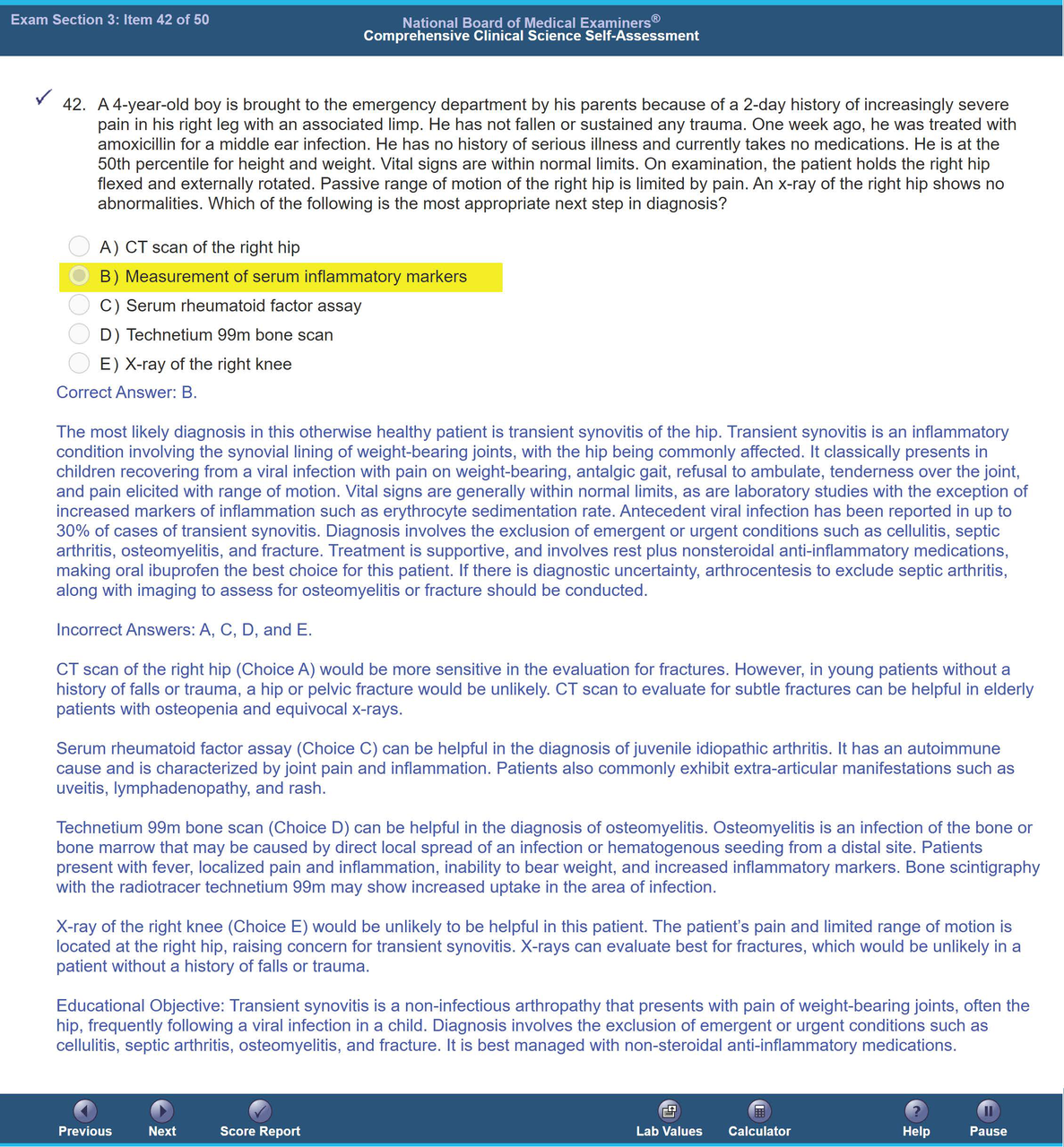
When assessing a febrile neonate <28 days, which condition should be prioritized for management due to high risk? - _______.
In managing respiratory distress in neonates, it is critical to remember that one of the first assessments should be for _______.
Common causes of abdominal pain in pediatrics include: - _______ - _______ - _______. Always consider these in differential diagnosis.
When diagnosing secondary hypertension in children, it is important to evaluate for underlying causes, such as _______ or _______.
For a patient presenting with secondary hypertension due to renal artery stenosis, the most appropriate next step in management is _______ to evaluate for stenosis.
In renal artery stenosis, low blood flow to the affected kidney leads to excessive production of _______, activating the renin-angiotensin-aldosterone system to cause hypertension.
The absence of lower extremity edema but the presence of absent dorsalis pedis and posterior tibialis pulses suggests significant vascular compromise, commonly seen in patients with _______.
In the context of hypertension, an abdominal systolic bruit may indicate _______ due to atherosclerosis or fibromuscular dysplasia.
Excess aldosterone production from conditions like adrenal adenoma can lead to secondary hypertension through mechanisms including _______.
Measurement of urine catecholamine concentration is indicated for suspected _______, a tumor that can cause secondary hypertension.
In cases of bilateral renal artery stenosis, ACE inhibitors should be avoided as they can lead to _______.
The most likely cause of hypertension in this patient is _______ diagnosed with _______.
A kidney biopsy is helpful in diagnosing _______ which may present with _______ and _______.
Renal artery stenosis causes secondary hypertension via abnormal activation of the _______.
Diagnosis of renal artery stenosis is established with _______ or _______.
The patient's signs of _______ and _______ may indicate a condition linked to the renal system.
Measurement of urine _______ is part of the diagnostic evaluation for _______.
The clinical decision regarding the most appropriate next step in management for poorly controlled hypertension involves considering _______ or _______.
In neonates, _______ can occur as a result of inadequate development of the pulmonary vascular bed leading to a fixed increase in pulmonary vascular resistance (PVR).
Cycling from high to low pulmonary vascular resistance (PVR) is critical in the transition after birth. This is often impaired by conditions like _______.
If a newborn presents with respiratory distress, a loud _______ during examination may suggest a complication like pulmonary hypertension rather than congenital malformations.
_______ can lead to impaired oxygenation by preventing the normal decrease in pulmonary vascular resistance post-delivery.
In newborns, a chest x-ray showing normal cardiac silhouette but respiratory distress could indicate possible _______ has been ruled out.
When assessing a septic neonate, the first step should always include ensuring adequate _______ and support, especially after intubation.
The assessment of respiratory distress in a full-term newborn should consider conditions like _______ made evident by small scattered infiltrates on chest x-ray.
In cases of respiratory distress in newborns, consider the possibility of _______ leading to _______.
A newborn who is cyanotic and in respiratory distress may indicate potential conditions such as _______ or _______. 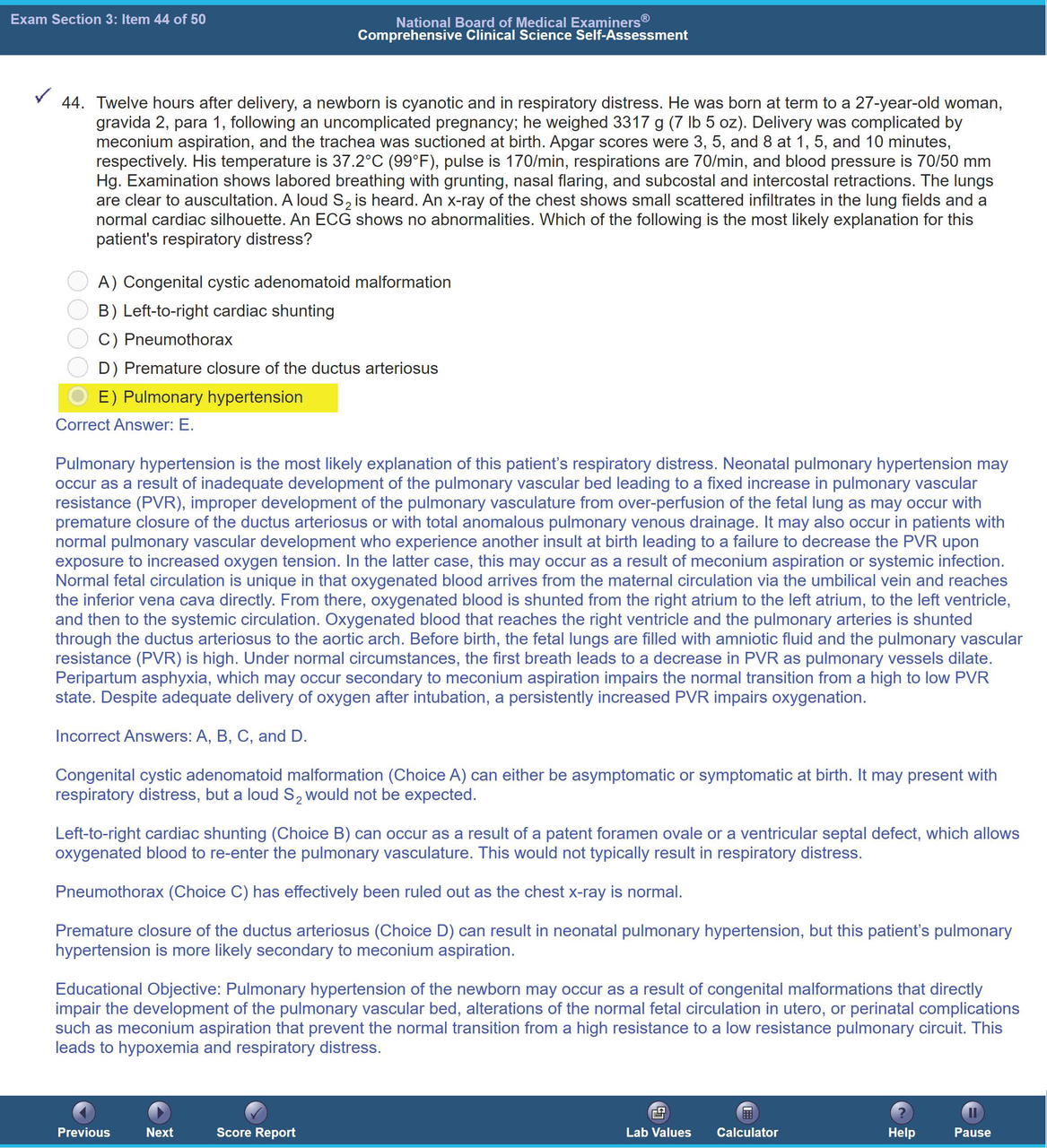
When assessing a newborn in respiratory distress, evaluate for underlying causes like _______ and _______.
If a newborn is experiencing respiratory distress, ensure to check for the _______.
In cases of neonatal respiratory distress, it is important to note that _______ can significantly impact patient management decisions.
In the case of a 32-year-old woman at 16 weeks' gestation presenting with heavy vaginal bleeding and no fetal heart tones, the most appropriate next step in management is _______.
For hydatidiform moles, the presence of _______ is a key diagnostic finding.
Hydatidiform moles can lead to symptoms like _______ and _______.
In the assessment of hydatidiform moles, the ultrasonography can reveal _______ and _______ in the uterus.
The treatment for hydatidiform moles requires _______ or _______ to remove the mole.
Oral administration of misoprostol is not indicated in the management of hydatidiform moles due to its role being limited to conditions like _______ or _______.
Treatment of gestational trophoblastic diseases, like choriocarcinoma, may involve _______ after the initial removal of the mole.
A key characteristic of complete hydatidiform moles is the absence of _______ and their inability to produce a viable pregnancy.
For hydatidiform moles with abnormal findings, normal procedures like exploratory laparotomy do not address the utmost concern of removing the _______ itself.
In a clinical scenario where a patient has heavy vaginal bleeding at 16 weeks' gestation, the most appropriate next step in management is _______.
Malignant gestational trophoblastic diseases such as _______ or invasive mole can be monitored by measuring _______ levels after evacuation.
After evacuation of a molar pregnancy, appropriate contraception should be employed to prevent complications in future pregnancies, particularly to avoid _______.
When considering treatment options for heavy bleeding in early pregnancy, one must differentiate between a viable pregnancy and potential complications such as _______.
In managing potential complications of a molar pregnancy, it is crucial to monitor for the development of _______.
In postmenopausal women, vaginal bleeding for more than 10 days raises suspicion for _______. What is the most appropriate next step in management?
A 57-year-old woman's transvaginal ultrasonography shows a markedly thickened endometrium measuring _______. What is a concerning implication of this finding?
Vaginal bleeding in a postmenopausal woman with a thickened endometrial stripe should lead to _______ to evaluate for malignancy.
Risk factors for _______ include obesity, prolonged estrogen exposure, and a family history of the disease.
Hormone replacement therapy in postmenopausal patients with a thickened endometrium would increase the risk of _______ and carcinoma.
Endometrial ablation is contraindicated in postmenopausal patients with confirmed _______ or carcinoma due to the risk of interfering with further evaluation.
In a patient with a subserosal leiomyoma, which type of leiomyoma is less likely to cause significant bleeding during menopause? _______.
If confirmed, treatment for endometrial cancer would typically involve _______ and possibly adjuvant chemotherapy for advanced disease.
In a patient with type 2 diabetes experiencing confusion and severe hyperglycemia, the most likely cause is _______ due to adverse medication adherence and potential volume depletion.
Hyperosmolar hyperglycemic state (HHS) is characterized by _______ without significant ketosis, primarily affecting patients with _______.
In HHS, neurologic symptoms like confusion arise from _______ due to glucose being an osmotically active compound.
Treatment priorities for hyperosmolar hyperglycemic state include _______ and restoration of _______.
In the context of hyperglycemia, false findings of _______ can occur, as seen in cases of severe glucose elevation.
Acidosis in aspirin overdose presents as _______, which is not evidenced by this patient’s laboratory values indicating _______.
The patient's serum bicarbonate and pH levels were only marginally low, indicating _______ with ketoacidosis, which presents with profound acidosis.
For lactic acidosis to present, one would expect significant _______ or decreased pH, which is not supported by this patient's examination.
In managing diabetic ketoacidosis (DKA), a known distinction is that patients will show significant _______ unlike those with HHS.
The anchor is Hyperglycemic Hyperosmolar State (HHS), which presents with profound _______ in the absence of _______ and markedly increased serum _______. These findings can lead to neurologic complications such as altered mental status to coma.
In the context of Hyperglycemic Hyperosmolar State (HHS), potential precipitating factors include medication _______, _______, myocardial _______, or dehydration.
When presented with a patient showing confusion, one of the first considerations in diagnosis should be whether there is a _______ associated with poorly controlled diabetes mellitus.
In a clinical scenario of confusion in a diabetic patient, always consider checking for elevation in serum _______ as it may indicate Hyperglycemic Hyperosmolar State (HHS).
In the management of Hyperglycemic Hyperosmolar State (HHS), recognize that it does not occur with _______, differentiating it from diabetic ketoacidosis.
A patient with HHS primarily presents with altered mental status due to severely increased serum _______, a key factor to monitor.
To assess the cause of confusion in a patient likely suffering from HHS, consider possible lab findings such as _______ and _______ as they can lead to diagnostic confusion.
In a case of a patient with acute kidney injury, hypoxia, and oliguria after surgical excision of the distal colon, the most appropriate next step in management is administration of _______.
Anemia is defined in this scenario by a hematocrit of _______. Given the acute blood loss, the true hemoglobin concentration is likely _______.
The patient suffered _______ of blood loss during surgery and has a history of _______ and controlled _______.
During the postoperative assessment, the patient is noted to be pale, diaphoretic, with blood pressure of _______ and oxygen saturation of _______.
In patients with acute blood loss and signs of end organ perfusion deficits, such as oliguria and increased creatinine, consideration should be given to _______.
The transfusion threshold for stable patients with anemia is a hemoglobin concentration of _______ or below, but may be higher in those with acute blood loss.
In cases of _______, the most common causative organism in younger men is _______.
Key clinical features of _______ include: - tender fullness of the testis - a positive _______ - preservation of the _______.
Doppler ultrasonography is used in the assessment of _______ to rule out testicular _______.
In men over age 35 years, the most common cause of _______ is _______ due to urinary tract obstruction.
When treating _______, appropriate antibiotics include _______ and _______.
In a patient treated with _______, cardiotoxicity often leads to _______ due to increased production of _______.
The most common clinical presentation of _______ includes symptoms such as _______, _______, and _______.
For patients receiving _______, routine _______ is crucial for monitoring potential _______.
If a non-Hodgkin lymphoma patient develops shortness of breath and tachycardia, consider assessing for _______ due to _______ exposure.
Patients with _______ from doxorubicin may show _______ and dilated heart chambers on echocardiography.
Common symptoms of _______ include _______, _______, and _______.
Endocarditis is characterized by _______, whereas pericarditis typically presents with _______.
A common complication of poorly managed _______ is the risk of _______.
In cases of respiratory distress, one must differentiate between _______ due to pulmonary issues versus _______.
ECG findings in pulmonary embolism may show _______ and typically lack major abnormalities unless there is _______.
Following chemotherapy with _______, patients are at risk for _______ due to cellular stress and myocyte damage.
Flashcards in dit deck (474)
-
1
In children over the age of 6 weeks, the vaccine that prevents invasive H. influenzae infections, including meningitis, is Haemophilus influenzae type b (Hib). This is crucial for vaccination in children who attend daycare.
-
2
For a 1-year-old boy with fever, vomiting, and neck stiffness, the clinical presentation is most consistent with meningitis due to Hib. This highlights the importance of Hib vaccination.
-
3
Children adopted from other countries should have their vaccination status confirmed and receive catch-up vaccinations as indicated based on their current health status.
-
4
The recommended vaccine series for Haemophilus influenzae type b begins as early as 6 weeks of age, with a booster between 12 and 15 months.
-
5
In cases of suspected meningitis in unvaccinated children, always consider Hib as a potential cause due to the outbreak risk in daycare settings.
-
6
Among the vaccines listed, which vaccine is most critical to prevent meningitis in children? The answer is Haemophilus influenzae type b (Hib).
-
7
In patients with T-lymphocyte dysfunction, there is an increased risk of infection with Mycobacterium tuberculosis due to impaired immune responses.
-
8
A patient presenting with a negative PPD skin test despite having Mycobacterium tuberculosis infection likely suffers from T-lymphocyte dysfunction.
-
9
Severe combined immunodeficiency syndrome (SCID) is characterized by a near-complete deficiency of T lymphocytes and increases susceptibility to infections.
-
10
The absence of HLA-DR molecules on lymphocytes as seen in Bare lymphocyte syndrome leads to ineffective T lymphocyte responses.
-
11
Infection with Candida species, Pneumocystis jiroveci, and Cryptococcus species are indicative of T-lymphocyte deficiency.
-
12
Failure to thrive and recurrent infections in children can suggest impaired T-cell function as a significant issue.
-
13
To rule out T-lymphocyte dysfunction, clinicians should consider underlying genetic or acquired immunodeficiency causes, such as HIV/AIDS.
-
14
In patients with newly diagnosed HIV infection, it is recommended to receive the yearly influenza vaccine along with both pneumococcal vaccines.
-
15
Patients who are not immune to hepatitis B, as indicated by a negative hepatitis B surface antibody, should receive a series of hepatitis B vaccines.
-
16
In patients with CD4 counts less than 100/mm³, prophylaxis against T. gondii is necessary, but only if antibodies are positive.
-
17
Prophylaxis for Pneumocystis jirovecii pneumonia is only indicated in patients with CD4 counts less than 200/mm³.
-
18
The best pharmacotherapy during the next year for an asymptomatic 27-year-old man with HIV is vaccinations including influenza virus, 23-valent pneumococcal, and hepatitis B.
-
19
In managing a sickle cell crisis with an oxygen saturation of 94%, the best next step is to provide oxygen supplementation by nasal cannula.
-
20
Patients with sickle cell disease often develop pain due to vaso-occlusive events across the body. Pain management should include both opiate and non-opiate medications.
-
21
Aggressive management of pain in sickle cell crises involves administering fluids and analgesics to counteract triggers, such as infection, acidosis, or volume depletion.
-
22
Recognizing decreased oxygen saturation in sickle cell patients is crucial, as it can lead to complications such as acute chest syndrome.
-
23
The administration of hydroxyurea is appropriate for patients with frequent pain crises but is not effective in the acute setting.
-
24
If a sickle cell patient shows signs of pain or crises (e.g., abdominal pain), ensure to check for signs of acute chest syndrome and manage accordingly.
-
25
Despite the presence of symptoms, intravenous administration of heparin is not indicated unless specific concerns for DVT or pulmonary embolism arise.
-
26
In patients with sickle cell disease, administering intravenous piperacillin is not necessary unless there are signs of acute chest syndrome or bacterial pneumonia.
-
27
In cases of severe abdominal pain related to sickle cell crises, typical presentations include diffuse pain in the arms and legs.
-
28
A patient with sickle cell disease may exhibit a hemoglobin concentration of 6.8 g/dL and a leukocyte count of 14,000/mm³ during a pain crisis.
-
29
In the case of a 62-year-old man with neurologic symptoms and a history of type 2 diabetes, which medication is most likely worsening his condition? The options are: - Atorvastatin - Lisinopril - Metformin - Metoclopramide - Zolpidem. Correct answer: Metoclopramide.
-
30
Metoclopramide is a dopamine-2 (D2) receptor antagonist that can cause parkinsonism. This condition manifests with: - muscle rigidity - bradykinesia - resting tremor - postural instability.
-
31
When managing medication-induced parkinsonism, the first step is to discontinue the offending agent. If this is not feasible, consider adding anticholinergic medications, such as benztropine.
-
32
D2 antagonism in the basal ganglia can lead to symptoms like acute dystonic reactions, akathisia, and tardive dyskinesia.
-
33
In a clinical scenario involving a patient with shuffling gait and decreased arm swing, consider whether medications like Metoclopramide are contributing to symptoms of parkinsonism.
-
34
For a patient on multiple medications, awareness of which drugs can affect dopamine neurotransmission is crucial to prevent worsening of neurologic conditions.
-
35
In patients with neurofibromatosis type 2 (NF2), annual brain MRI is recommended to monitor for the development of new tumors and the growth of existing tumors.
-
36
A 13-year-old girl diagnosed with neurofibromatosis type 2 (NF2) should have an annual brain MRI starting at age 10 due to the high incidence of intracranial neoplasms.
-
37
Patients with neurofibromatosis type 2 are typically screened for bilateral acoustic schwannomas, cataracts, meningiomas, and ependymomas.
-
38
Annual screenings for NF2 do NOT include dilated eye examinations and visual evoked potential testing as part of the regular protocol.
-
39
In neurofibromatosis type 2, a full ophthalmologic evaluation is warranted but does not need to occur annually.
-
40
The gene associated with neurofibromatosis type 2 is located on chromosome 22 and encodes the tumor suppressor merlin (schwannomin).
-
41
In cases of hand-foot-and-mouth disease (HFMD), the most appropriate next step in management for a child presenting with low-grade fever, sore throat, and oral ulcers is Observation only.
-
42
HFMD is caused by coxsackievirus, which is transmitted primarily through fecal-oral routes.
-
43
The symptoms of HFMD typically include painful oral ulcers, vesicles on the palms and soles, and a low-grade fever.
-
44
In children with HFMD, hospitalization is necessary if neurologic or cardiovascular complications develop or if the child is unable to maintain adequate hydration.
-
45
Acyclovir therapy is not effective for coxsackievirus infections due to the lack of the enzyme thymidine kinase required to activate it.
-
46
Throat culture is unnecessary in HFMD as it is primarily a clinical diagnosis.
-
47
In a case of pediatric shoulder pain with an x-ray showing bony disorganization, the most appropriate next step in management is to perform an MRI of the left upper extremity.
-
48
Osteosarcoma, the most common primary osseous malignancy in children, typically presents with bone pain and may show areas of osteoid production on histology.
-
49
In a pediatric patient, pain and swelling around the bone, especially in long bones, can indicate osteosarcoma.
-
50
Corticosteroid therapy should not be used as a first step in the management of osteosarcoma without confirming the diagnosis.
-
51
Electromyography is indicated in cases of suspected neuromuscular diseases but not in cases of suspected malignancy like osteosarcoma.
-
52
Arteriography should be considered in cases where there is suspicion of arterial occlusion or other vascular issues, not in suspected osteosarcoma.
-
53
Osteosarcoma is the most common primary osseous malignancy in children characterized by bony destruction. Its radiological appearance includes cortical/periosteal irregularity and elevation visible on x-ray.
-
54
For osteosarcoma, the most appropriate imaging to further delineate the lesion is MRI.
-
55
The typical treatment approach for osteosarcoma generally involves a combined surgical and medical strategy.
-
56
An 8-year-old boy presents with pain in his left shoulder and arm. The most appropriate next step in management includes performing an MRI of the left upper extremity.
-
57
Chondromalacia patella presents with symptoms of knee pain and instability, especially when the knee is held in flexion such as ascending stairs. Diagnosis is primarily clinical, though MRI can be used in unclear cases.
-
58
For a diagnosis of chondromalacia patella, the pain is commonly exacerbated by walking up stairs and sitting with the knee in flexion. Treatment typically involves nonsurgical methods like rest and physical therapy.
-
59
When evaluating knee pain in older adults, particularly in those who are overweight, consider chondromalacia patella as a common diagnosis, especially with a patient's history of knee instability.
-
60
In cases of knee pain, the absence of joint effusion during examination may support a diagnosis of chondromalacia patella, as opposed to injuries like meniscus tears, which usually present with effusion.
-
61
In the context of knee injuries, the anterior cruciate ligament (ACL) tear is typically associated with acute injuries and often comes with instability following a sudden load on the knee.
-
62
For a patient experiencing shooting pain and paresthesia in the distribution of a lumbar nerve root, consider lumbar radiculopathy; this differs from the symptoms of chondromalacia patella which does not involve these symptoms.
-
63
Medial meniscus tears often present with acute pain and joint effusion, distinguishing them from conditions like chondromalacia patella, which is characterized by chronic pain.
-
64
Prepatellar bursitis typically causes pain, erythema, and swelling over the anterior knee, presenting differently compared to chondromalacia patella which shows tenderness on the patella.
-
65
In cases of peripatellar cartilage inflammation, what condition commonly triggers it? Think of overuse, especially in athletes or overweight patients.
-
66
The main treatments for peripatellar cartilage inflammation include physical therapy, anti-inflammatory medications, and rest.
-
67
What important movement does the patella normally allow as it glides over the surface of the distal femur?
-
68
A common clinical finding in patients with peripatellar cartilage issues is a 'giving-way' sensation in the knee. What age group might be particularly affected by this?
-
69
In the management of knee pain, if an MRI reveals lesions, one must consider whether the root cause is linked to overuse injuries, particularly in athletes.
-
70
On a multiple-choice question concerning a 62-year-old woman with severe knee pain, what should be included in the differential for conditions like chondromalacia patella?
-
71
When evaluating knee injuries, one must be aware of associated conditions such as lumbar radiculopathy and medial meniscus tear.
-
72
What is a common treatment modality for knee pain resulting from peripatellar cartilage inflammation?
-
73
In athletes, particularly again during overuse, peripatellar cartilage inflammation can occur. Explore treatment options including anti-inflammatory medications.
-
74
In a patient with a history of intravenous drug use presenting with fever and hypotension, the most appropriate initial antibiotic therapy for suspected bacterial endocarditis includes coverage for methicillin-resistant Staphylococcus aureus (MRSA).
-
75
Fever, leukocytosis, and hypotension in a patient with a prior splenectomy raises concern for septic shock and possible bacteremia.
-
76
Intravenous vancomycin and gentamicin are preferred initial antibiotic treatments in patients presenting with high-risk factors, including history of intravenous drug use and splenectomy.
-
77
In the context of septic shock, delaying antibiotic therapy can lead to increased morbidity and mortality, making it crucial to start early, especially in patients with symptoms like fever, tachycardia, and leukocytosis.
-
78
Normal results in a urinalysis and chest x-ray can accompany cases of suspected bacterial endocarditis, highlighting the importance of recognizing systemic infection signs, like fever.
-
79
For a patient with acute symptoms suggestive of infection and a history of high-risk behaviors, initial therapy should cover for both common bacteria and MRSA.
-
80
The clinical scenario of a febrile patient with recent intravenous drug use should prompt consideration of conditions such as bacterial endocarditis and appropriate antibiotic coverage.
-
81
In cases of bacteremia and bacterial endocarditis, septic shock can occur, especially in patients with a history of intravenous drug use or immunosuppression.
-
82
The imperative treatment for patients with septic shock is early use of broad-spectrum antibiotics that should cover MRSA.
-
83
In a clinical scenario with a 27-year-old woman presenting with fever and cough, the best next step in antibiotic therapy is to administer intravenous vancomycin and gentamicin.
-
84
In cases of hemodynamically unstable atrial fibrillation with rapid ventricular response, the most appropriate initial treatment is synchronized cardioversion to quickly correct the arrhythmia.
-
85
A patient with an irregular, narrow-complex tachyarrhythmia lacking P-waves is likely experiencing atrial fibrillation. In unstable cases, cardioversion is preferred over rate control drugs like amiodarone, diltiazem, or labetalol.
-
86
For a patient presenting with hypotension and a heart rate over 100 beats/minute due to atrial fibrillation with rapid ventricular response, it is critical to administer synchronized cardioversion as the best next step.
-
87
Administration of diltiazem or labetalol is recommended for hemodynamically stable patients experiencing atrial fibrillation with rapid ventricular response. However, they are not suitable for unstable cases.
-
88
Carotid sinus massage is effective in slowing down supraventricular tachyarrhythmias but does NOT have a role in treating atrial fibrillation with rapid ventricular response.
-
89
In a patient presenting with acute chest pain and new left bundle branch block, cardiac catheterization is the most appropriate next step to rule out acute coronary syndrome.
-
90
Patients with unstable angina present with new onset chest pain and ECG changes but normal cardiac biomarkers.
-
91
When presented with anterior chest pain that is refractory to nitroglycerin, one should be alerted to the possibility of ischemic heart disease.
-
92
Despite normal serum troponin I and myoglobin concentrations, a clinician should consider delayed rise of cardiac biomarkers in acute coronary syndrome.
-
93
Patients diagnosed with acute coronary syndrome require treatment with full-dose anticoagulation and dual antiplatelet therapy followed by cardiac catheterization.
-
94
An ECG showing left bundle branch block raises concern for ischemic heart disease in patients with chest pain.
-
95
Cardiac stress testing methods, like exercise stress tests, are typically not first-line in acute coronary syndrome until ruled out.
-
96
Patients with suspected acute coronary syndrome should undergo cardiac catheterization rather than non-invasive imaging initially.
-
97
In assessing an 82-year-old woman with shortness of breath, an appropriate initial pharmacotherapy after administering furosemide is lisinopril.
-
98
The 2/6 holosystolic murmur best heard at the apex in the left lateral decubitus position is indicative of mitral valve regurgitation.
-
99
In the case of left-sided congestive heart failure, typical symptoms include dyspnea on exertion, orthopnea, and paroxysmal nocturnal dyspnea.
-
100
Physical examination findings of jugular venous distention, pitting peripheral edema, and bibasilar crackles are associated with heart failure.
-
101
ACE inhibitors like lisinopril are first-line therapy in congestive heart failure as they are known to decrease mortality.
-
102
Digoxin is used for symptomatic relief in systolic heart failure but does not decrease mortality.
-
103
In advanced heart failure scenarios, medications like dobutamine and milrinone are used only in cases of cardiogenic shock.
-
104
Nifedipine, as a calcium-channel blocker, primarily treats hypertension and is not indicated for heart failure management.
-
105
Nitroprusside is utilized for hypertensive emergencies but is not indicated in the management of chronic heart failure.
-
106
In a case of a patient with a nonproductive cough worsening at night and episodes of vomiting, the most appropriate next step in diagnosis for suspected pertussis is a Bordetella pertussis polymerase chain reaction test.
-
107
Pertussis presents in three stages: the initial catarrhal stage, the paroxysmal stage, and the convalescent stage.
-
108
The paroxysmal stage of pertussis can cause severe complications such as rib fractures, incontinence, and pneumothorax.
-
109
Pertussis toxin leads to impaired recruitment of phagocytes and affects the production of inflammatory mediators.
-
110
The diagnosis of pertussis is confirmed by polymerase chain reaction (PCR) amplification of Bordetella pertussis DNA.
-
111
Vaccination against pertussis provides protection that wanes over time, necessitating booster doses every 10 years.
-
112
A negative PPD test indicates no previous infection with tuberculosis; however, pertussis presents differently than chronic conditions such as COPD.
-
113
In order to diagnose pertussis, the most appropriate test is the Bordetella pertussis polymerase chain reaction test.
-
114
The primary clinical symptom of pertussis is severe paroxysmal coughing which may lead to cyanosis.
-
115
Symptoms of pertussis can be accompanied by syncope, emesis, or apnea.
-
116
Treatment for pertussis includes antibiotics, specifically macrolides, and supportive care.
-
117
An X-ray of the chest may show focal consolidation, but it is less specific than polymerase chain reaction for diagnosing pertussis.
-
118
In schools in the United States, exposure to pertussis is commonly seen among homeless patients.
-
119
In the management of asthma exacerbations, the most appropriate next step for a patient with episodes of coughing, wheezing, and chest tightness is inhaled albuterol therapy.
-
120
Asthma is characterized by reversible obstruction of the bronchi due to hyperreactivity and airway inflammation.
-
121
Short-acting inhaled ẞ-adrenergic agonists, such as albuterol, are first-line therapy for the management of asthma exacerbations.
-
122
For patients with intermittent asthma, allergy skin testing is not typically required unless there is concern for a specific allergen.
-
123
Chest x-ray is typically normal in the setting of asthma and is primarily useful for the diagnosis of pneumonia.
-
124
Exercise stress testing may be used for the diagnosis of exercise-induced asthma, which is not indicated in a young, healthy patient at low risk for coronary artery disease.
-
125
Oral antibiotics like azithromycin are not beneficial in asthma exacerbations unless there is an infectious precipitant.
-
126
Increased diffusion capacity for carbon monoxide in asthma patients may occur due to increased capillary blood volume and lung hyperinflation.
-
127
The educational objective regarding asthma management emphasizes that asthma exacerbations should be managed by maintaining oxygenation and rapidly reversing bronchospasm.
-
128
In a drowning case involving a child, the most crucial indicator of a good prognosis is purposeful movements in the intensive care unit.
-
129
Drowning can lead to hypoxemia, which may cause ischemic neuronal damage and subsequent cerebral edema.
-
130
Prolonged hypoxia from drowning increases the risk of end organ dysfunction, including hypoxic brain injury and cardiac arrhythmias.
-
131
A child with a return of spontaneous circulation and pulse greater than 100/min en route does not guarantee a good prognosis in drowning.
-
132
Hypoxemia consequences include aspiration, respiratory distress, and laryngospasm.
-
133
Hypoxic management in acute respiratory distress is essential to prevent hypoxic brain injury.
-
134
The appearance of non-cardiogenic pulmonary edema on chest imaging may result from fluid exposure in drowning incidents.
-
135
Management of hypoxia in drowning cases must include appropriate intubation and ventilation strategies.
-
136
In cases of spontaneous bacterial peritonitis (SBP), the diagnosis is confirmed by measuring the total leukocyte count of ascitic fluid through a paracentesis.
-
137
A total leukocyte count of greater than 1,000/mm³ or more than 250 neutrophils/mm³ in ascitic fluid is generally diagnostic of spontaneous bacterial peritonitis (SBP).
-
138
In patients with cirrhosis, spontaneous bacterial peritonitis (SBP) commonly occurs due to translocated enteric flora, often including Escherichia coli.
-
139
Despite abdominal tenderness, the best next step in a suspected case of spontaneous bacterial peritonitis (SBP) is obtaining a complete analysis of ascitic fluid through paracentesis.
-
140
When evaluating ascitic fluid for infection, Gram stain is not sensitive, but common pathogens include E. coli, Streptococcus species, and Klebsiella pneumoniae.
-
141
In patients with cirrhosis and ascites, the clinical presentation of spontaneous bacterial peritonitis (SBP) often includes fever and diffuse abdominal pain.
-
142
When treating spontaneous bacterial peritonitis (SBP), first-line therapy includes antibiotics with coverage for Gram-negative rods.
-
143
In a diagnosis of neutrophilia, a cell count greater than 250 neutrophils/mm³ indicates potential concern.
-
144
For neutrophils, any count of 000/mm³ or greater represents a condition needing further assessment.
-
145
When assessing abdominal conditions, a measurement of cell count and differential of abdominal fluid can confirm a diagnosis; consider using the following tests: - Blood culture - Culture and Gram stain - Exploratory laparotomy.
-
146
In a clinical scenario of a 42-year-old man found unconscious, which test is essential for diagnosis confirmation? Options include: - Abdominal CT scan - Flat and upright abdominal x-rays.
-
147
“Management of respiratory distress in neonates” represents an essential core concept in pediatrics related to increased neutrophil counts and potential infections, such as when observing >250 neutrophils/mm³.
-
148
For a patient diagnosed with ulcerative colitis, the most appropriate initial management step is mesalamine therapy due to its anti-inflammatory effects. This condition is characterized by subacute or chronic bloody diarrhea, abdominal pain, and colonoscopic evidence of continuous mucosal inflammation.
-
149
In ulcerative colitis, the risk of developing colorectal carcinoma increases due to chronic inflammation of the colon. Therefore, regular surveillance is necessary.
-
150
If a patient with ulcerative colitis does not respond to mesalamine therapy, second-line treatments like azathioprine or infliximab may be considered for management due to their severe disease indications.
-
151
In cases of ulcerative colitis, an examination may reveal abdominal tenderness, and laboratory tests may show elevated erythrocyte sedimentation rate indicating inflammation.
-
152
For patients with ulcerative colitis experiencing severe symptoms, options like steroids or immunomodulators might be necessary for management to control inflammation.
-
153
The presence of negative stool tests for Clostridium difficile is important in ruling out other causes of bloody diarrhea in patients suspected of ulcerative colitis.
-
154
For a patient with ulcerative colitis, the best initial medical management is Mesalamine.
-
155
The primary mechanism of action of Mesalamine is to reduce the production of leukotrienes and prostaglandins.
-
156
Total parenteral nutrition is associated with risks including thrombosis, electrolyte derangements, and sepsis.
-
157
In patients with sulfa allergies, Mesalamine is typically well-tolerated compared to sulfasalazine.
-
158
A key finding in ulcerative colitis may include chronic diarrhea and weight loss.
-
159
In the management of ulcerative colitis, it is crucial to know that Total parenteral nutrition should be avoided except when bowel rest is required.
-
160
Ulcerative colitis is characterized by findings during colonoscopy that may include ulcers and mucosal inflammation, contrasting with infections like giardiasis.
-
161
The management for abdominal pain and bloody stools in a 26-year-old woman might involve considering Mesalamine therapy among other options.
-
162
For patients with a first-degree relative who had colon cancer, colorectal cancer screening should begin at age 10 years younger than the age of diagnosis of the relative or at age 40, whichever is earlier.
-
163
The United States Preventive Services Task Force (USPSTF) recommends routine colorectal cancer screening for average-risk patients starting at age 50 and continuing until age 75.
-
164
Colonoscopy remains the gold standard for colorectal cancer screening because it allows for direct visualization and excision of polyps throughout the colon.
-
165
Screening for colon cancer using stool DNA tests is less sensitive and specific compared to colonoscopy and is also more costly.
-
166
In patients at average risk of colon cancer, the best next step for screening at age 47 is waiting until age 50 for colonoscopy.
-
167
The recommended frequency for colorectal cancer screening for individuals at increased risk due to family history is every 5 years.
-
168
Flexible sigmoidoscopy is not preferable to colonoscopy because it only provides visualization of the distal colon.
-
169
For a patient aged 47 undergoing a routine health maintenance examination, the most appropriate recommendation for colon cancer screening is colonoscopy at the age of 50 years.
-
170
The recommended age to begin colon cancer screening for average-risk individuals is 50.
-
171
In the assessment of secondary hypertension, it is essential to evaluate for underlying conditions such as renal disease and endocrine disorders.
-
172
In managing respiratory distress in neonates, priority should be given to ensuring adequate airway clearance.
-
173
Vaccine-preventable conditions in pediatrics include measles, mumps, and rubella.
-
174
Common causes of abdominal pain that must be assessed include appendicitis and gallbladder disease.
-
175
The most likely diagnosis for a 72-year-old woman with a 3-day history of bright red rectal bleeding, left-sided lower abdominal cramps, and a history of diverticular disease is ischemic colitis.
-
176
Patients with ischemic colitis typically present with acute abdominal pain and cramping associated with bloody bowel movements.
-
177
Ischemic colitis can occur due to arterial occlusion or systemic hypotension.
-
178
To diagnose ischemic colitis, angiographic evaluation is required to assess the patency of the mesenteric arteries.
-
179
The treatment for occlusive lesions in ischemic colitis may include anticoagulation, thrombectomy, and/or angioplasty.
-
180
In ischemic colitis, bowel necrosis or perforation may require bowel resection or partial colectomy.
-
181
Diverticulitis typically presents with left lower quadrant abdominal pain, fever, and tenderness due to infection or inflammation of colonic diverticula.
-
182
Colon cancer is unlikely in a patient with a negative colonoscopy within the last 10 years.
-
183
Unlike mesenteric venous thrombosis, ischemic colitis typically presents acutely rather than subacutely.
-
184
Symptoms of sigmoid volvulus include constipation, abdominal bloating, and distension due to twisting of the sigmoid mesentery.
-
185
For the clinical scenario involving a 72-year-old woman with rectal bleeding and abdominal cramps, the best next step is to consider ischemic colitis as the most likely diagnosis.
-
186
Ischemic colitis refers to inadequate blood supply to the colon, which can lead to bowel wall necrosis, loss of immune barriers, and bowel perforation.
-
187
Patients with ischemic colitis typically present with acute abdominal pain and cramping associated with bloody bowel movements if bowel necrosis has occurred.
-
188
A common presentation of ischemic colitis includes a patient who is a 72-year-old woman with lower abdominal cramps and bright red rectal bleeding. What is the most likely diagnosis?
-
189
In a case of postoperative complications after cholecystectomy, the most appropriate next step in diagnosis when jaundice and abdominal pain are present is Endoscopic retrograde cholangiopancreatography (ERCP).
-
190
Following a laparoscopic cholecystectomy, symptoms such as fever, abdominal pain, and jaundice typically indicate bile duct injury or bile leak.
-
191
Laboratory findings showing leukocytosis and elevated total bilirubin post-cholecystectomy suggest complications such as biliary leaks or bile duct injury.
-
192
In conjunction with ERCP, it is indicated to utilize ultrasonography to evaluate for fluid collections post-cholecystectomy.
-
193
Despite the presentation of abdominal pain and fever after cholecystectomy, an exploratory laparotomy is typically only considered after less invasive means are ruled out.
-
194
A HIDA scan is primarily used to diagnose acute cholecystitis, contradicting its application in biliary leaks where ERCP is preferred.
-
195
Post-cholecystectomy complications can manifest by day 10 with signs like fever, abdominal pain, and jaundice.
-
196
In a patient with acute interstitial nephritis (AIN) caused by medication, such as nafcillin, the most appropriate next step in management is to discontinue nafcillin therapy.
-
197
Acute interstitial nephritis can be characterized by various findings, including increased creatinine and eosinophilia.
-
198
Common causes of acute interstitial nephritis (AIN) include hypersensitivity reactions to medications such as nonsteroidal anti-inflammatory drugs, antibiotics, and diuretics.
-
199
Signs of acute interstitial nephritis may include rash, azotemia, and sterile pyuria.
-
200
If a patient with diabetes mellitus experiences creatinine elevation after starting nafcillin, it is important to discontinue the antibiotic to prevent further kidney damage.
-
201
In cases of acute kidney injury due to medications, the treatment usually involves supportive care and discontinuation of the offending drug.
-
202
The presence of eosinophils in blood tests can indicate acute interstitial nephritis when associated with increased serum creatinine.
-
203
A patient with acute interstitial nephritis may present with symptoms such as fever and diffuse rash.
-
204
Increased serum creatinine concentration and eosinophilia in a patient suggest systemic involvement potentially due to drug-induced acute interstitial nephritis.
-
205
It is inappropriate to continue current medications like nafcillin in a patient showing signs of acute interstitial nephritis; it should be discontinued.
-
206
In a patient with urge incontinence, leakage of urine is typically associated with the overwhelming urge to void, often occurring when they step out of a car.
-
207
Urge incontinence is commonly associated with detrusor hyperreflexia or overactivity, leading to an urge to urinate followed by leakage.
-
208
When evaluating incontinence, it's crucial to rule out a urinary tract infection especially when symptoms are new in onset.
-
209
In women, stress incontinence is triggered by an increase in intra-abdominal pressure, such as during sneezing or lifting.
-
210
The best treatment methods for urge incontinence include pelvic floor strengthening, weight loss, and medications like oxybutynin.
-
211
Overflow incontinence can occur due to underactive detrusor muscles resulting in urinary retention and a high post-void residual volume.
-
212
A vesicovaginal fistula presents with painless urinary leakage from the bladder into the vagina, typically following pelvic surgery.
-
213
Urge incontinence symptoms, such as urgency and urinary leakage, can arise from neurological issues like multiple sclerosis or spinal cord injuries.
-
214
In the case of a 32-year-old woman at 18 weeks' gestation with complications from Zika virus, the best next step in pharmacotherapy is no pharmacotherapy. This is due to the absence of effective treatments for congenital Zika syndrome (CZS).
-
215
Maternal Zika virus infection during pregnancy can result in congenital Zika syndrome (CZS), characterized by notable abnormalities such as microcephaly and central nervous system dysfunction.
-
216
Zika virus (ZIKV) is predominantly spread by the Aedes aegyptus mosquito in endemic tropical climates such as Africa and South America.
-
217
Congenital Zika syndrome (CZS) is especially risky to the fetus during the first trimester of pregnancy, with specific developmental abnormalities detectable by ultrasonography.
-
218
Despite maternal infection with ZIKV, there is currently no available pharmacotherapy for the prevention or treatment of CZS.
-
219
Folic acid supplementation is beneficial for preventing neural tube defects, but it does not provide treatment for CZS resulting from ZIKV infection.
-
220
In overweight and obese patients with a family history of diabetes, undiagnosed pregestational diabetes mellitus should be considered.
-
221
The most appropriate screening test for a pregnant woman with a BMI ≥25 kg/m² and a family history of diabetes at her first prenatal visit is the glucose tolerance test.
-
222
The glucose tolerance test is typically performed between 24 and 28 weeks' gestation but can be done earlier if there is suspicion of underlying or preexisting diabetes.
-
223
Maternal glucose tolerance testing helps prevent complications such as macrosomia and shoulder dystocia in pregnancy.
-
224
TSH measurement is not routinely recommended during pregnancy due to natural suppression caused by β-human chorionic gonadotropin.
-
225
Quadruple screening for fetal abnormalities is not done until 15 to 22 weeks' gestation.
-
226
Serum herpes simplex antibody testing is unnecessary in a patient who has a history of herpes simplex lesions.
-
227
Serum lipid studies are not recommended during pregnancy, especially when statin therapy is contraindicated.
-
228
At the first prenatal visit for a pregnant woman with a history of gestational diabetes, the recommended screening test is a glucose tolerance test.
-
229
Patients with a history of impaired glucose tolerance should be screened for diabetes mellitus at their first prenatal visit.
-
230
Both gestational and pregestational diabetes mellitus can lead to significant maternal and fetal morbidity.
-
231
For a patient with a history of macrosomia, it's crucial to conduct a glucose tolerance test early in the prenatal care.
-
232
The most appropriate lab test for a woman at 12 weeks' gestation with previous gestational diabetes is a glucose tolerance test.
-
233
If a woman has a history of hypertension or impaired glucose tolerance, she should be screened for glucose levels during her initial prenatal visit.
-
234
In the case of a 17-year-old patient experiencing severe right nipple pain during breast-feeding, the most appropriate recommendation is repositioning the infant's mouth to achieve a proper latch.
-
235
Nipple pain that begins in the first few days of breast-feeding is most commonly caused by poor latching.
-
236
If repositioning the newborn's mouth does not alleviate severe nipple pain, what is a possible next step? Consider consultation with a lactation specialist and possible pumping.
-
237
Despite nipple pain, breastfeeding should continue first on the unaffected side until proper latching is achieved.
-
238
Acetaminophen therapy for nipple pain is an adjunct but does not address the underlying cause of poor latching.
-
239
The optimal source of nutrition for the growth and healthy development of infants is breastfeeding, not formula feeding.
-
240
A common mistake in breastfeeding management is switching to formula feeding prematurely when proper latching techniques have not been fully explored.
-
241
Engaging with lactation consultants can help alleviate nipple pain and promote sustained breastfeeding.
-
242
For cracked or abraded nipples, treatment may include the application of topical antibiotics or the use of warm/cool compresses for relief.
-
243
Common causes of premature termination of breastfeeding include factors like nipple pain and difficulty achieving a proper latch.
-
244
In a young nulligravid woman with irregular menstrual cycles and heavy menses, anovulation is the most likely cause. Anovulation can lead to irregular intervals of menstruation associated with heavy vaginal bleeding due to persistent endometrial development. Is cyclic progesterone therapy beneficial for managing anovulation?
-
245
Cyclic progesterone therapy acts to inhibit follicle-stimulating hormone (FSH) and luteinizing hormone (LH) and maintain the endometrial lining. This therapy is particularly important when managing anovulation. What happens when progesterone is withdrawn?
-
246
The presence of glandular endometrial tissue in the myometrium generally indicates adenomyosis. It is less likely to occur in a young nulligravid patient, who usually presents with abnormal uterine bleeding and pelvic pain.
-
247
In patients with immune thrombocytopenic purpura, severe menstrual bleeding is uncommon, despite presenting with abnormal bleeding and bruising. What findings would suggest this condition?
-
248
In patients with leiomyomata uteri, or uterine fibroids, manifestations may include abnormal uterine bleeding and pelvic pain, often presenting in middle-aged women. Which findings would you expect upon examination?
-
249
Patients with von Willebrand disease commonly present with mucocutaneous bleeding and prolonged bleeding post-trauma or surgery. However, it may not explain irregular menstruation—what else should be evaluated?
-
250
When evaluating a young nulligravid woman for heavy menstrual bleeding, one must consider anovulation as a leading cause due to irregular hormone regulation. What additional menstrual characteristics should be assessed?
-
251
When progesterone is withdrawn, menstruation occurs if the anovulation is caused by an abnormality or irregularity of the hypothalamic-pituitary-ovarian axis.
-
252
In young women, heavy vaginal bleeding can indicate anovulation due to abnormalities in the hypothalamic-pituitary-ovarian axis.
-
253
If menstruation occurs after the withdrawal of progesterone, it can suggest that the cause of anovulation is related to the hypothalamic-pituitary-ovarian axis.
-
254
The following are potential causes of heavy menses: Adenomyosis, Anovulation, Immune thrombocytopenic purpura, Leiomyomata uteri, von Willebrand disease.
-
255
In patients with signs of hyperthyroidism, the most appropriate next step for evaluation is to measure the serum thyroid-stimulating hormone (TSH) concentration.
-
256
The symptoms of thyrotoxicosis include: - diaphoresis - weight loss - anxiety - palpitations - tremor.
-
257
If TSH levels are low or undetectable and T4/T3 levels are increased, this indicates hyperthyroidism.
-
258
Citalopram and lorazepam are used for treating generalized anxiety disorder, but this patient's symptoms suggest a different cause.
-
259
Propranolol is used after a diagnosis of hyperthyroidism to alleviate symptoms, not before diagnosis.
-
260
A low TSH with increased free T4 and/or T3 is consistent with hyperthyroidism caused by conditions such as Graves disease.
-
261
In iodine-sufficient areas, Graves disease is a common cause of hyperthyroidism.
-
262
To differentiate causes of thyrotoxicosis, a radioiodine uptake scan can be helpful.
-
263
In the case of a 37-year-old man brought to the emergency department after scuba diving, the most likely diagnosis is Decompression sickness.
-
264
Decompression sickness may present with symptoms such as hypoxemia and neurologic derangements after rapid ascent.
-
265
Neurologic symptoms of decompression sickness can include altered mental status, paralysis, and ataxia.
-
266
In managing decompression sickness, the best next step includes 100% supplemental oxygen and hyperbaric (recompression) therapy.
-
267
The mechanism of decompression sickness involves the release of air bubbles from saturated tissues during rapid ascent.
-
268
Unlike other conditions, hypothermia does not present with cyanosis or hypoxemia.
-
269
A 37-year-old diver shows signs of severe decompression sickness with pulmonary symptoms such as hypoxia and chest pain.
-
270
Sinus barotrauma presents with sinus pain and congestion, not neurological symptoms.
-
271
For a patient experiencing neurological symptoms such as coma, paralysis, and profound hypoxemia after scuba diving, the most likely diagnosis is decompression sickness.
-
272
In the management of decompression sickness, the best treatment is 100% oxygen and the use of a recompression chamber.
-
273
Key neurological symptoms of decompression sickness include coma, paralysis, and hypoxemia. What is the essential treatment protocol?
-
274
A patient develops hypoxemia shortly after a scuba diving session, indicating a potential case of decompression sickness. What is the first-line treatment?
-
275
In patients with Marfan syndrome, annual echocardiography is essential for screening vascular complications such as aortic root dilation and dissection.
-
276
The most common ocular finding in Marfan syndrome is ectopia lentis, which typically presents as superotemporal lens dislocation.
-
277
Patients with Marfan syndrome should also undergo annual ophthalmic examination to prevent complications such as cataract and retinal detachment.
-
278
When assessing a patient with tall stature and pectus excavatum as part of Marfan syndrome evaluation, the most appropriate next step is ophthalmologic examination.
-
279
Marfan syndrome is caused by mutations in the FBN1 gene, which encodes for fibrillin and is inherited in an autosomal dominant manner.
-
280
Clinical features of Marfan syndrome include tall stature, high narrow palate, scoliosis, pectus excavatum, and hyperextensibility of joints.
-
281
Patients with Marfan syndrome are at increased risk for vascular complications like aortic dissection and should be monitored accordingly.
-
282
The attributable risk (AR) of cigarette smoking on the development of lung cancer is calculated as AR = (a/(a + b)) - (c/(c + d)). In this scenario, the AR is approximately 2.7%.
-
283
In a study of cigarette smokers, the incidence of lung cancer among smokers is represented by 'a' and is calculated as 30 out of 1000 participants.
-
284
For nonsmokers, the incidence of lung cancer is represented by 'c' and is calculated as 3 out of 1000 participants.
-
285
Attributable risk (AR) measures the risk of developing disease that can be attributed to an exposure. Calculate AR using the formula: AR = (a/(a + b)) - (c/(c + d)). What is the AR for lung cancer in smokers?
-
286
Choice B (2.7%) represents the correct answer for the attributable risk of cigarette smoking on lung cancer. Other choices such as A (0.3%) and E (99.7%) involve incorrect mathematical assumptions.
-
287
The formula for calculating attributable risk (AR) is AR = (a / (a + b)) - (c / (c + d)). In the case of lung cancer from smoking, this results in an AR of 2.7%.
-
288
In the context of diabetic retinopathy, a hemoglobin A1c greater than 15% shows sensitivity of 88%. What does this indicate?
-
289
Sensitivity can be calculated using the formula TP/(TP + FN). Where TP is true positives and FN is false negatives.
-
290
A sensitivity of 88% in a test means that 88% of patients with the disease are correctly identified. Thus, the false negative rate is 12%.
-
291
For diabetic retinopathy, a hemoglobin A1c greater than 15% being present in 88% of patients signifies that a high sensitivity is useful for screening.
-
292
The false-positive rate for a test that determines hemoglobin A1c's reliability in predicting diabetic retinopathy cannot be evaluated without additional data, and thus is unknown.
-
293
A negative result from a high sensitivity test indicates a very low likelihood that the disease is present, making it valuable for ruling out conditions.
-
294
The likelihood that a positive test indicates a disease is referred to as the positive predictive value, which cannot be calculated without more data in this study.
-
295
To prevent loss of sight, the priority in diabetic retinopathy screening is to maximize sensitivity, ensuring that true positive cases are identified.
-
296
In the case of diabetic retinopathy, a hemoglobin A1c greater than 15% identifying 88% of patients showcases its clinical importance in screening.
-
297
The educational objective of this study highlights that sensitivity is key in preventing misdiagnosis in critical cases like diabetic retinopathy.
-
298
In a study comparing sedatives in children on mechanical ventilation, including children with coma may invalidate the study results due to confounding variables.
-
299
Confounding variables influence both the independent and dependent variables and must be evenly distributed to avoid false associations.
-
300
It is more appropriate to exclude patients with coma from the study design to ensure accurate results regarding sedation efficacy.
-
301
The etiology of respiratory failure is less impactful on sedative response unless accompanied by central nervous system pathology.
-
302
Sedative medications are generally dosed by weight in pediatric patients, making lack of age restriction unlikely to complicate study design.
-
303
Different types of mechanical ventilation, like volume-controlled and pressure-controlled, do not affect the patient response to sedation.
-
304
When designing studies, it is critical to account for confounding variables to prevent false conclusions.
-
305
When assessing the effectiveness of a new drug for bacterial meningitis, the primary consideration regarding the use of placebo is that it should not be used because it could cause harm when an effective treatment is available.
-
306
In clinical trials for bacterial meningitis, using a placebo can lead to ethical issues because the disease is life-threatening and a delay in treatment could cause severe outcomes.
-
307
If an effective treatment for bacterial meningitis exists, it is recommended to compare the experimental drug to the standard treatment rather than a placebo.
-
308
The use of placebo in clinical trials is inappropriate in situations where its use could cause harm to the patient.
-
309
Delaying treatment for a patient with bacterial meningitis to use a placebo could lead to permanent disability or death, highlighting the need for effective treatments.
-
310
Ethical dilemmas arise in clinical trials when effective treatments are available for life-threatening conditions like bacterial meningitis.
-
311
Patients should not be assigned to receive placebo in trials for bacterial meningitis because such a practice is considered unethical.
-
312
In a patient with Hodgkin lymphoma, laboratory studies often show increased lactate dehydrogenase (LDH) activity, especially with supraclavicular lymphadenopathy and splenomegaly.
-
313
The presence of Reed-Sternberg cells on biopsy is a key indicator for diagnosing Hodgkin lymphoma.
-
314
Patients with Hodgkin lymphoma may present with a dominant lymph node mass in the neck, supraclavicular region, or chest.
-
315
Increased serum levels of erythrocyte sedimentation rate (ESR) are frequently encountered in patients with Hodgkin lymphoma.
-
316
Despite symptoms like a lump in the neck, patients with Hodgkin lymphoma often do NOT show significant changes in erythrocyte count, which is usually normal or slightly low.
-
317
Increased serum calcium concentrations are more common in solid tumor malignancies that metastasize to the bone, rather than in Hodgkin lymphoma.
-
318
The standard approach for diagnosing Hodgkin lymphoma involves a core biopsy of an accessible lymph node or an excisional biopsy to preserve tissue architecture.
-
319
In a patient with symptoms of stimulant intoxication, the presence of paranoid delusions and excessive irritability can indicate a diagnosis of substance-induced psychotic disorder.
-
320
Substance-induced psychotic disorder is characterized by delusions or hallucinations that develop during or within a month of substance use or withdrawal.
-
321
Stimulant drugs such as cocaine or methamphetamine commonly lead to psychotic symptoms due to increased dopamine in the limbic system.
-
322
Signs of stimulant intoxication often include elevated mood, pressured speech, tachycardia, and hypertension.
-
323
In patients with severe stimulant intoxication, coronary vasospasm may lead to acute coronary syndrome, evidenced by chest pain and ST-segment elevation on an ECG.
-
324
Treatment of acute stimulant intoxication primarily involves supportive care and may include antipsychotic or benzodiazepine medication for agitation.
-
325
In cases of panic disorder, patients often experience acute fear or anxiety and physical symptoms like heart palpitations, sweating, and shortness of breath. What diagnosis fits a patient with recurrent episodes without physical cause?
-
326
A 32-year-old woman experiencing panic attacks after a recent work reorganization most likely suffers from panic disorder. What are common symptoms associated with these attacks?
-
327
A thorough medical history and examination are essential in ruling out medical causes before diagnosing panic disorder. What key diagnostic step is often performed?
-
328
If physical examination and laboratory tests are normal after episodes of anxiety, the patient may be experiencing panic disorder rather than myocardial infarction. What vital signs should remain stable?
-
329
Despite other possible complications, normal serum cardiac enzymes suggest the patient does not have acute myocardial infarction. What would exclude an unstable angina diagnosis?
-
330
For treatment of panic disorder, what two main approaches are typically utilized?
-
331
Patients with thyrotoxicosis typically present with acute anxiety and sympathetic hyperactivity, possibly including symptoms such as exophthalmos and fine hair.
-
332
Anxiety symptoms in hyperthyroidism are usually more constant and persistent compared to the episodic course of panic disorder.
-
333
Panic attacks are characterized by acute fear or anxiety that peaks within minutes and are associated with symptoms like diaphoresis and chest pain.
-
334
A panic disorder is defined by recurrent panic attacks that are unexpected and linked with worry about future attacks or avoidance of panic attack triggers.
-
335
In suspecting panic disorder, be cautious of overlapping symptoms with conditions like thyrotoxicosis or myocardial infarction.
-
336
The common symptoms associated with panic disorder include dyspnea and symptoms caused by sympathetic overactivation.
-
337
For a presentation featuring palpitations, sweating, and shortness of breath, consider diagnoses such as panic disorder or thyrotoxicosis.
-
338
In the case of a 42-year-old woman with depression post-sinusitis treatment, the most appropriate next step in management is to add citalopram to the medication regimen.
-
339
Medication-induced depressive disorder is characterized by a prominent decrease in mood associated with decreased interest in activities, beginning during or within a month after use of a medication.
-
340
Prednisone can trigger depressive symptoms and is associated with medication-induced depressive disorder.
-
341
Supportive group psychotherapy is less likely to address depressive disorder compared to citalopram, which is an effective SSRI.
-
342
In managing a depressive disorder caused by medication, the primary treatment may involve discontinuation of the inciting medication and/or initiating psychiatric medication.
-
343
Adding clonazepam is unlikely to help address the depressive disorder because it is primarily used for anxiety.
-
344
Quetiapine is less effective than SSRIs like citalopram for treating depressive disorders and may cause weight gain.
-
345
In cases of medication-induced depressive disorder, increasing the dosage of the inciting medication, like prednisone, is not indicated.
-
346
Anchor: Subconjunctival hemorrhage. An otherwise healthy woman with a red left eye and 20/20 visual acuity likely has subconjunctival hemorrhage, which arises from the rupture of capillaries within the conjunctiva due to increased venous pressure. This condition typically resolves spontaneously over 1 to 2 weeks.
-
347
Anchor: Management for subconjunctival hemorrhage. The best next step for a patient with isolated subconjunctival hemorrhage and no trauma is reassurance rather than further immediate intervention.
-
348
Anchor: Indications for slit-lamp examination. A slit-lamp examination is appropriate when evaluating acute conditions involving the anterior segment of the eye, especially in cases of suspected trauma or foreign body sensation. It is NOT warranted in isolated subconjunctival hemorrhage without trauma.
-
349
Anchor: Investigation for ocular trauma. In cases of subconjunctival hemorrhage resulting from trauma, a CT scan of the head may be necessary to identify potential orbital wall fractures. However, in the absence of trauma, imaging is unnecessary.
-
350
Anchor: Unnecessary evaluations for subconjunctival hemorrhage. A complete blood count or tests for coagulation (e.g., prothrombin time) are unnecessary for evaluating isolated subconjunctival hemorrhage not associated with trauma.
-
351
Anchor: Topical treatments for subconjunctival hemorrhage. Topical therapies like methylprednisolone and sulfacetamide sodium are inappropriate for treating isolated subconjunctival hemorrhage, which does not require specific treatment.
-
352
The best next step in diagnosing xanthelasma palpebrarum is to perform fasting serum lipid studies due to their association with increased serum cholesterol and triglyceride concentrations.
-
353
Xanthelasma palpebrarum typically presents as soft, yellowish plaques located on the medial side of the upper eyelids.
-
354
In the context of xanthelasma, the presence of chronic painless growths on the eyelids raises the suspicion for increased risk of atherosclerotic cardiovascular disease.
-
355
If the clinician cannot distinguish between xanthelasma and similar lesions, a biopsy may be obtained to confirm the diagnosis.
-
356
Xanthelasma is not typically associated with increased inflammatory markers such as those measured by the erythrocyte sedimentation rate.
-
357
Measurement of serum thyroid-stimulating hormone concentration is indicated in cases of Graves ophthalmopathy, characterized by symptoms such as proptosis and lid-lag.
-
358
In cases where systemic lupus erythematosus (SLE) is suspected, a serum antinuclear antibody assay would be more appropriate than tests for xanthelasma.
-
359
If a patient shows a significantly increased risk for cardiovascular disease, it is critical to initiate treatment based on fasting serum lipid studies.
-
360
When assessing a patient presenting with enlarging, painless growths on the eyelids, consider potential diagnoses like xanthelasma as part of your differential diagnosis.
-
361
Elevated erythrocyte sedimentation rate can indicate ongoing inflammation and should be part of your diagnostic evaluation.
-
362
In the case of suspected thyroid dysfunction, measuring serum thyroid-stimulating hormone concentration is an essential next step.
-
363
For autoimmune disorders, testing for serum antinuclear antibodies is crucial in establishing diagnosis.
-
364
In evaluating joint pain, consider ordering a serum rheumatoid factor assay to rule out rheumatoid arthritis.
-
365
According to clinical guidelines, treatment for suspected secondary hypertension should include a thorough assessment of the underlying cause.
-
366
For infants presenting with respiratory distress, management should focus on providing supportive care while identifying the underlying cause.
-
367
In the case of a 52-year-old man with necrotizing fasciitis, the most appropriate next step in management is surgical debridement.
-
368
A perineal abscess can lead to necrotizing fasciitis if not treated promptly.
-
369
Signs of necrotizing fasciitis include bullae, crepitus, and tenderness out of proportion to exam.
-
370
Risk factors for developing necrotizing fasciitis include diabetes mellitus, kidney failure, and liver failure.
-
371
Regardless of imaging or cultures, the treatment for necrotizing fasciitis is immediate surgical debridement and broad-spectrum antibiotics.
-
372
In patients with necrotizing fasciitis, CT scan of the pelvis may be helpful but is not necessary for diagnosis due to the clinical nature of the condition.
-
373
Necrotizing fasciitis is characterized by rapid expansion and requires immediate intervention to prevent high morbidity and mortality.
-
374
The clinical features of necrotizing fasciitis include pyrexia, tachycardia, and hypotension.
-
375
Hyperbaric oxygen therapy can be an adjunct to treatment but does not replace the need for surgical debridement in necrotizing fasciitis.
-
376
Patients presenting with pain at the base of the scrotum, fever, and confusion may have necrotizing fasciitis, especially if they are diabetic.
-
377
In a 4-year-old boy with right hip pain and limp, the most appropriate next step in diagnosis is measurement of serum inflammatory markers.
-
378
Transient synovitis of the hip often presents in children recovering from a viral infection with symptoms such as pain on weight-bearing, antalgic gait, and refusal to ambulate.
-
379
The vital signs of a child with transient synovitis of the hip are generally within normal limits.
-
380
In transient synovitis, increased markers of inflammation, such as erythrocyte sedimentation rate, may be the only abnormal lab finding.
-
381
The treatment for transient synovitis of the hip is primarily supportive care and non-steroidal anti-inflammatory medications.
-
382
When considering transient synovitis, it is crucial to exclude conditions such as cellulitis, septic arthritis, and osteomyelitis.
-
383
In cases where there is diagnostic uncertainty regarding hip symptoms in children, arthrocentesis may be performed to exclude septic arthritis.
-
384
In a case of a 4-year-old boy with increasing pain in his right leg, what is the most appropriate next step in diagnosis? Options: - CT scan of the right hip - Measurement of serum inflammatory markers - Serum rheumatoid factor assay - Technetium 99m bone scan - X-ray of the right knee.
-
385
When assessing a febrile neonate <28 days, which condition should be prioritized for management due to high risk? - sepsis.
-
386
In managing respiratory distress in neonates, it is critical to remember that one of the first assessments should be for airway patency.
-
387
Common causes of abdominal pain in pediatrics include: - appendicitis - intussusception - gastroenteritis. Always consider these in differential diagnosis.
-
388
When diagnosing secondary hypertension in children, it is important to evaluate for underlying causes, such as renal disease or endocrine disorders.
-
389
For a patient presenting with secondary hypertension due to renal artery stenosis, the most appropriate next step in management is MR angiography of the renal arteries to evaluate for stenosis.
-
390
In renal artery stenosis, low blood flow to the affected kidney leads to excessive production of renin, activating the renin-angiotensin-aldosterone system to cause hypertension.
-
391
The absence of lower extremity edema but the presence of absent dorsalis pedis and posterior tibialis pulses suggests significant vascular compromise, commonly seen in patients with peripheral vascular disease.
-
392
In the context of hypertension, an abdominal systolic bruit may indicate renal artery stenosis due to atherosclerosis or fibromuscular dysplasia.
-
393
Excess aldosterone production from conditions like adrenal adenoma can lead to secondary hypertension through mechanisms including salt and water retention.
-
394
Measurement of urine catecholamine concentration is indicated for suspected pheochromocytoma, a tumor that can cause secondary hypertension.
-
395
In cases of bilateral renal artery stenosis, ACE inhibitors should be avoided as they can lead to acute kidney failure.
-
396
The most likely cause of hypertension in this patient is renovascular hypertension diagnosed with MR angiography of the renal arteries.
-
397
A kidney biopsy is helpful in diagnosing nephrotic and nephritic syndromes which may present with proteinuria and hematuria.
-
398
Renal artery stenosis causes secondary hypertension via abnormal activation of the renin-angiotensin-aldosterone system.
-
399
Diagnosis of renal artery stenosis is established with renal artery Doppler ultrasonography or MR angiography.
-
400
The patient's signs of volume overload and peripheral edema may indicate a condition linked to the renal system.
-
401
Measurement of urine catecholamine concentration is part of the diagnostic evaluation for pheochromocytoma.
-
402
The clinical decision regarding the most appropriate next step in management for poorly controlled hypertension involves considering intravenous pyelography or measurement of peripheral plasma renin activity.
-
403
In neonates, pulmonary hypertension can occur as a result of inadequate development of the pulmonary vascular bed leading to a fixed increase in pulmonary vascular resistance (PVR).
-
404
Cycling from high to low pulmonary vascular resistance (PVR) is critical in the transition after birth. This is often impaired by conditions like meconium aspiration.
-
405
If a newborn presents with respiratory distress, a loud S2 during examination may suggest a complication like pulmonary hypertension rather than congenital malformations.
-
406
Meconium aspiration can lead to impaired oxygenation by preventing the normal decrease in pulmonary vascular resistance post-delivery.
-
407
In newborns, a chest x-ray showing normal cardiac silhouette but respiratory distress could indicate possible pneumothorax has been ruled out.
-
408
When assessing a septic neonate, the first step should always include ensuring adequate oxygenation and support, especially after intubation.
-
409
The assessment of respiratory distress in a full-term newborn should consider conditions like pulmonary hypertension made evident by small scattered infiltrates on chest x-ray.
-
410
In cases of respiratory distress in newborns, consider the possibility of hypoxemia leading to respiratory distress.
-
411
A newborn who is cyanotic and in respiratory distress may indicate potential conditions such as congenital cystic adenomatoid malformation or pulmonary hypertension.
-
412
When assessing a newborn in respiratory distress, evaluate for underlying causes like left-to-right cardiac shunting and pneumothorax.
-
413
If a newborn is experiencing respiratory distress, ensure to check for the premature closure of the ductus arteriosus.
-
414
In cases of neonatal respiratory distress, it is important to note that hypoxemia can significantly impact patient management decisions.
-
415
In the case of a 32-year-old woman at 16 weeks' gestation presenting with heavy vaginal bleeding and no fetal heart tones, the most appropriate next step in management is dilation and suction evacuation.
-
416
For hydatidiform moles, the presence of abnormally increased β-hCG concentrations is a key diagnostic finding.
-
417
Hydatidiform moles can lead to symptoms like early preeclampsia and persistent nausea and vomiting.
-
418
In the assessment of hydatidiform moles, the ultrasonography can reveal bilateral theca-lutein cysts and abnormal echogenicity in the uterus.
-
419
The treatment for hydatidiform moles requires dilation and curettage or suction evacuation to remove the mole.
-
420
Oral administration of misoprostol is not indicated in the management of hydatidiform moles due to its role being limited to conditions like termination of pregnancy or induction of labor.
-
421
Treatment of gestational trophoblastic diseases, like choriocarcinoma, may involve chemotherapy after the initial removal of the mole.
-
422
A key characteristic of complete hydatidiform moles is the absence of fetal tissue and their inability to produce a viable pregnancy.
-
423
For hydatidiform moles with abnormal findings, normal procedures like exploratory laparotomy do not address the utmost concern of removing the hydatidiform mole itself.
-
424
In a clinical scenario where a patient has heavy vaginal bleeding at 16 weeks' gestation, the most appropriate next step in management is dilation and suction evacuation.
-
425
Malignant gestational trophoblastic diseases such as choriocarcinoma or invasive mole can be monitored by measuring ẞ-hCG levels after evacuation.
-
426
After evacuation of a molar pregnancy, appropriate contraception should be employed to prevent complications in future pregnancies, particularly to avoid gestational trophoblastic diseases.
-
427
When considering treatment options for heavy bleeding in early pregnancy, one must differentiate between a viable pregnancy and potential complications such as molar pregnancies.
-
428
In managing potential complications of a molar pregnancy, it is crucial to monitor for the development of malignant gestational trophoblastic diseases.
-
429
In postmenopausal women, vaginal bleeding for more than 10 days raises suspicion for endometrial carcinoma. What is the most appropriate next step in management?
-
430
A 57-year-old woman's transvaginal ultrasonography shows a markedly thickened endometrium measuring 18 mm. What is a concerning implication of this finding?
-
431
Vaginal bleeding in a postmenopausal woman with a thickened endometrial stripe should lead to endometrial sampling to evaluate for malignancy.
-
432
Risk factors for endometrial cancer include obesity, prolonged estrogen exposure, and a family history of the disease.
-
433
Hormone replacement therapy in postmenopausal patients with a thickened endometrium would increase the risk of endometrial hyperplasia and carcinoma.
-
434
Endometrial ablation is contraindicated in postmenopausal patients with confirmed endometrial hyperplasia or carcinoma due to the risk of interfering with further evaluation.
-
435
In a patient with a subserosal leiomyoma, which type of leiomyoma is less likely to cause significant bleeding during menopause? Submucosal or intracavitary leiomyoma.
-
436
If confirmed, treatment for endometrial cancer would typically involve hysterectomy and possibly adjuvant chemotherapy for advanced disease.
-
437
In a patient with type 2 diabetes experiencing confusion and severe hyperglycemia, the most likely cause is hyperosmolality due to adverse medication adherence and potential volume depletion.
-
438
Hyperosmolar hyperglycemic state (HHS) is characterized by severe hyperglycemia without significant ketosis, primarily affecting patients with type 2 diabetes mellitus.
-
439
In HHS, neurologic symptoms like confusion arise from markedly increased serum osmolality due to glucose being an osmotically active compound.
-
440
Treatment priorities for hyperosmolar hyperglycemic state include volume repletion and restoration of euglycemia.
-
441
In the context of hyperglycemia, false findings of hyponatremia can occur, as seen in cases of severe glucose elevation.
-
442
Acidosis in aspirin overdose presents as mixed, which is not evidenced by this patient’s laboratory values indicating no metabolic acidosis.
-
443
The patient's serum bicarbonate and pH levels were only marginally low, indicating not consistent with ketoacidosis, which presents with profound acidosis.
-
444
For lactic acidosis to present, one would expect significant anion gap or decreased pH, which is not supported by this patient's examination.
-
445
In managing diabetic ketoacidosis (DKA), a known distinction is that patients will show significant ketosis unlike those with HHS.
-
446
The anchor is Hyperglycemic Hyperosmolar State (HHS), which presents with profound hyperglycemia in the absence of ketosis and markedly increased serum osmolality. These findings can lead to neurologic complications such as altered mental status to coma.
-
447
In the context of Hyperglycemic Hyperosmolar State (HHS), potential precipitating factors include medication non-adherence, infection, myocardial infarction, or dehydration.
-
448
When presented with a patient showing confusion, one of the first considerations in diagnosis should be whether there is a hyperosmolar state associated with poorly controlled diabetes mellitus.
-
449
In a clinical scenario of confusion in a diabetic patient, always consider checking for elevation in serum osmolality as it may indicate Hyperglycemic Hyperosmolar State (HHS).
-
450
In the management of Hyperglycemic Hyperosmolar State (HHS), recognize that it does not occur with ketosis, differentiating it from diabetic ketoacidosis.
-
451
A patient with HHS primarily presents with altered mental status due to severely increased serum osmolality, a key factor to monitor.
-
452
To assess the cause of confusion in a patient likely suffering from HHS, consider possible lab findings such as hyperosmolality and hypoglycemia as they can lead to diagnostic confusion.
-
453
In a case of a patient with acute kidney injury, hypoxia, and oliguria after surgical excision of the distal colon, the most appropriate next step in management is administration of packed red blood cells.
-
454
Anemia is defined in this scenario by a hematocrit of 24%. Given the acute blood loss, the true hemoglobin concentration is likely lower.
-
455
The patient suffered 500 mL of blood loss during surgery and has a history of myocardial infarction and controlled hypertension.
-
456
During the postoperative assessment, the patient is noted to be pale, diaphoretic, with blood pressure of 90/60 mm Hg and oxygen saturation of 89%.
-
457
In patients with acute blood loss and signs of end organ perfusion deficits, such as oliguria and increased creatinine, consideration should be given to transfusion.
-
458
The transfusion threshold for stable patients with anemia is a hemoglobin concentration of 7 mg/dL or below, but may be higher in those with acute blood loss.
-
459
In cases of epididymitis, the most common causative organism in younger men is Chlamydia trachomatis.
-
460
Key clinical features of epididymitis include: - tender fullness of the testis - a positive Prehn sign - preservation of the cremasteric reflex.
-
461
Doppler ultrasonography is used in the assessment of epididymitis to rule out testicular torsion.
-
462
In men over age 35 years, the most common cause of epididymitis is Escherichia coli due to urinary tract obstruction.
-
463
When treating epididymitis, appropriate antibiotics include azithromycin and penicillin.
-
464
In a patient treated with doxorubicin, cardiotoxicity often leads to dilated cardiomyopathy due to increased production of reactive oxygen species.
-
465
The most common clinical presentation of anthracycline-induced cardiomyopathy includes symptoms such as dyspnea on exertion, Tachycardia, and peripheral edema.
-
466
For patients receiving doxorubicin, routine echocardiography is crucial for monitoring potential cardiotoxicity.
-
467
If a non-Hodgkin lymphoma patient develops shortness of breath and tachycardia, consider assessing for congestive heart failure due to doxorubicin exposure.
-
468
Patients with dilated cardiomyopathy from doxorubicin may show decreased ejection fraction and dilated heart chambers on echocardiography.
-
469
Common symptoms of congestive heart failure include pulmonary crackles, tachypnea, and dyspnea.
-
470
Endocarditis is characterized by inflammation of the endocardium, whereas pericarditis typically presents with substernal chest pain.
-
471
A common complication of poorly managed heart failure is the risk of pulmonary edema.
-
472
In cases of respiratory distress, one must differentiate between dyspnea due to pulmonary issues versus cardiac causes.
-
473
ECG findings in pulmonary embolism may show sinus tachycardia and typically lack major abnormalities unless there is right heart strain.
-
474
Following chemotherapy with doxorubicin, patients are at risk for cardiotoxic effects due to cellular stress and myocyte damage.
Exam Section 3: Clinical Cases Summary
This section contains multiple-choice questions focusing on various medical scenarios that highlight differential diagnoses, management strategies, and underlying pathology primarily in pediatric and adult patients.
Item 1: Vaccine Preventable Conditions
- A 1-year-old boy with fever and vomiting likely suffered from meningitis due to Haemophilus influenzae type b (Hib). Administering the Hib vaccine could have prevented this condition.
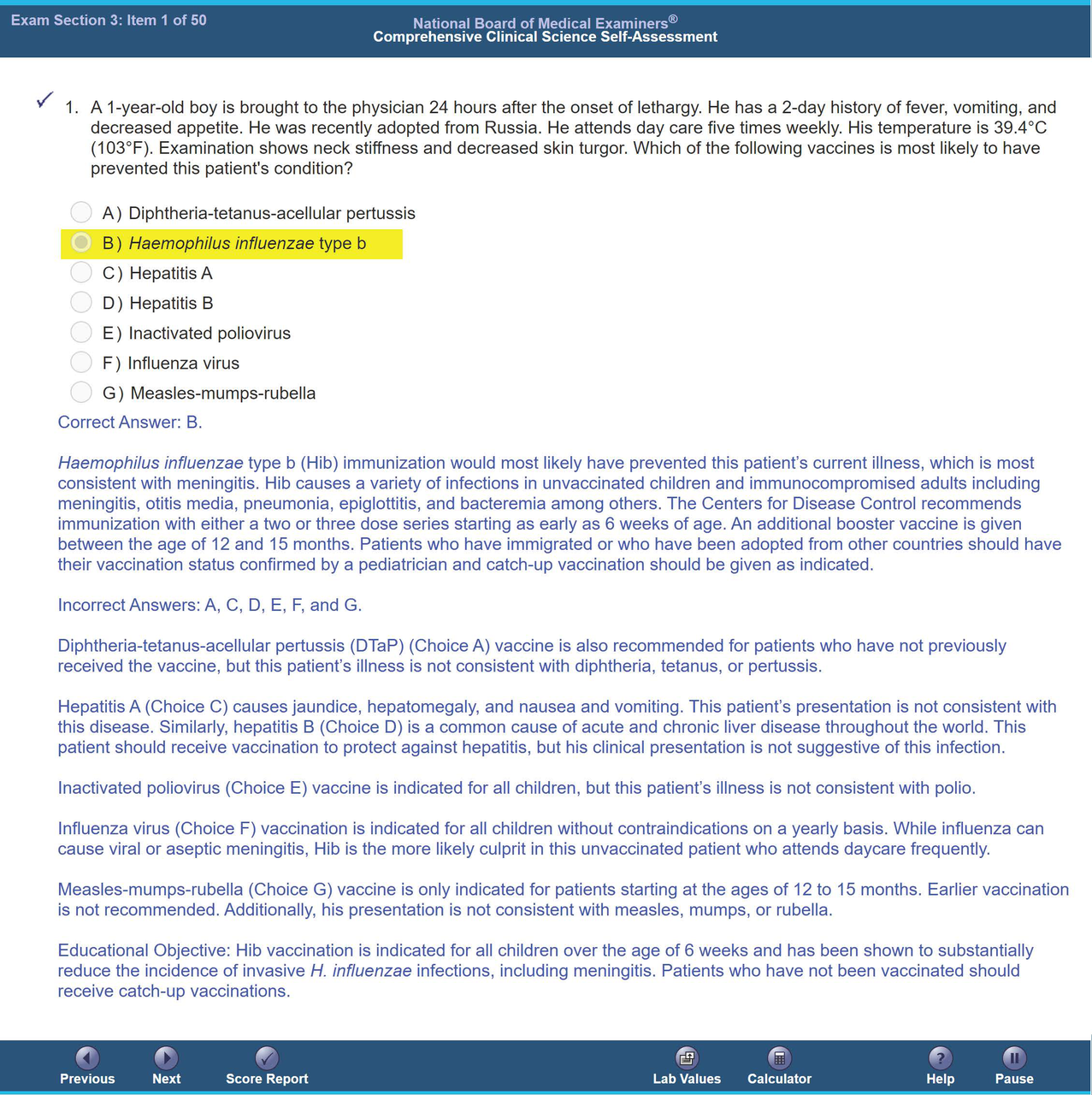
Item 2: T-Lymphocyte Dysfunction
- A 2-year-old girl presented with cough and weight loss; the absence of PPD reaction alongside Mycobacterium tuberculosis in gastric aspirates indicates T-lymphocyte dysfunction.
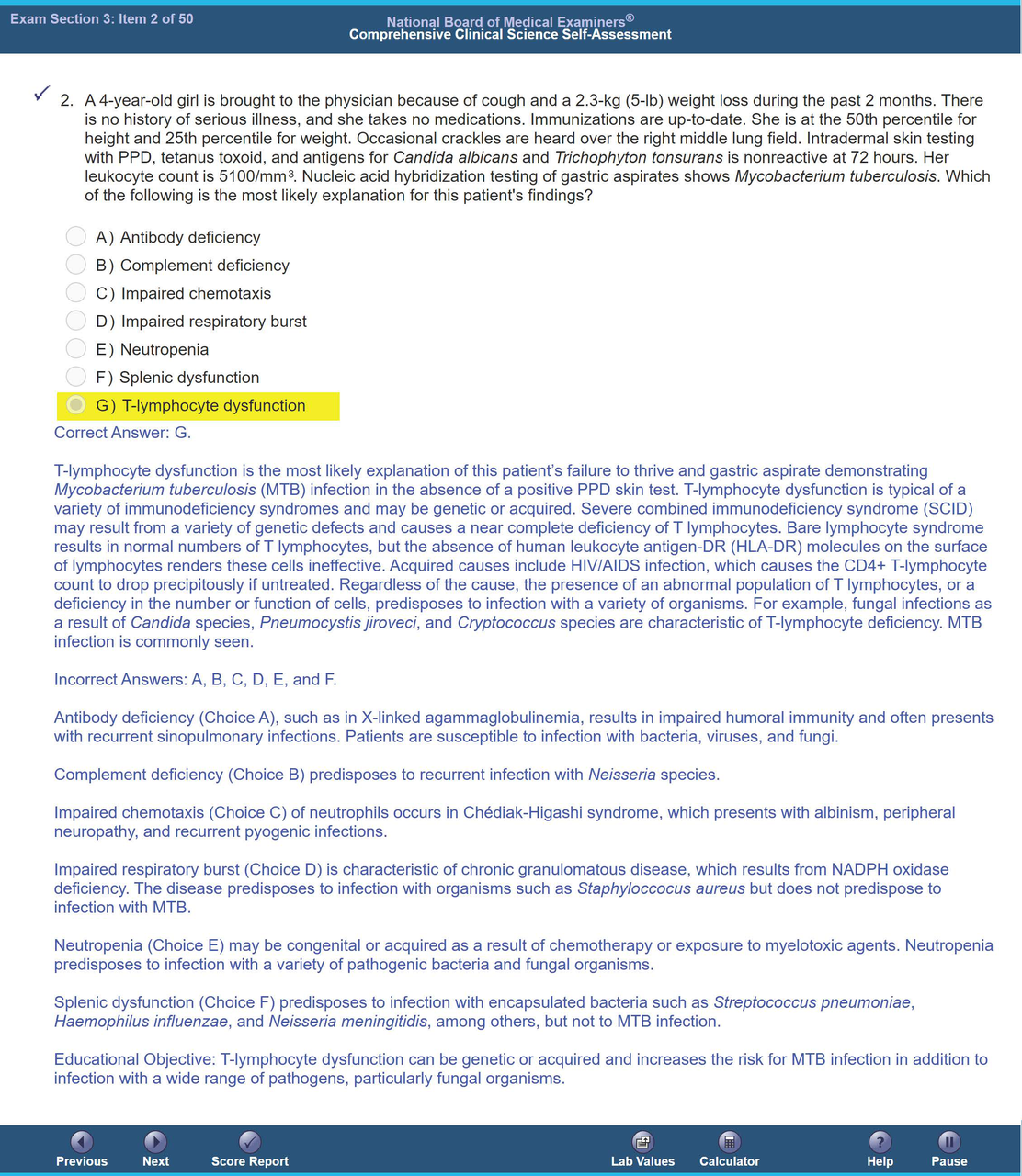
Item 3: Prophylaxis in HIV
- A 27-year-old male with HIV should receive immunizations for Influenza virus, pneumococcus, and hepatitis B over the next year as prophylaxis.
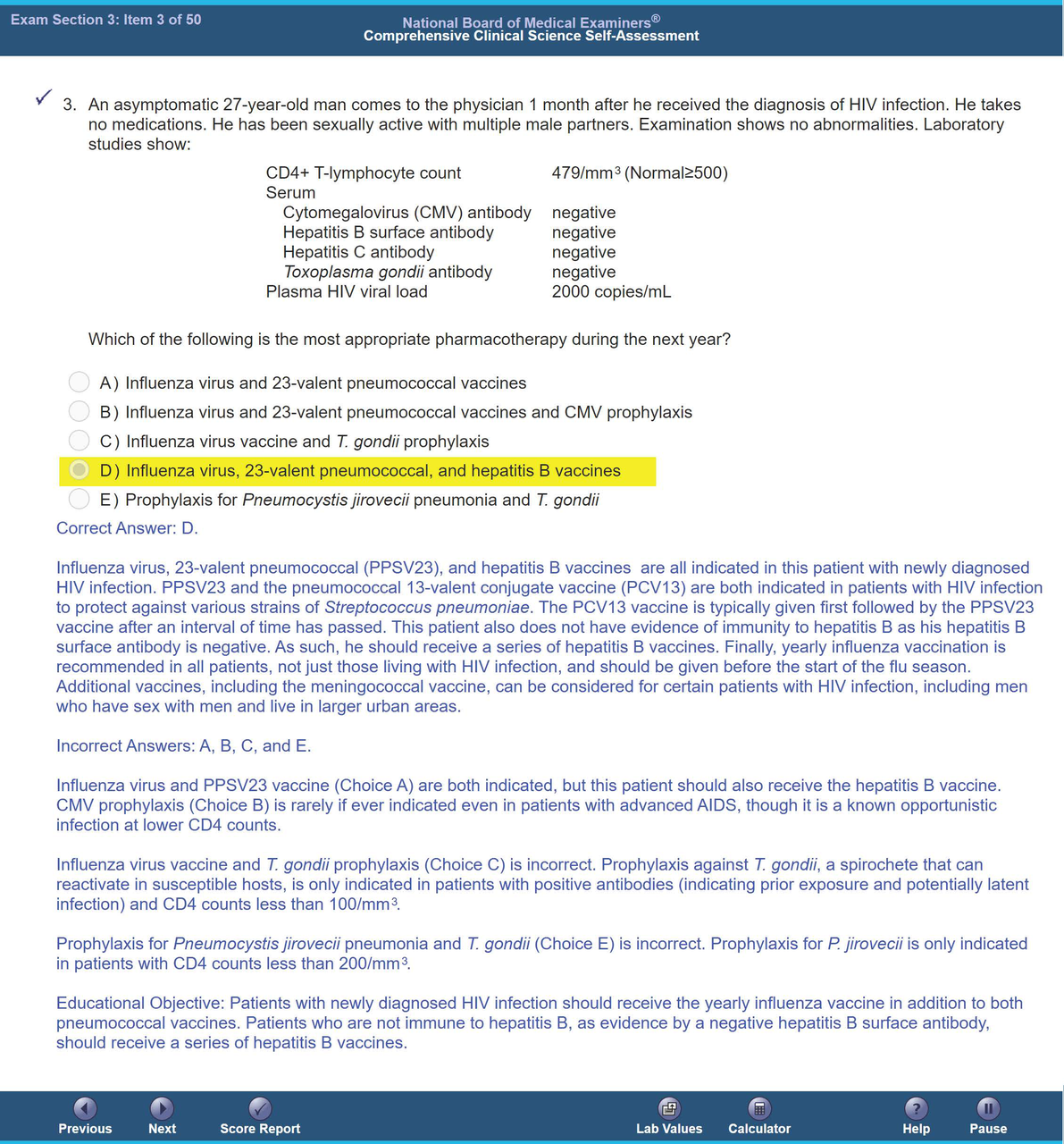
Item 4: Management of Sickle Cell Crisis
- A 24-year-old female with sickle cell disease in crisis should receive oxygen supplementation immediately to manage her acute pain and prevent complications like acute chest syndrome.
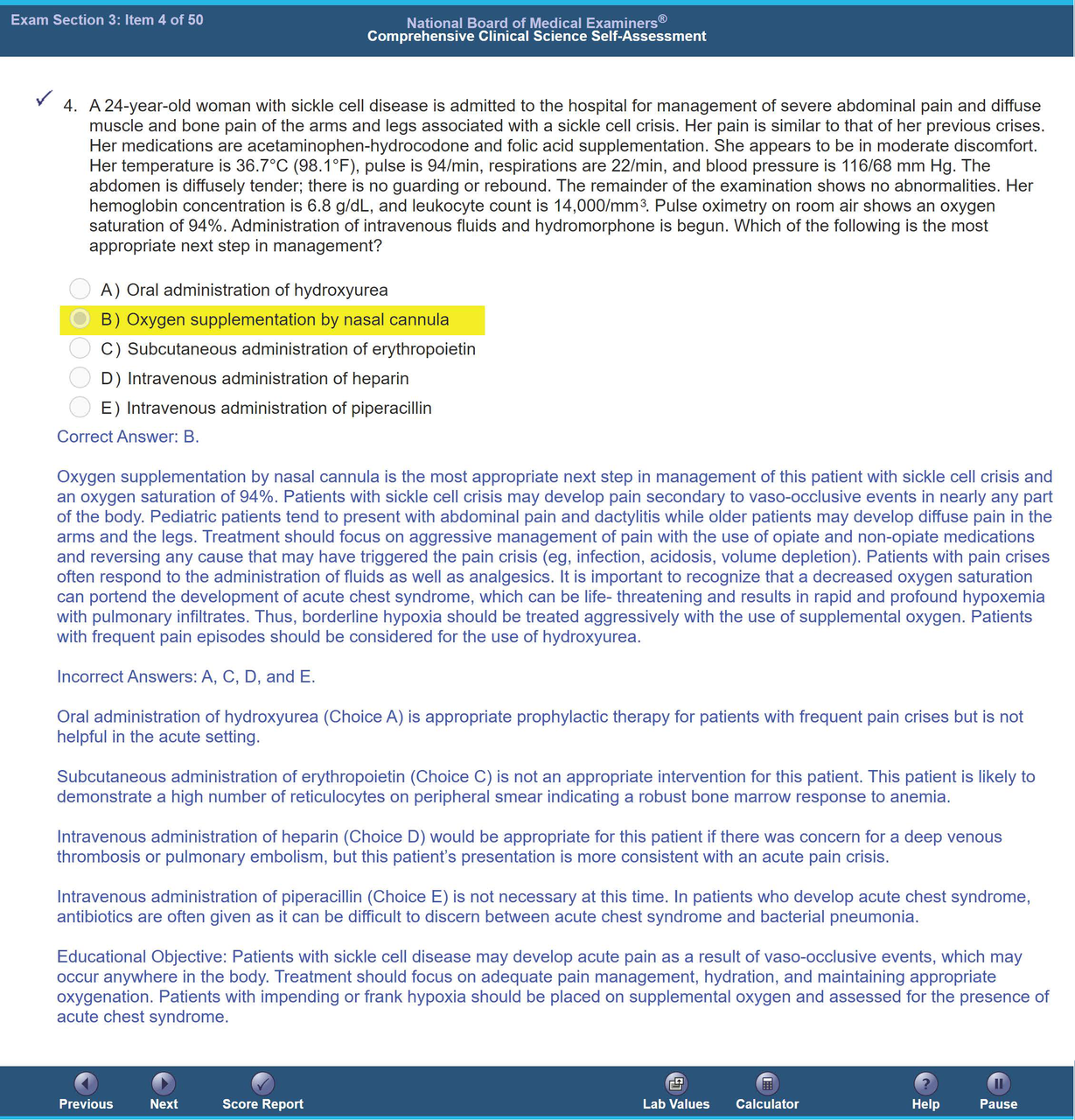
Item 5: Medication Effects on Neurology
- A 62-year-old woman with increasing neurologic symptoms is likely affected by metoclopramide, which caused medication-induced parkinsonism.
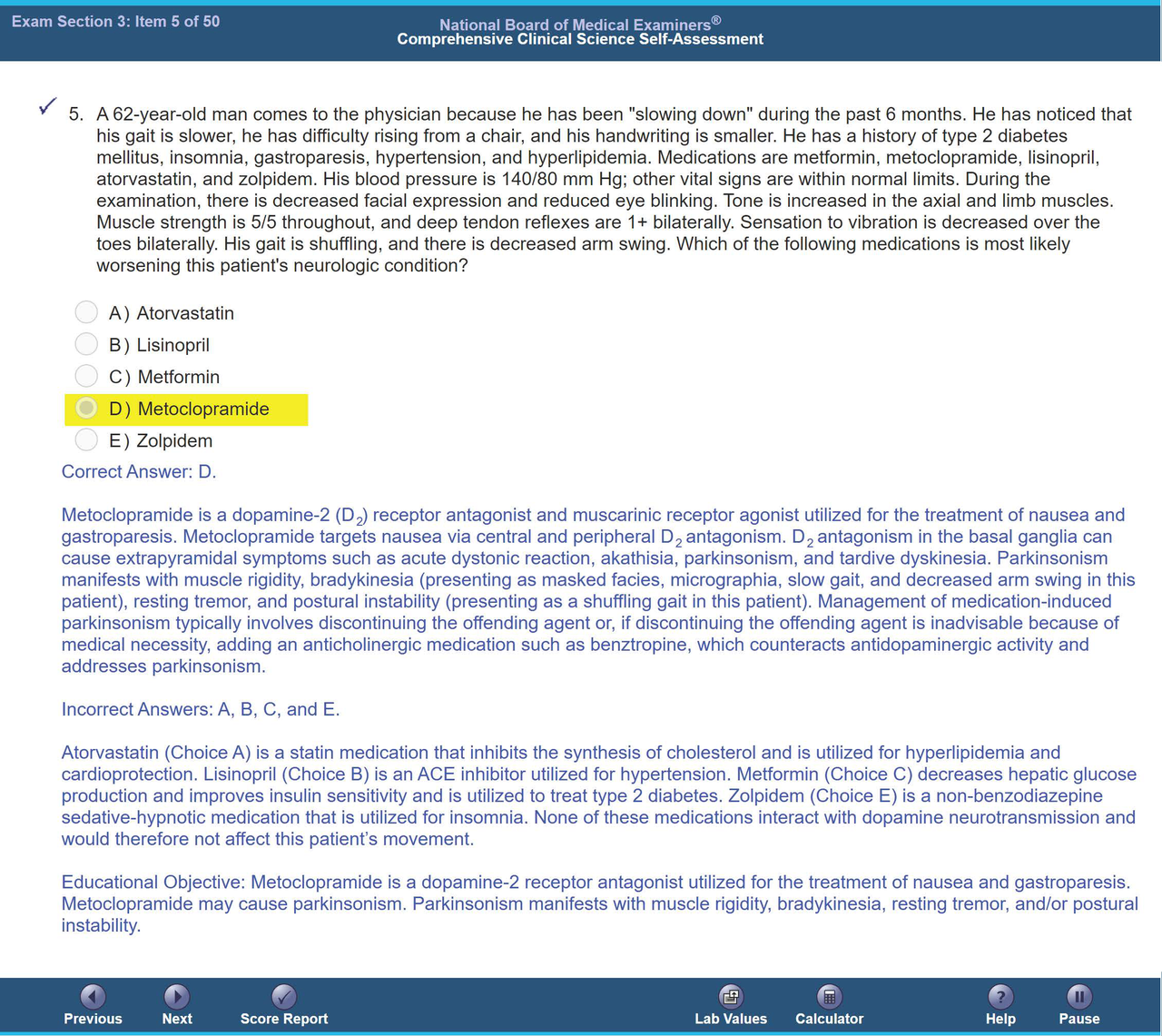
Item 6: Screening in Neurofibromatosis Type 2
- Annual MRI of the brain is necessary in patients with neurofibromatosis type 2 due to high tumor development rates.
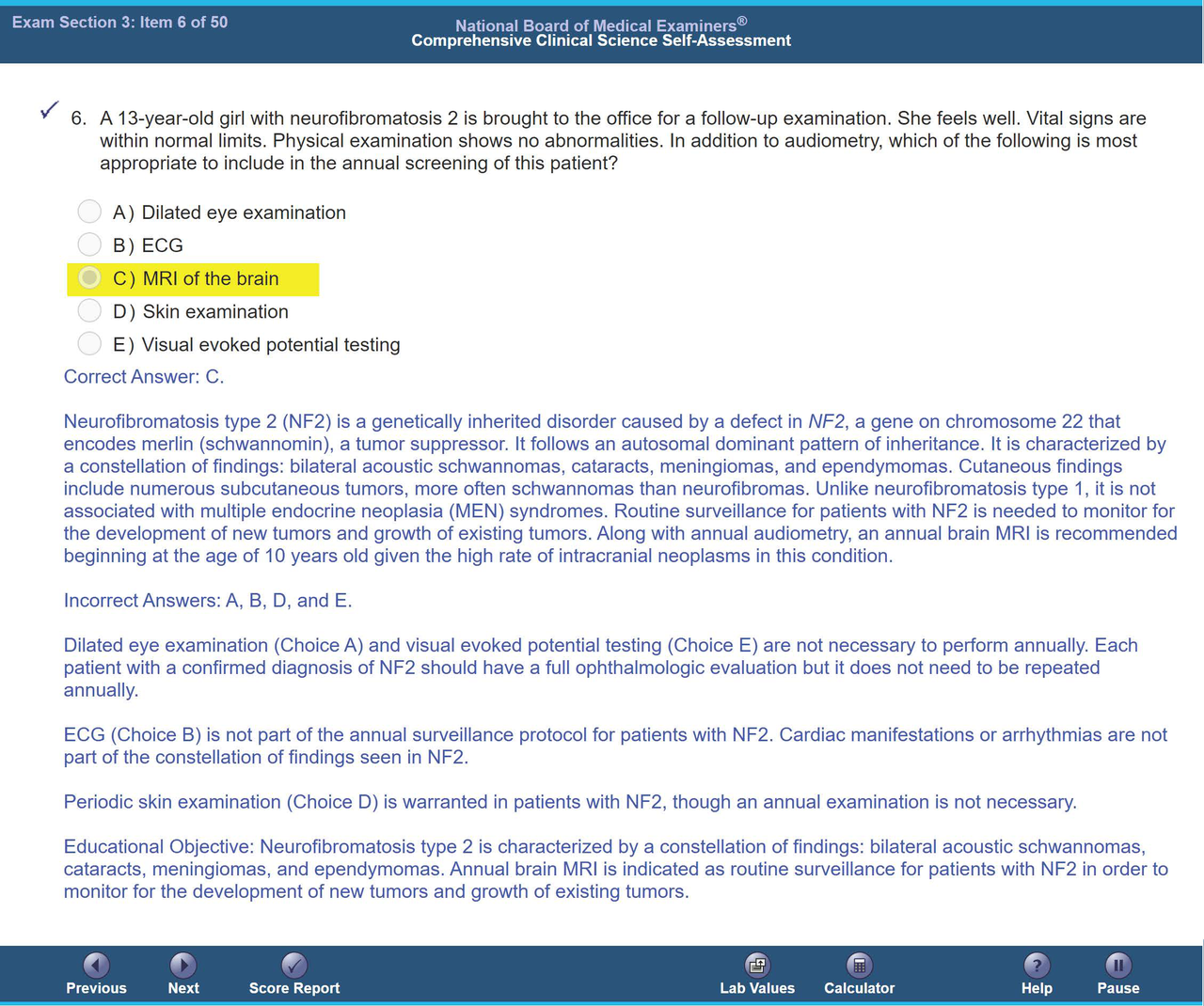
Item 7: Management of Hand-Foot-And-Mouth Disease
- A young girl with a viral rash should be managed with observation only, common in non-complicated viral infections like hand-foot-and-mouth disease.
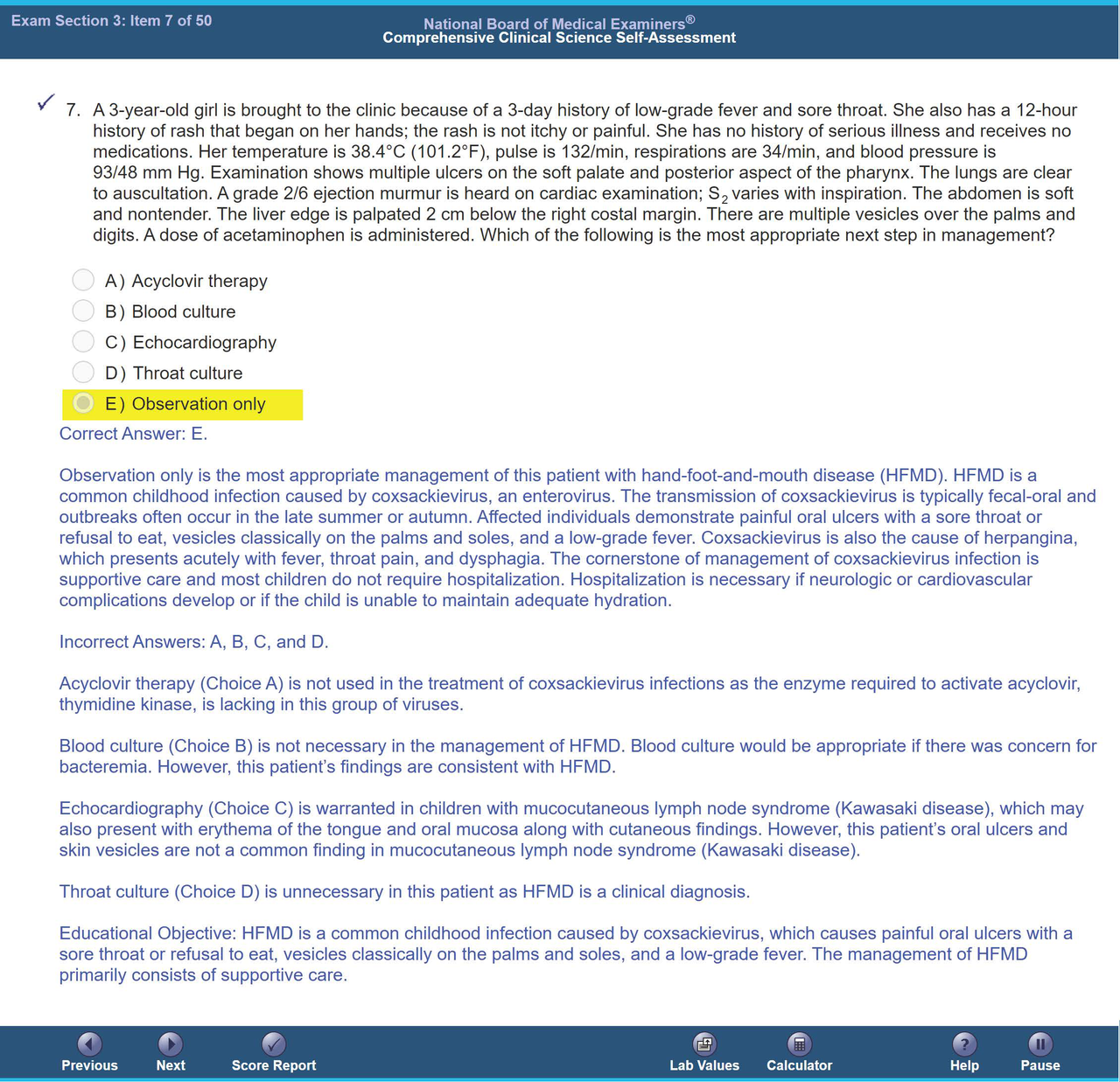
Item 8: Further Diagnostics for Shoulder Pain
- An 8-year-old boy should receive an MRI of the left upper extremity to evaluate suspected osteosarcoma after x-rays showed abnormalities.
Item 9: Diagnosing Knee Pain
- A diagnosis of chondromalacia patella for a 62-year-old patient exhibiting anterior knee pain and instability is likely.
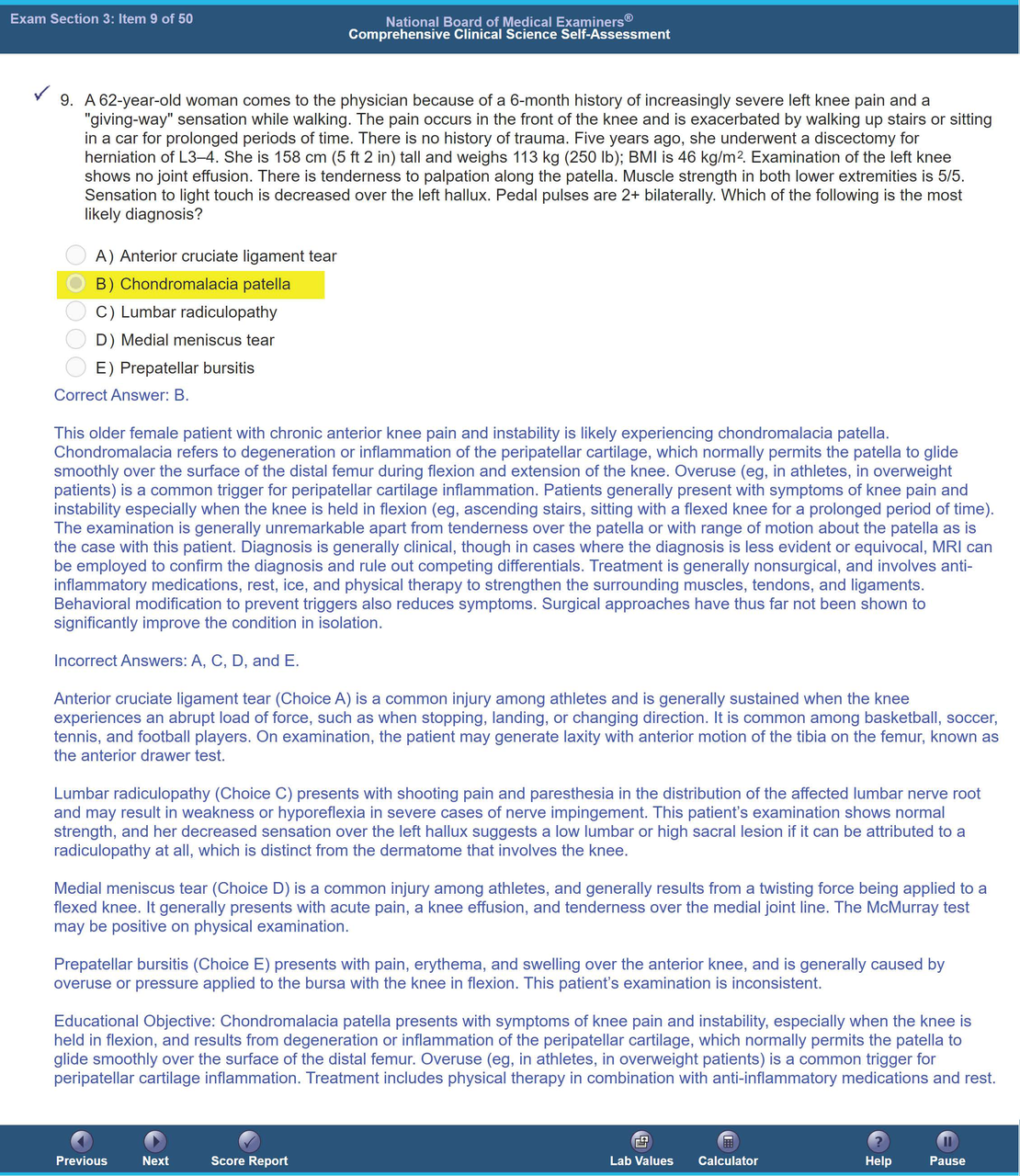
Item 10: Antibiotic Therapy Post-Infusion
- Proper management after an infusion for a 27-year-old male with pneumonia involves intravenous ceftriaxone and azithromycin.
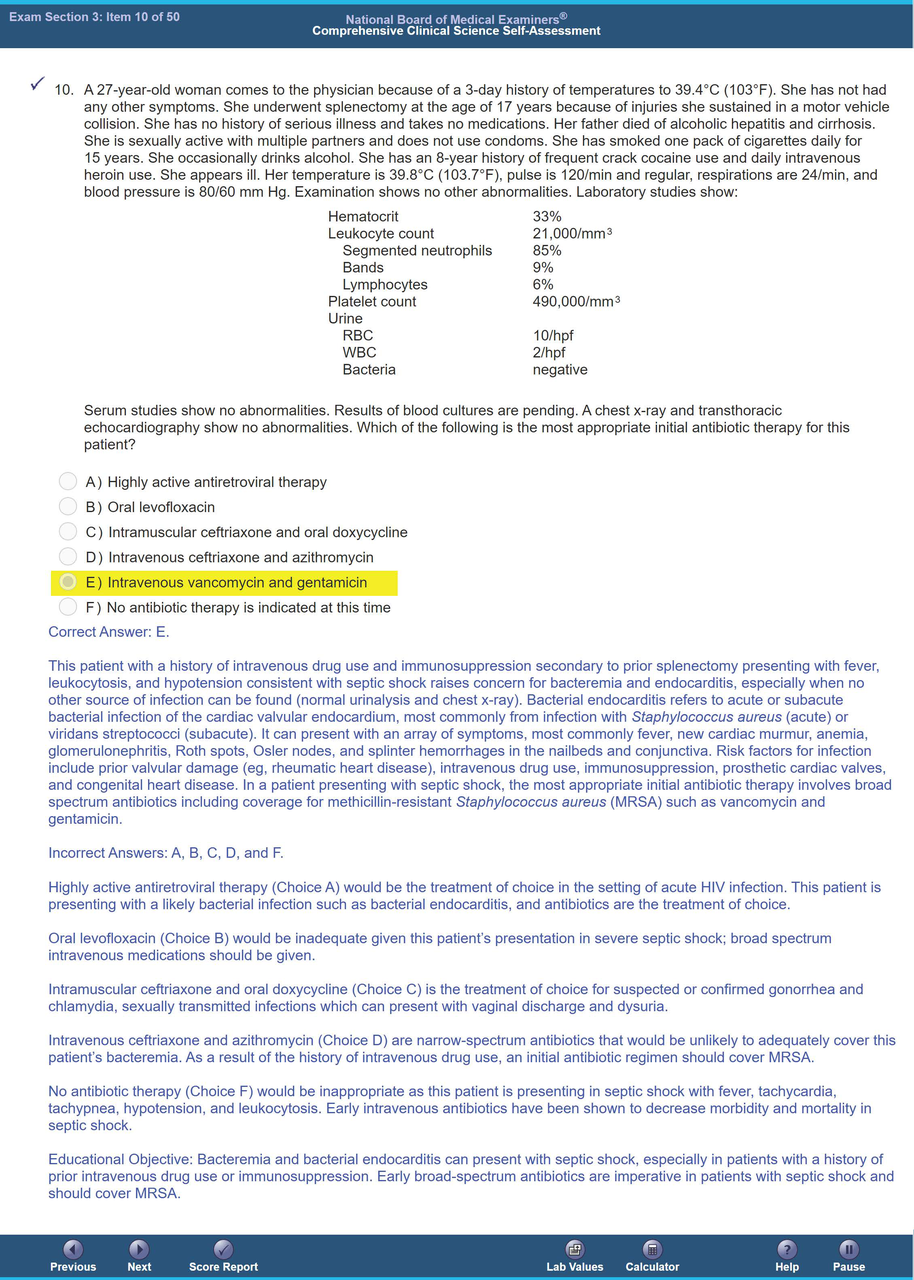
Item 11: Cardioversion in Atrial Fibrillation
- Electrical cardioversion is necessary for hemodynamically unstable patients with atrial fibrillation.
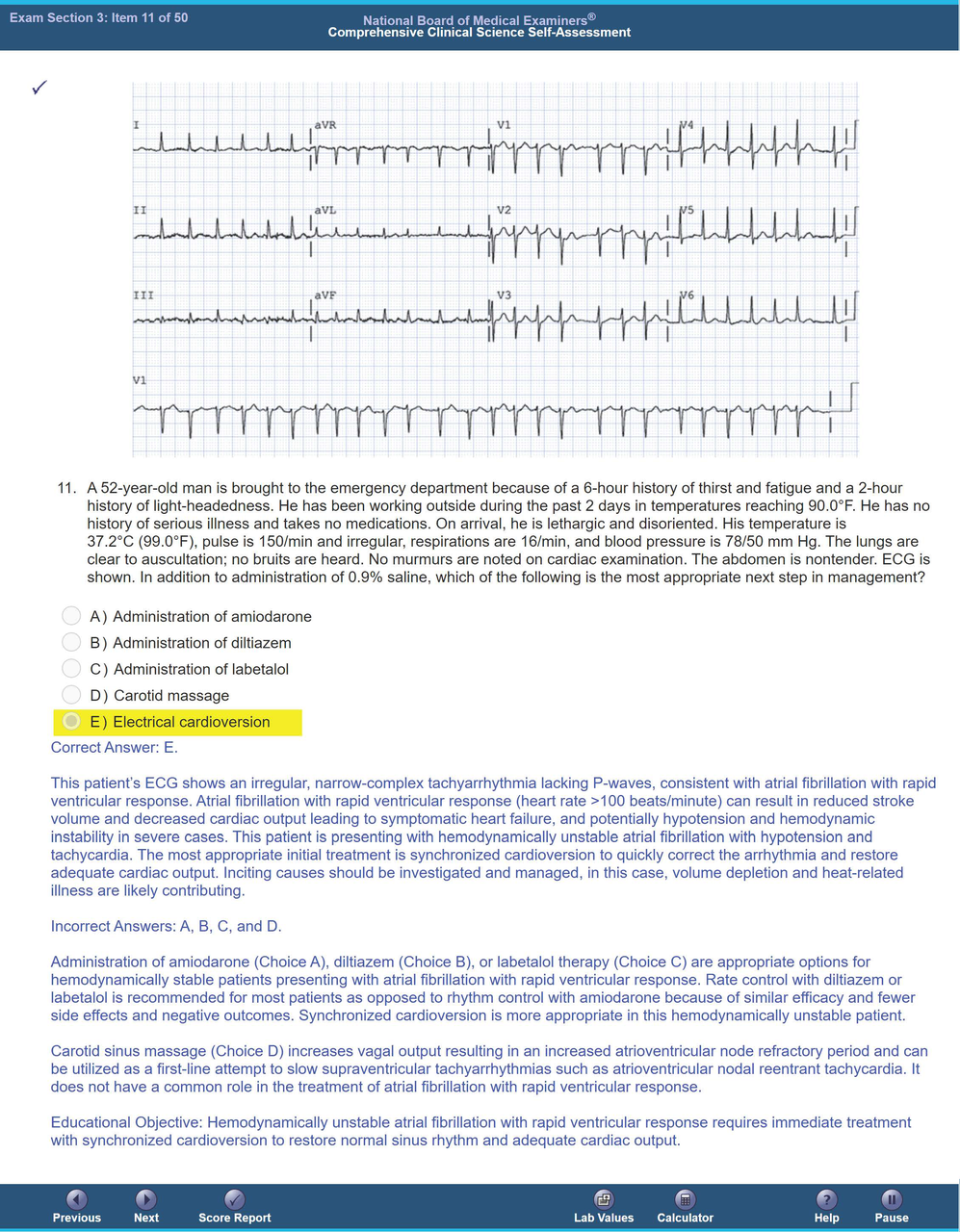
Item 12: Next Step in Cardiac Examination
- The most appropriate next step for the 62-year-old woman experiencing chest pain is cardiac catheterization for suspected acute coronary syndrome.
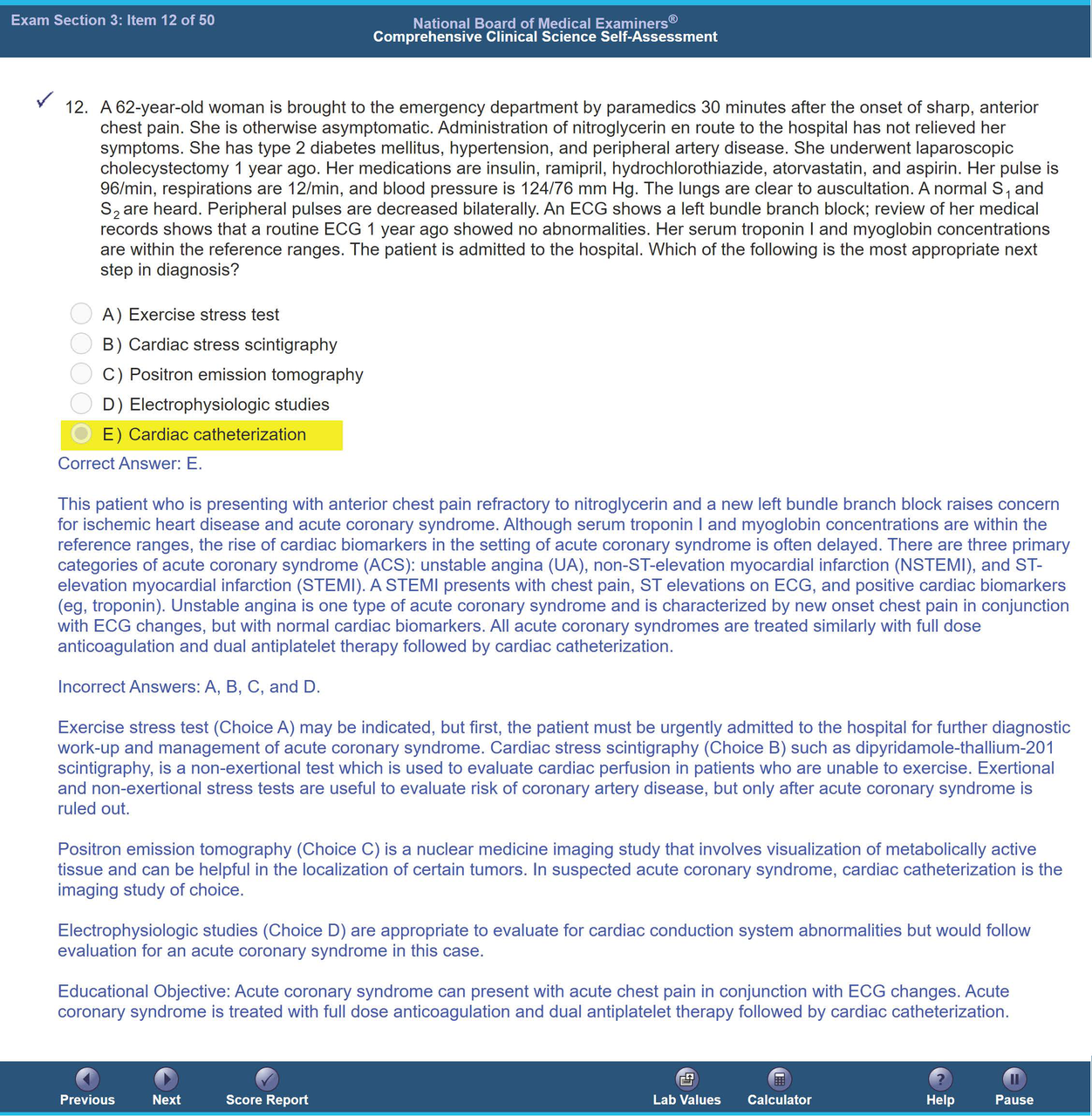
Item 13: Congestive Heart Failure Management
- Start lisinopril to address heart failure symptoms in an elderly patient with suspected mitral valve regurgitation.
Item 14: Managing Cough and Sore Throat
- The Bordetella pertussis PCR test is the most appropriate next step for diagnosing suspected pertussis.
Item 15: Immediate Asthma Management
- Inhaled albuterol therapy should be initiated for asthma episodes in the young patient.
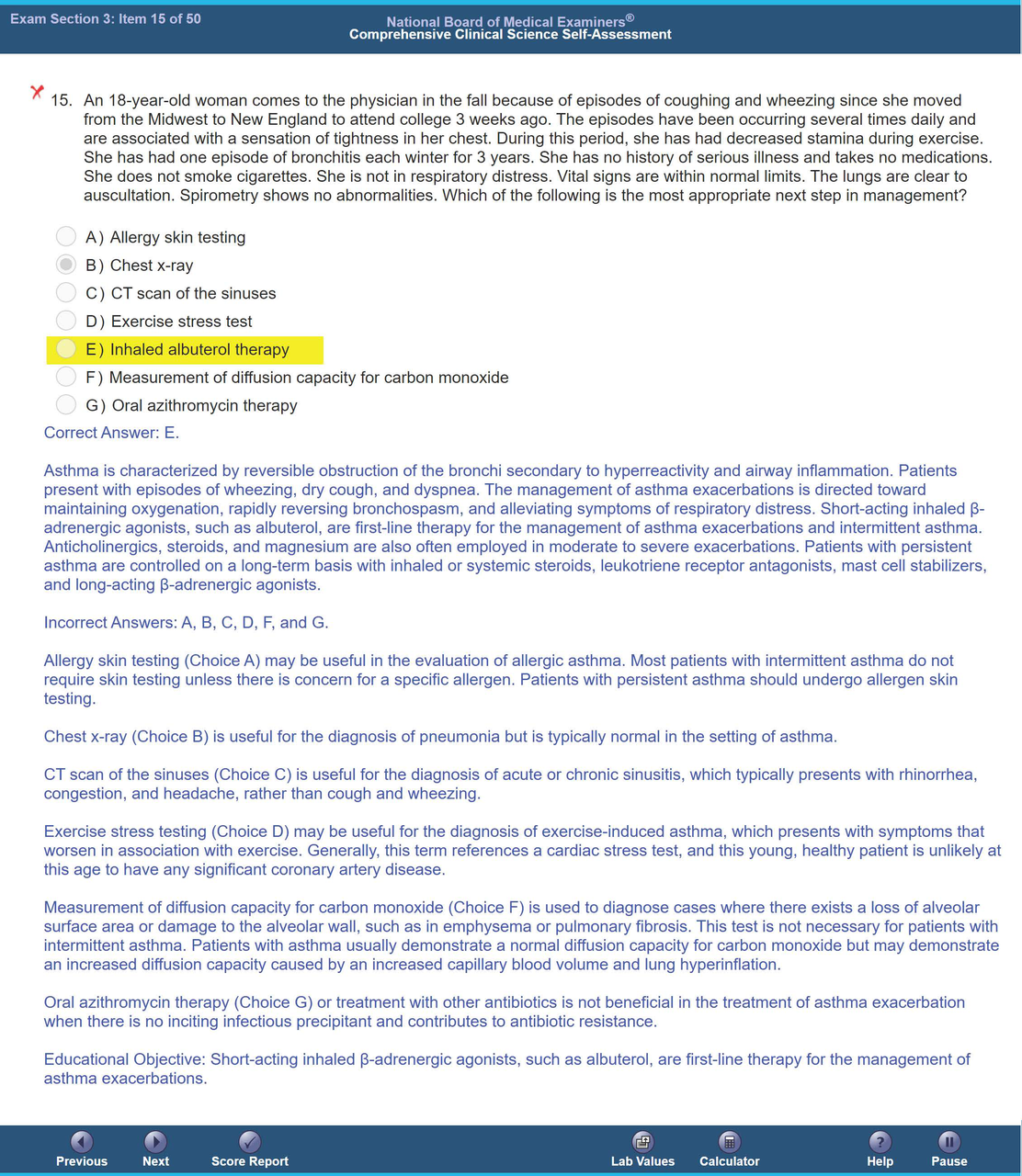
Item 16: Prognosis after Drowning Incident
- Purposeful movements after resuscitation indicate a good prognosis for the child post-drowning.

Item 17: Confirming Patient's Diagnosis
- The most appropriate diagnosis confirmation step for the patient found unconscious is measuring serum electrolyte levels or conducting tests like blood cultures.
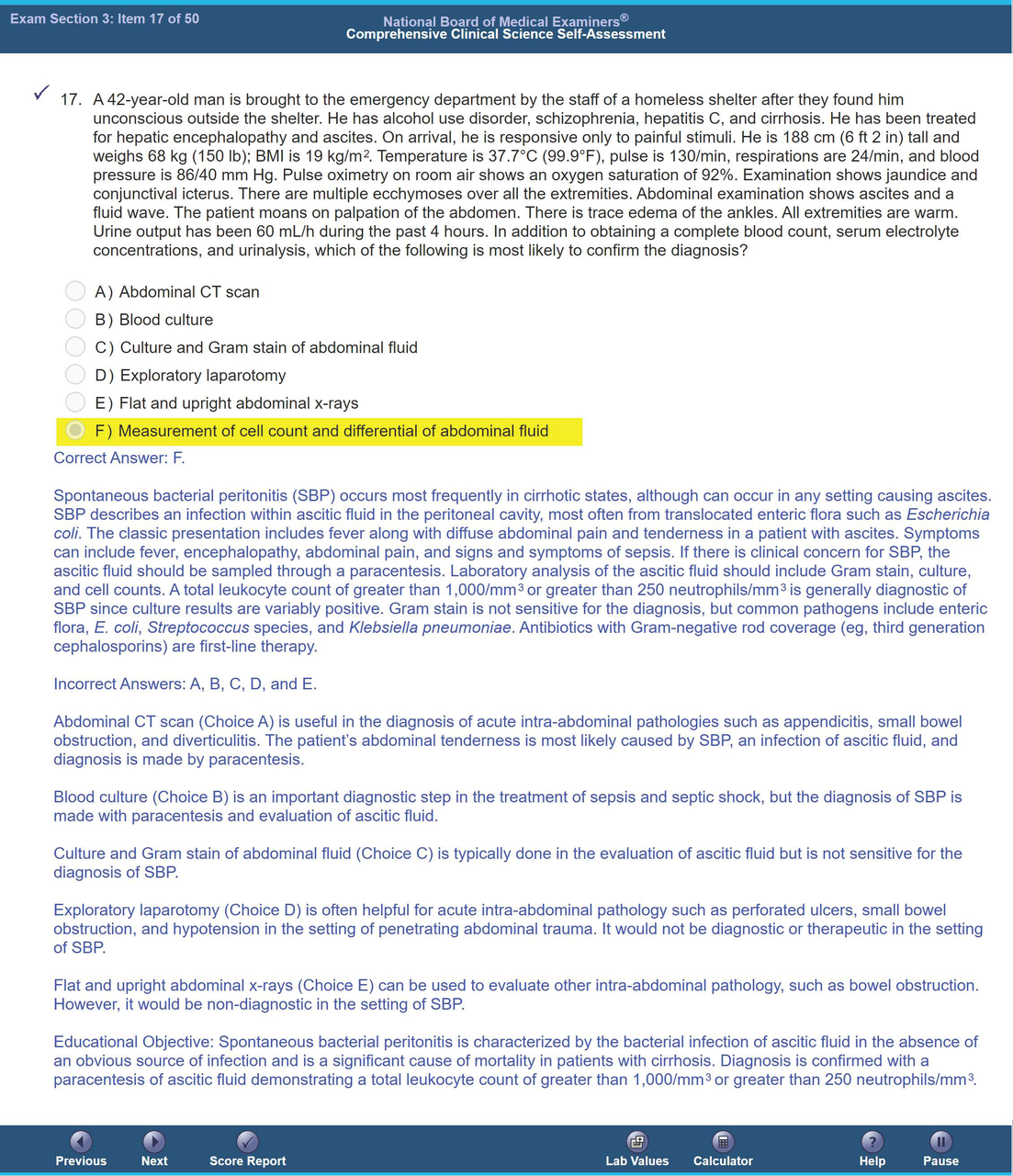
Item 18: Effective Medication for Inflammatory Bowel Disease
- Starting mesalamine therapy is appropriate for patients presenting with ulcerative colitis.

Item 19: Colon Cancer Screening Recommendation
- The average risk patient should begin colonoscopy at age 50.

Item 20: Diagnosis of Abdominal Pain
- A diagnosis of ischemic colitis is suggested by bright red rectal bleeding and abdominal cramps.

Item 21: Post-Surgical Abdominal Pain Analysis
- CT scan of the abdomen can help diagnose complications after an elective cholecystectomy.

Item 22: Secondary Hypertension Evaluation
- For the patient's poorly controlled hypertension, MR angiography of the renal arteries is warranted to evaluate possible renal artery stenosis.

Item 23: Newborn Respiratory Distress Causes
- The likely cause for a newborn's respiratory distress is pulmonary hypertension, particularly after meconium aspiration.

Item 24: Clinical Decision in Early Pregnancy
- Dilation and suction evacuation is appropriate for managing hydatidiform moles with associated heavy vaginal bleeding.

Item 25: Post-Menopausal Bleeding Evaluation
- In cases of post-menopausal bleeding, endometrial sampling is essential to evaluate for potential malignancy.

Item 26: Anemia and Nephropathy
- The patient's acute renal failure and altered mental status are likely due to hyperosmolality secondary to diabetes.

Item 27: Post-Operative Management
- In a post-surgical patient with decreased urine output, a transfusion of packed red blood cells is indicated.

Item 28: Epididymitis Pathogen
- Chlamydia trachomatis is commonly the infective agent in cases of epididymitis, particularly in young males.

Item 29: Congestive Heart Failure Etiology
- The patient's symptoms post-chemotherapy suggest congestive heart failure, possibly due to anthracycline (doxorubicin) toxicity.
