Meld je aan om meer functies te ontgrendelen
- Sla dit deck op in je account
- Oefen met flashcards via gespreide herhaling
- Exporteer naar Anki (.apkg) of PDF
- Verwerk documenten tot 100 pagina's
- Afbeeldingen uit PDF's en documenten gehaald
- Betere tekstherkenning uit je PDF's en documenten
- Betere flashcards dankzij ons geavanceerdere AI-model
What is the primary purpose of the scientific method in agriculture?
What are the core steps of the scientific method in agricultural research?
What is meant by systematic observation in agricultural research?
What is the role of hypothesis testing in agricultural experiments?
Name two key characteristics of scientific methods applied to agriculture.
What are essential elements of experimental design in agricultural research?
What is the final analytical step after experimentation in agricultural research?
Give examples of agricultural topics that can be investigated using the scientific method (illustrated).
What agricultural elements are shown in the chapter cover collage?
Which university and college produced the chapter titled 'The Scientific Method'?
What is the scientific method in agriculture?
What are the core activities named in the scientific method in agriculture?
What does the standardized set of techniques for building scientific knowledge include?
What is the primary purpose of applying the scientific method in agriculture?
How might an illustration of a scientist examining a strange plant relate to the scientific method in agriculture?
Flashcards in dit deck (15)
-
What is the primary purpose of the scientific method in agriculture?
- To use systematic observation, hypothesis testing, experimentation, and analysis to improve agricultural practices
method purpose -
What are the core steps of the scientific method in agricultural research?
- Systematic observation
- Hypothesis formulation
- Experimentation
- Analysis and reporting
steps method -
What is meant by systematic observation in agricultural research?
- Careful, structured collection of data and observations to detect patterns or problems
observation research -
What is the role of hypothesis testing in agricultural experiments?
- To propose a testable statement and evaluate it through controlled experiments
hypothesis experiments -
Name two key characteristics of scientific methods applied to agriculture.
- Systematic approach
- Empirical testing
characteristics scientific -
What are essential elements of experimental design in agricultural research?
- Control or comparison groups
- Replication
- Clear variables
design experiments -
What is the final analytical step after experimentation in agricultural research?
- Data analysis and reporting of results
analysis reporting -
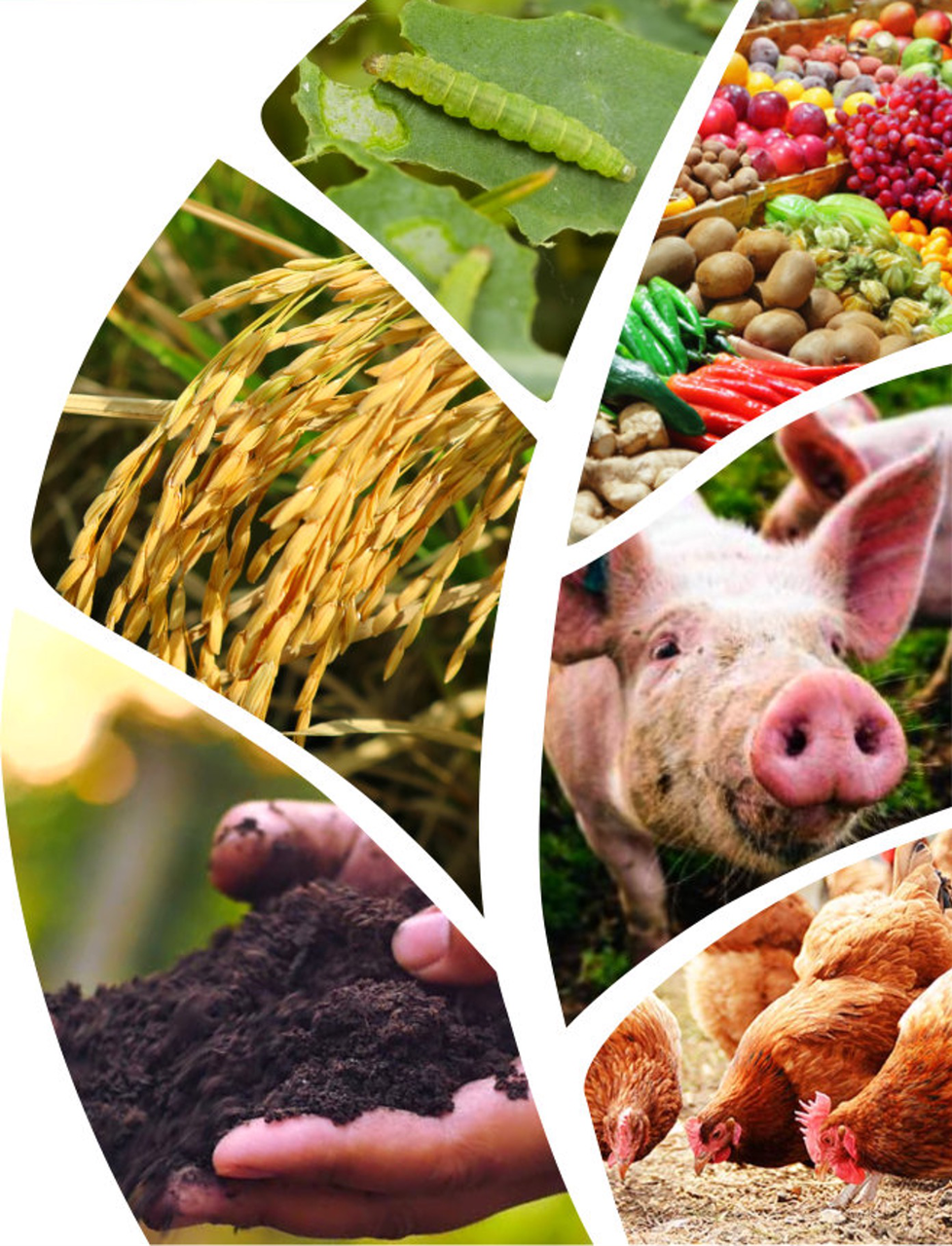
Give examples of agricultural topics that can be investigated using the scientific method (illustrated).
- Pest effects on rice, soil quality testing, livestock health studies
 examples applications
 -
What agricultural elements are shown in the chapter cover collage?
- Green caterpillar on a rice stalk
- Close-up of ripe rice grains
- Pig's face
- Hands holding soil
- Chickens
agriculture image -
Which university and college produced the chapter titled 'The Scientific Method'?
- Caraga State University
- College of Agriculture and Agri-Industries, Ampayon, Butuan City, Agusan del Norte, Philippines
institution college -
What is the scientific method in agriculture?
- A systematic approach of observation, experimentation, and analysis used to develop knowledge and improve agricultural practices.
definition agriculture -
What are the core activities named in the scientific method in agriculture?
- Observation
- Experimentation
- Analysis
core methods -
What does the standardized set of techniques for building scientific knowledge include?
- How to make valid observations
- How to interpret results
- How to generalize those results
techniques research -
What is the primary purpose of applying the scientific method in agriculture?
- To develop knowledge and improve agricultural practices.
purpose agriculture -
How might an illustration of a scientist examining a strange plant relate to the scientific method in agriculture?
- It represents observation and investigation used to develop knowledge and improve practices.
 image observation
Methods in Agricultural Research — Chapter I: The Scientific Method
Overview
- The scientific method is a structured approach used to generate reliable knowledge through observation, hypothesis, experimentation, and analysis.
- In agriculture it guides improvements in crop production, pest control, livestock management, and resource use efficiency.
Definition
- Scientific method (agriculture): a standardized set of procedures for collecting empirical evidence, testing ideas, and drawing justified conclusions to improve agricultural practice.
- Emphasizes valid observation, controlled testing, and generalization based on data.
Why it matters in agriculture
- Transforms observations (e.g., poor yield) into testable questions and actionable solutions.
- Reduces risk by relying on evidence rather than anecdote or tradition.
- Ensures results are reproducible and useful across contexts.
Core steps of the scientific method (practical view)
- Observation / problem identification — notice a pattern, decline, or opportunity in the field.
- Question — convert the observation into a clear, answerable question.
- Literature review & background — check prior studies to refine the question and method.
- Hypothesis — propose a testable, falsifiable statement (cause-effect or comparative claim).
- Experimental design — plan treatments, controls, replication, and randomization.
- Data collection — measure variables consistently using valid methods and instruments.
- Analysis & interpretation — summarize data, test hypotheses, and evaluate alternative explanations.
- Conclusion & communication — report results, limitations, and recommendations; publish or present.
Key characteristics of the scientific method
- Empirical: based on observed and measured evidence.
- Systematic: follows repeatable procedures.
- Objective: minimizes personal bias through controls and standardization.
- Falsifiable: hypotheses must be testable and disprovable.
- Transparent & reproducible: methods and data should be shared for verification.
Types of scientific reasoning
- Inductive reasoning: generalizing from specific observations to a broader rule (e.g., repeated field observations suggest a pest prefers cultivar A).
- Deductive reasoning: deriving specific predictions from a general theory or hypothesis (e.g., if fertilizer X increases N availability, then yield should rise).
- Abductive reasoning: inferring the most likely explanation for an observation (e.g., sudden wilting best explained by drought stress rather than disease).
Experimental design essentials (agriculture focus)
- Controls: include untreated or standard-treatment plots to compare effects.
- Replication: repeat treatments across independent units to estimate variability.
- Randomization: assign treatments randomly to avoid systematic bias.
- Blocking: group similar experimental units (soil type, slope) to reduce confounding.
- Sample size: plan adequate sample size to detect meaningful differences.
- Standardized measurements: use consistent timing, units, and instruments.
Basic data analysis and interpretation
- Start with descriptive statistics (means, ranges, variability) and visual plots.
- Use inferential tests to assess whether observed differences are unlikely by chance; choose tests matching data type and design.
- Distinguish correlation from causation; causal claims require controlled experiments or strong causal inference.
- Report effect sizes and uncertainty (confidence intervals, p-values) and discuss biological relevance.
Common pitfalls and how to avoid them
- Confounding variables: control or block known sources of variation.
- Insufficient replication: underpowered studies produce unreliable conclusions.
- Measurement error: calibrate instruments and train observers.
- Biased sampling: ensure random or representative sampling.
- Overgeneralization: avoid applying results beyond tested conditions without evidence.
Reporting, ethics, and reproducibility
- Report methods and raw data clearly to enable replication.
- Consider ethical issues: animal welfare, environmental impacts, and farmer consent.
- Acknowledge limitations and potential conflicts of interest.
Quick study tips for students
- Memorize the core steps and the purpose of each step.
- Practice designing simple experiments (identify control, replication, and randomization).
- Read methods sections in agricultural papers to see real examples.
- Focus on cause-effect logic and how design choices affect inference.