Sla je deck op voordat het weg is
Deze flashcards zijn nog niet opgeslagen — ze verdwijnen zodra je weggaat. Maak een gratis account aan om ze te bewaren en krijg toegang tot alles hieronder.
- Save this deck to your account
- Study with spaced repetition
- Export to Anki (.apkg) or PDF
- Process documents up to 100 pages
- Images extracted from your PDFs
- Sharper text extraction & a more advanced AI model
What is 'behavioral ecology'?
What does 'ethology' study?
How is 'behavior' defined in ethology?
What are 'proximate' causes of behavior?
What are 'ultimate' causes of behavior?
How does 'nature vs. nurture' relate to behavior?
What determines whether a behavior persists in a population?
What are 'innate behaviors'?
What is a 'Fixed Action Pattern (FAP)' and give an example?
What is 'migration' as an innate behavior?
What role do 'signals and communication' play in behavior?
Give an example of learned behavior in blue tits.
Provide an observed social behavior example from the text.
What visual is used to represent 'nature vs. nurture' in the materials?
What are the main modes of animal communication listed?
What is a stimulus-response chain?
Define kinesis and give the example provided.
What is taxis and what are three types named?
What is imprinting and when does it occur?
What is spatial learning and what related concept helps with navigation?
What is associative learning and what example is given?
What is social learning and what example is provided?
Which image illustrates selection for chemical detection and release?
Which image illustrates conditioning with food and a bell?
What does natural selection favor regarding behavior?
What is 'foraging behavior' in ecological terms?
What is 'sexual dimorphism'?
Name two mating systems mentioned.
What is altruism and give the example provided?
What is kin selection?
What is phototropism and which hormone regulates it?
List four plant tropisms.
What is an ecosystem?
How is metabolic rate commonly measured?
What is the relationship between metabolic rate and body mass?
How do endotherms and ectotherms differ in energy use?
Name the main trophic levels involved in energy flow in ecosystems.
What is the role of decomposers in an ecosystem?
Which image shows endotherm vs ectotherm body-temperature patterns?
What does the provided ecosystem diagram illustrate?
Flashcards in this deck (40)
-
What is 'behavioral ecology'?
The study of how organisms interact with their environment through behavior and how behavior affects survival and reproductive success.
behavioral_ecology definition -
What does 'ethology' study?
The scientific study of animal behavior focusing on mechanisms and evolutionary significance.
ethology definition -
How is 'behavior' defined in ethology?
Observable actions of an organism in response to its environment.
behavior definition -
What are 'proximate' causes of behavior?
Immediate stimuli and mechanisms that trigger behavior.
causes proximate -
What are 'ultimate' causes of behavior?
Evolutionary explanations for why a behavior exists.
causes ultimate -
How does 'nature vs. nurture' relate to behavior?
Behavior results from genetic programming (nature) and environmental influences (nurture); some behaviors are innate, others are learned.
nature_nurture behavior -
What determines whether a behavior persists in a population?
Natural selection: behaviors that enhance survival and reproductive success tend to persist over generations.
natural_selection evolution -
What are 'innate behaviors'?
Genetically controlled behaviors exhibited in nearly all individuals of a species that do not require learning.
innate behavior -
What is a 'Fixed Action Pattern (FAP)' and give an example?
- A sequence of unchangeable, instinctive behaviors triggered by a stimulus
- Example: a goose retrieving an egg back to its nest
fap innate -
What is 'migration' as an innate behavior?
Seasonal movement of animals often influenced by environmental cues such as daylight and temperature.
migration innate -
What role do 'signals and communication' play in behavior?
Organisms use different signals to convey information.
communication signals -
Give an example of learned behavior in blue tits.
Blue tits learned to pierce bottles and siphon cream after using their beaks to peel bark for food.
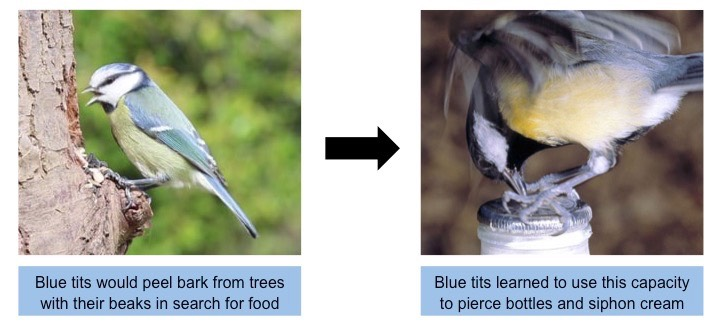 learning example
 -
Provide an observed social behavior example from the text.
A group of meerkats huddles together on the ground.
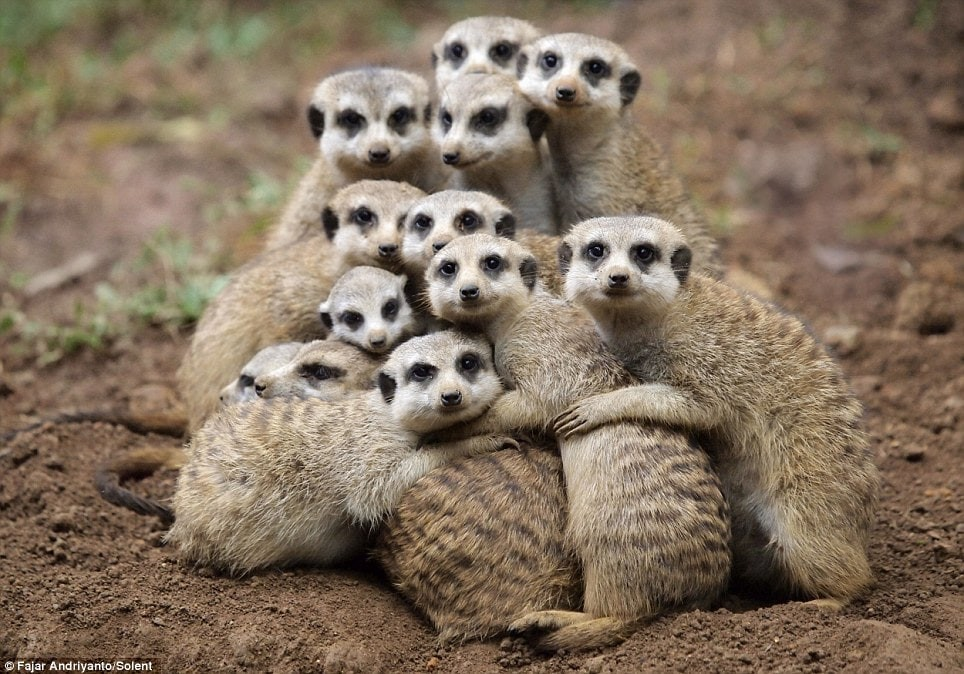 social example
 -
What visual is used to represent 'nature vs. nurture' in the materials?
An image showing DNA and a growing plant side by side illustrating genetic programming and environmental influences.
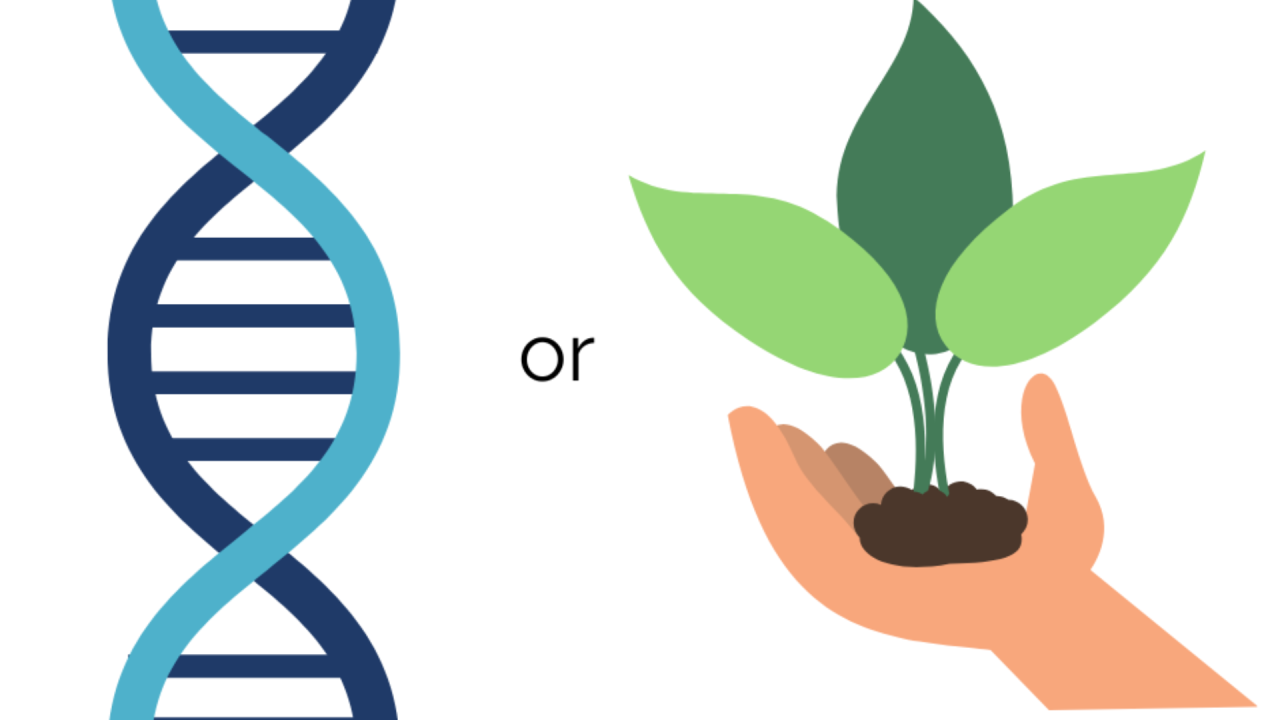 visual nature_nurture
 -
What are the main modes of animal communication listed?
- Visual (e.g., warning coloration in frogs)
- Auditory (e.g., bird songs, whale calls)
- Tactile (e.g., grooming in primates)
- Electrical (e.g., electric fish communication)
- Chemical (e.g., pheromones used by ants and bees)
communication behavior -
What is a stimulus-response chain?
A series of behaviors in response to sequential stimuli.
behavior concepts -
Define kinesis and give the example provided.
Kinesis: A non-directional response to a stimulus; example: increased activity in pill bugs in humid environments.
movement kinesis -
What is taxis and what are three types named?
Taxis: Directed movement toward or away from a stimulus. - Phototaxis: response to light - Chemotaxis: response to chemicals - Geotaxis: response to gravity
movement taxis -
What is imprinting and when does it occur?
Imprinting: Learning that occurs during a critical period and is often irreversible (e.g., ducklings following their mother).
learning imprinting -
What is spatial learning and what related concept helps with navigation?
Spatial learning: The ability to recognize landmarks to navigate; related concept: cognitive maps (mental representations of surroundings).
learning navigation -
What is associative learning and what example is given?
Associative learning: Learning by linking one stimulus with another; example: classical conditioning in Pavlov's dogs.
learning conditioning -
What is social learning and what example is provided?
Social learning: Learning by observing and imitating others; example: young chimpanzees learning to use tools.
learning social -
Which image illustrates selection for chemical detection and release?
Diagram showing selection for chemical detection on one side and selection for chemical signal release on the other:
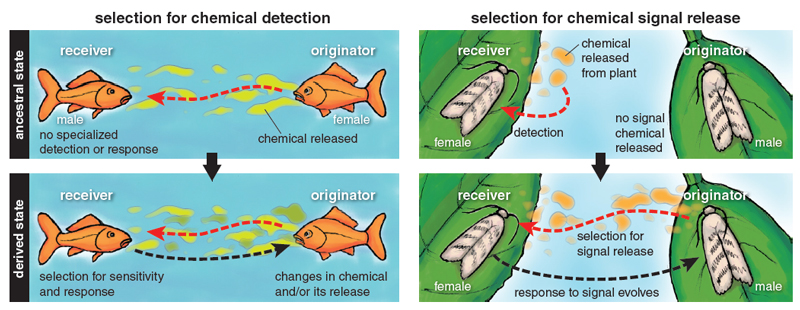 communication chemical
 -
Which image illustrates conditioning with food and a bell?
Illustration of conditioning (dog, food, ringing bell):
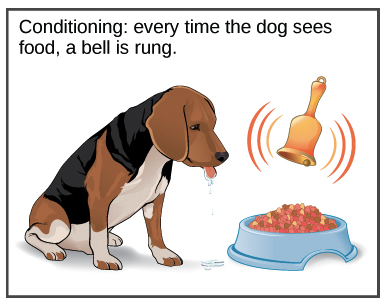 conditioning learning
 -
What does natural selection favor regarding behavior?
Behaviors that enhance survival and reproduction are favored by natural selection.
evolution behavior -
What is 'foraging behavior' in ecological terms?
Efficient food-seeking strategies that increase energy intake while minimizing risks.
behavior foraging -
What is 'sexual dimorphism'?
Differences in appearance between males and females, often due to mating competition.
behavior mating -
Name two mating systems mentioned.
- Monogamy: one mate
- Polygamy: multiple mates
mating systems -
What is altruism and give the example provided?
Altruism: behaviors that benefit others at a personal cost; example: worker bees sacrificing reproduction for the colony.
behavior altruism -
What is kin selection?
Altruistic behavior that benefits relatives, increasing shared genetic fitness.
evolution kin -
What is phototropism and which hormone regulates it?
Phototropism: growth in response to light, regulated by hormones like auxin.
plants tropisms -
List four plant tropisms.
- Phototropism: growth toward light
- Thigmotropism: growth in response to touch
- Geotropism/Gravitropism: growth in response to gravity
- Hydrotropism: growth toward water
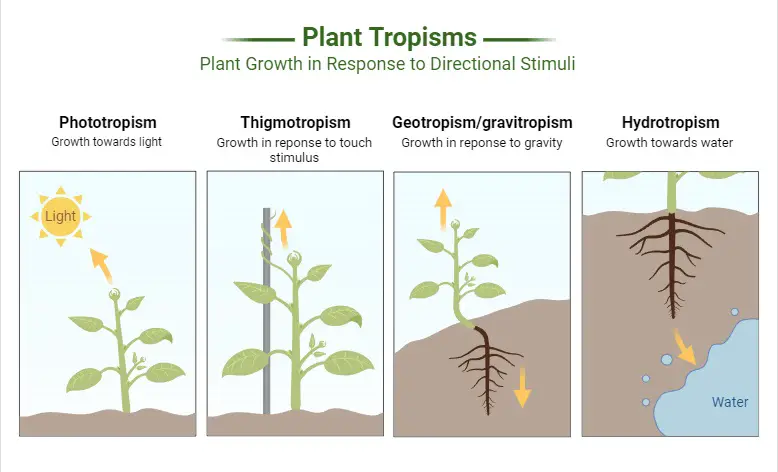 plants tropisms
 -
What is an ecosystem?
An ecosystem is all the living (biotic) and nonliving (abiotic) factors in a given area interacting to influence energy flow and nutrient cycling.
ecosystem ecology -
How is metabolic rate commonly measured?
Metabolic rate is commonly measured by oxygen consumption or carbon dioxide production.
metabolism physiology -
What is the relationship between metabolic rate and body mass?
Metabolic rate is inversely proportional to body mass; smaller animals tend to have higher metabolic rates than larger animals.
metabolism scaling -
How do endotherms and ectotherms differ in energy use?
- Endotherms maintain a constant internal temperature and require more energy.
- Ectotherms rely on environmental heat sources and use less energy.
thermoregulation physiology -
Name the main trophic levels involved in energy flow in ecosystems.
- Primary producers (autotrophs)
- Primary consumers (herbivores)
- Secondary consumers (carnivores eating herbivores)
- Tertiary consumers (carnivores eating carnivores)
- Decomposers
trophic energy -
What is the role of decomposers in an ecosystem?
Decomposers break down dead organic material and recycle nutrients.
decomposition nutrients -
Which image shows endotherm vs ectotherm body-temperature patterns?
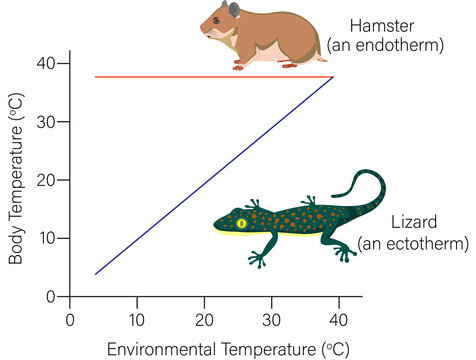 The hamster (endotherm) maintains a constant body temperature while the lizard (ectotherm) body temperature changes with environmental temperature.image thermoregulation
 -
What does the provided ecosystem diagram illustrate?
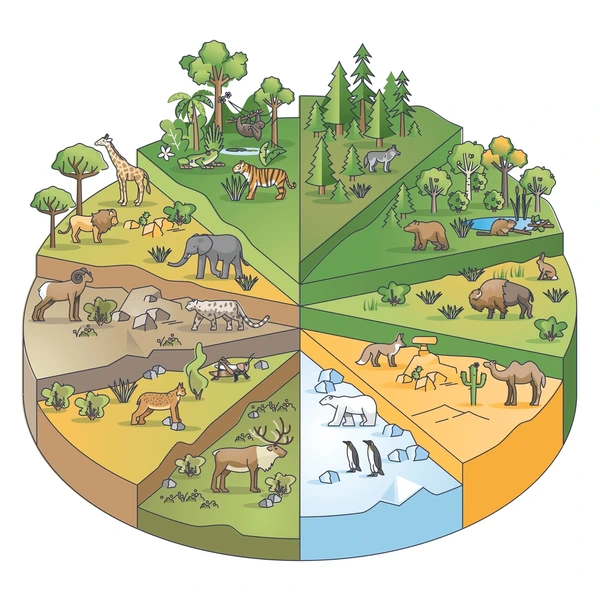 The diagram illustrates different ecosystems within a circle, showing biotic and abiotic factors and their interactions.image ecosystem
Behavioral Ecology & Ecosystems — Study Notes
What is behavioral ecology?
- Behavioral ecology studies how organisms behave in their environment and how behavior affects survival and reproduction.
- It links behavior to evolutionary fitness and ecological context.
Topic #1: Behavioral Ecology
Ethology — core framework
- Ethology: scientific study of animal behavior, emphasizing mechanisms and evolutionary function.
- Distinguish causes:
- Proximate causes: immediate triggers and physiological/developmental mechanisms.
- Ultimate causes: evolutionary reasons why a behavior increases fitness.
Nature vs. nurture
- Behavior arises from both genetic programming and environmental learning.
- Natural selection acts on behavioral variation: adaptive behaviors increase in frequency.
Types of behavior
Innate behaviors (genetically programmed)
- Fixed Action Patterns (FAPs): stereotyped sequences triggered by a stimulus (e.g., egg‑retrieval in geese).
- Migration: seasonal, often cued by daylight or temperature.
- Signals & communication: multiple channels convey information: visual, auditory, tactile, electrical, chemical.
- Stimulus‑response chains: sequences of behaviors triggered by successive stimuli.
- Kinesis vs. taxis:
- Kinesis: non-directional change in activity (e.g., pill bugs moving more in dry areas).
- Taxis: directed movement toward/away from stimulus (phototaxis, chemotaxis, geotaxis).
Learned behaviors
- Imprinting: rapid learning during a critical period; often irreversible (e.g., ducklings following a parent).
- Spatial learning & cognitive maps: using landmarks and mental representations to navigate.
- Associative learning: linking stimuli (classical conditioning — Pavlovian example).
- Social learning: learning by observing others (e.g., tool use in primates).
Natural selection and behavior
- Behaviors that increase energy intake, survival, or reproductive success are favored.
- Foraging strategies balance energy gain against risk and time.
- Sexual selection & mating:
- Sexual dimorphism arises from mate competition or choice.
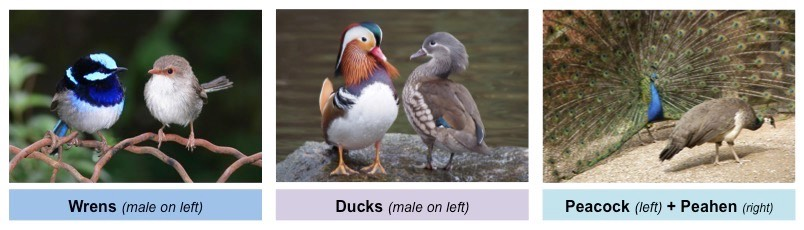
- Mating systems: monogamy, polygamy, etc., reflect ecological and social pressures.
- Cooperative and altruistic behaviors:
- Altruism: acts that help others at a personal cost.
- Kin selection: altruism can evolve when it increases inclusive fitness of relatives.
Plant responses (behavioral analogs)
- Plants respond without a nervous system using growth and chemical changes.
- Phototropism: growth toward light, mediated by hormones like auxin.
- Photoperiodism: physiological changes (e.g., flowering) in response to day length.
- Defenses: physical (thorns) and chemical (toxins like alkaloids) deter herbivores.
- Soil nutrients and composition shape plant growth and interactions.
Plant tropisms — quick reference
- Tropisms: directional growth responses to stimuli.
- Phototropism: toward light.
- Thigmotropism: response to touch.
- Geotropism (gravitropism): response to gravity.
- Hydrotropism: growth toward water.
Topic #2: Ecosystems and Energy
What is an ecosystem?
- An ecosystem includes all biotic (living) and abiotic (nonliving) components in an area and their interactions.
Metabolic rate and energy use
- Metabolic rate: energy use over time; often measured by O2 consumption or CO2 production.
- Smaller animals generally have higher mass‑specific metabolic rates than larger ones; qualitatively:
- Endotherms maintain steady internal temperature and expend more energy; ectotherms rely on environmental heat and use less energy.
Energy flow and trophic levels
- Energy moves through trophic levels:
- Primary producers (autotrophs): photosynthesis or chemosynthesis.
- Primary consumers: herbivores.
- Secondary/tertiary consumers: carnivores and higher predators.
- Decomposers: recycle nutrients from dead material.
- Energy transfer between levels is inefficient; energy pyramids show declining available energy at higher levels.

Key takeaways (for quick review)
- Behavioral ecology links behavior to fitness and environment.
- Distinguish proximate (how) vs ultimate (why) explanations.
- Behaviors can be innate (FAPs, migration, taxis) or learned (imprinting, conditioning, social learning).
- Natural selection shapes foraging, mating, and cooperative behaviors; kin selection explains some altruism.
- Plants respond via tropisms, photoperiodism, and chemical defenses despite lacking nervous systems.
- Ecosystems are networks of biotic and abiotic factors; energy flow proceeds from producers to consumers and decomposers.
- Small animals have higher mass‑specific metabolic rates; endothermy costs more energy than ectothermy.