Sign up to unlock more features
- Save this deck to your account
- Study flashcards with spaced repetition
- Export to Anki (.apkg) or PDF
- Process documents up to 100 pages
- Images extracted from PDFs and documents
- Better text extraction from your PDFs and documents
- Better flashcards with our more advanced AI model
What condition is likely caused by abnormalities in collagen, type I?
What are the educational objectives related to osteogenesis imperfecta?
What is the most likely diagnosis for a 1-year-old boy with weakness and hypotonia?
What are the key features of spinal muscular atrophy (SMA)?
What is the most likely cause of this child's obesity?
What defines overweight and obesity in children?
What is the correct diagnosis for the 10-month-old girl with a rash?
What is the educational objective regarding atopic dermatitis?
What is the most likely site of excessive hormonal production in a 6-year-old boy with signs of precocious puberty?
What is the educational objective regarding precocious puberty?
What is the effect of adrenal pathology in young boys?
What is the most likely diagnosis for a 3-week-old boy with bilious vomiting and abdominal pain?
What is the educational objective regarding congenital malrotation of the intestines?
What are the symptoms of midgut volvulus due to congenital malrotation?
What do X-ray findings of small bowel obstruction show?
What is the likely cause of the patient's hyponatremia?
What is the likely cause of the patient's hyponatremia in the context of meningitis?
What is a safe rate for sodium correction in hyponatremia?
What underlying conditions can cause SIADH?
What is the likely cause of the findings in the 2-month-old boy?
What is the educational objective regarding congenital torticollis?
What may fibrosis present as on physical examination?
What is the source of the medical question about a 2-month-old boy?
What is the most likely diagnosis for the case described?
What is the most likely diagnosis for the patient described?
What is the educational objective regarding histoplasmosis?
What is the correct answer for the diagnosis of a previously healthy 7-year-old girl with fever, fatigue, and cough?
What is the education objective related to diagnosing pneumonia in children?
What is the most appropriate recommendation for preventing food allergies in the next child?
What is the educational objective regarding food allergies in infants?
What is the most likely explanation for the patient's symptoms in the case of the 2-month-old boy?
What are the educational objectives regarding ventricular septal defects (VSDs)?
What is the correct answer for the medical case of a 2-month-old boy with fatigue and feeding difficulties?
What is the education objective related to the symptoms of the 2-month-old boy?
What is the most appropriate next step in diagnosis for septic arthritis in this patient?
What is the educational objective regarding Neisseria gonorrhoeae?
What does the culture of aspirate synovial fluid typically demonstrate in diagnosis?
What is the most appropriate next step in diagnosis for the presented case?
What is the characteristic of Beckwith-Wiedemann syndrome?
What is the common condition associated with Beckwith-Wiedemann syndrome?
What is the most appropriate next step in diagnosis for the 9-year-old girl?
What is the educational objective regarding chronic vesicoureteral reflux?
What should be measured to assess kidney function in patients?
What is the main educational objective regarding kidney function assessment?
What is the most appropriate next step in diagnosis for a child with suspected Meckel diverticulum?
What is a Meckel diverticulum?
What is the most appropriate treatment for carbon monoxide poisoning?
What are the symptoms of carbon monoxide poisoning?
What has been used to treat clonidine overdose?
What is the education objective regarding clonidine overdose treatment?
What is the treatment for carbon monoxide (CO) poisoning?
What is the key educational objective regarding carbon monoxide (CO)?
What is the correct treatment for a 4-year-old boy with confusion, headache, weakness, and dyspnea after exposure to a space heater?
What is the education objective regarding oxygen treatment?
What is the most likely cause of this patient's findings?
What is Graves disease?
What are common symptoms of Graves disease?
What is a key feature of thyroid eye disease in Graves disease?
What is the likely cause of Graves disease?
What is the most appropriate next step in management for a newborn with peripheral cyanosis and minimal movement?
What is the educational objective regarding neonatal resuscitation?
What is the underlying cause of bruising and thrombocytopenia in a newborn with a fleshy mass and a bruit over the liver?
What is the educational objective regarding Kasabach-Merritt syndrome?
What is the first-line treatment for tinea capitis?
What happens when a significant inflammatory response occurs in tinea capitis?
What is the educational objective regarding tinea capitis?
What is the most appropriate next step in diagnosis for a child with suspected duodenal hematoma after blunt abdominal trauma?
What educational objective is associated with duodenal hematoma after blunt abdominal trauma in children?
What is the most likely diagnosis for a newborn with respiratory distress and seizures?
What are the common causes of early neonatal sepsis?
When is bacterial infection more common in bronchiolitis and pneumonia?
What x-ray findings are consistent with bacterial infection in neonates?
What is the most likely diagnosis for the 18-month-old boy with symptoms of cough, pallor, and dark red urine?
What is the educational objective regarding HUS?
What is the most likely explanation for this patient's anemia?
What is the correct answer for the child's anemia diagnosis?
What is the educational objective regarding thalassemia minor?
What is the most likely diagnosis for the 17-year-old girl with irregular menses, hirsutism, and hyperpigmented plaques?
What are the key features of Polycystic Ovarian Syndrome (PCOS)?
What is the most likely diagnosis for the 7-month-old girl with oral thrush and Pneumocystis pneumonia?
What is the most likely diagnosis for a patient with oral thrush, diffuse lymphadenopathy, splenomegaly, and Pneumocystis pneumonia?
What should be included in the initial evaluation for suspected pediatric HIV?
What should be started for a patient once HIV infection is confirmed?
What is the educational objective regarding pediatric HIV/AIDS?
What are the AIDS-defining illnesses mentioned?
What is required for treatment of bacterial pneumonia or AIDS-defining illnesses?
What is the next step in evaluating a patient with unexplained exertional syncope?
What does an ECG typically show in patients with hypertrophic cardiomyopathy?
What is a characteristic feature of exertional syncope related to cardiac conditions?
What should be advised for a patient after an episode of exertional syncope?
What is the correct answer for the management of a previously healthy 16-year-old girl who fell and appeared unconscious for 15 seconds?
What is the education objective regarding the management of syncope in adolescents?
What are the characteristics of opioid overdoses?
What is the emergency treatment for opioid overdose?
What is the most likely diagnosis for a 14-year-old girl with right knee pain after jumping or running?
What is the correct answer for the diagnosis of a 10-year-old girl with knee pain after volleyball?
What is the education objective regarding knee pain in children?
What is a common cause of anterior knee pain in adolescents?
What is the mainstay of treatment for patellofemoral instability?
What are the symptoms of patellofemoral instability?
What is the educational objective regarding patellofemoral instability?
What is the most likely acid-base disorder in a 1-day-old newborn with tachypnea and cyanosis?
What does the patient's arterial blood gas evaluation indicate?
What is the educational objective regarding metabolic acidosis?
What is the management for an unruptured corpus luteum cyst?
What are potential complications of a corpus luteum cyst?
What is the educational objective regarding corpus luteum cysts?
What is the most likely cause of the patient's syncopal episode?
What is the educational objective related to breath-holding episodes?
What is the pathogenesis of the eye pain in the case of the 6-year-old boy?
What is the treatment for corneal abrasions?
What are the diagnostic methods for corneal abrasions?
What is the cause of pertussis?
What is the preventive measure for pertussis?
What is the correct answer for the diagnosis of a previously healthy 1-month-old girl with cough and difficulty breathing?
What is the education objective for understanding bronchiolitis in infants?
What is the recommended age for administering the HPV vaccine?
What is the educational objective regarding HPV vaccination?
What is the significance of HPV vaccination in terms of public health?
What is the likely change in cardiac output for a patient with severe anemia due to sickle cell disease?
What is the educational objective regarding peripheral oxygen delivery in severe anemia?
What is the most likely diagnosis for the 8-year-old girl with meningococcemia?
What is the educational objective regarding complement deficiencies?
What is the role of the MAC in the complement cascade?
What does deficiency in the MAC predispose individuals to?
What is the most likely cause of the cardiac findings in the infant?
What is the educational objective regarding pulmonary hypertension in neonates?
What is the main issue with the right ventricle in pulmonary vasculature remodeling?
What is the source of the medical exam question?
What can lead to abnormal and heavy uterine bleeding?
What happens during the follicular phase of the menstrual cycle?
What occurs after ovulation in the menstrual cycle?
What happens if no implantation occurs after ovulation?
What is a common side effect of ACE inhibitors like enalapril?
What is the educational objective regarding ACE inhibitors?
What is the most likely complication for the newborn with asplenia?
What is the role of the spleen in immunity?
What is the most appropriate next step in the management of the 12-year-old girl with decreased urine output?
What is the correct answer for the management of the patient with high-grade fever and decreased urine output?
What does the ECG show in this medical case?
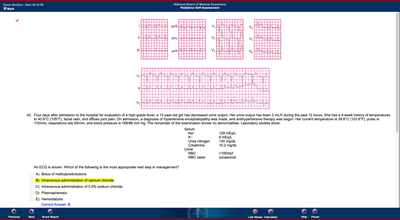
What is the correct next step in management for severe hyperkalemia?
What is the educational objective regarding acute renal failure?
What are the effects of salicylate poisoning?
What is the educational objective regarding salicylate toxicity?
What is the most appropriate next step in the management of a suspected urethral injury?
What is the educational objective regarding urethral injuries?
What should physicians advise when families inquire about discontinuing evidence-based treatment for children?
What is the educational objective regarding life-saving treatments for children?
What is the naturopathic treatment approach in this case?
What is the education objective for the physician in this context?
What is the characteristic of Spontaneous Bacterial Peritonitis (SBP)?
What are the common bacteria causing SBP?
How is SBP diagnosed?
What is the treatment for SBP?
What is the educational objective regarding SBP?
What is the most appropriate management for a 2-week-old girl with increased TSH and maternal propylthiouracil use?
Flashcards in this deck (156)
-
What condition is likely caused by abnormalities in collagen, type I?
Osteogenesis imperfecta, leading to: - Bone fractures - Scoliosis - Short stature - Skull deformities - Blue sclera - Fragile teeth - Hearing loss - Easy bruising - Severe cases may cause death in utero.
-
What are the educational objectives related to osteogenesis imperfecta?
In osteogenesis imperfecta: - Abnormalities of collagen, type I - Lead to connective tissue defects - Result in bone fractures and related complications.
-
What is the most likely diagnosis for a 1-year-old boy with weakness and hypotonia?
Progressive infantile spinal muscular atrophy (SMA) - Autosomal recessive mutation of SMN protein - Affects motor neurons - Symptoms: weakness, hyporeflexia, fasciculations - Progresses over months - Confirmed by genetic testing
-
What are the key features of spinal muscular atrophy (SMA)?
- Degeneration of lower brainstem motor nuclei and anterior horns
- Progressive, symmetric muscular weakness
- Lower motor neuron dysfunction
- Affects lower extremities more than upper
- Supportive treatment includes nutrition and respiratory function
-
What is the most likely cause of this child's obesity?
Excessive intake of total calories. Obesity in children often results from a diet rich in unhealthy, calorie-dense foods and insufficient exercise.
-
What defines overweight and obesity in children?
Overweight is defined as a BMI at or above the 85th percentile and below the 95th percentile. Obesity is defined as a BMI at or above the 95th percentile for age and gender.
-
What is the correct diagnosis for the 10-month-old girl with a rash?
Atopic dermatitis is characterized by pruritus and recurrent eczematous rashes, especially on cheeks and diaper area.
-
What is the educational objective regarding atopic dermatitis?
Atopic dermatitis is a chronic pruritic inflammatory skin disease common in children, primarily affecting the cheeks and diaper area due to moisture and irritation.
-
What is the most likely site of excessive hormonal production in a 6-year-old boy with signs of precocious puberty?
Adrenal cortex
Precocious puberty can be peripheral, caused by excess sex hormones from the adrenal glands or gonads.
-
What is the educational objective regarding precocious puberty?
Precocious puberty is the development of secondary sexual characteristics before age 8 in girls and age 9 in boys. It can be central (increased FSH and LH) or peripheral (decreased FSH and LH).
-
What is the effect of adrenal pathology in young boys?
Causes precocious puberty with age-appropriate testicular size due to androgen-induced feedback inhibition of FSH and LH.
-
What is the most likely diagnosis for a 3-week-old boy with bilious vomiting and abdominal pain?
Volvulus occurs when a portion of the gastrointestinal tract twists, leading to bowel obstruction. It presents with bilious vomiting and can cause intestinal necrosis if not recognized quickly.
-
What is the educational objective regarding congenital malrotation of the intestines?
Congenital malrotation predisposes to midgut volvulus, presenting with signs of small bowel obstruction like bilious vomiting and abdominal distension. X-ray findings include dilated loops of bowel with air-fluid levels.
-
What are the symptoms of midgut volvulus due to congenital malrotation?
- Bilious vomiting
- Abdominal distension
- Signs of small bowel obstruction
-
What do X-ray findings of small bowel obstruction show?
X-ray findings include dilated loops of bowel with air-fluid levels.
-
What is the likely cause of the patient's hyponatremia?
The patient's hyponatremia is likely caused by increased secretion of ADH (vasopressin) due to syndrome of inappropriate antidiuretic hormone (SIADH) associated with meningitis.
-
What is the likely cause of the patient's hyponatremia in the context of meningitis?
The likely cause is syndrome of inappropriate antidiuretic hormone (SIADH) due to meningitis, resulting in increased secretion of ADH without stimulus.
-
What is a safe rate for sodium correction in hyponatremia?
The safe rate of sodium correction is generally no more than 6 to 12 mEq/day to prevent complications like central pontine myelinolysis.
-
What underlying conditions can cause SIADH?
SIADH can be caused by medications, paraneoplastic processes, or central nervous system disorders like stroke, infection, or trauma.
-
What is the likely cause of the findings in the 2-month-old boy?
The patient likely experienced an injury of the sternomastoid muscle due to birth trauma, leading to congenital torticollis. This condition presents with a preferred head position, decreased cervical range of motion, and a mass of the SCM.
-
What is the educational objective regarding congenital torticollis?
Congenital torticollis typically presents in newborns with a preferred head position, decreased cervical range of motion, and a sternocleidomastoid muscle mass. Causes include birth trauma or intrauterine malposition of the head.
-
-
What is the source of the medical question about a 2-month-old boy?
A multiple-choice question from a medical exam.
-
What is the most likely diagnosis for the case described?
Histoplasmosis is an endemic mycosis caused by Histoplasma capsulatum. It presents with fevers, malaise, myalgia, cough, and hemoptysis, leading to calcified nodules and lymphadenopathy. Endemic in Mississippi and Ohio River valleys, Central and South America, sub-Saharan Africa, and Southeast Asia.
-
What is the most likely diagnosis for the patient described?
Histoplasmosis: An endemic mycosis caused by Histoplasma capsulatum. Symptoms include fever, malaise, myalgia, cough, and hemoptysis. Diagnosis involves detecting histoplasma antigen in serum/urine and histology showing yeast cells in macrophages.
-
What is the educational objective regarding histoplasmosis?
Histoplasmosis is an endemic fungal infection caused by Histoplasma capsulatum. It is endemic to the Mississippi and Ohio River valleys in the U.S. Risk factors include exposure to bird or bat droppings. Symptoms can present in acute, subacute, or chronic phases.
-
What is the correct answer for the diagnosis of a previously healthy 7-year-old girl with fever, fatigue, and cough?
Pneumonia - History of asthma - Imaging shows hazy infiltrates - Elevated white blood cell count
-
What is the education objective related to diagnosing pneumonia in children?
- Recognize symptoms: fever, cough, fatigue
- Understand risk factors: history of asthma
- Evaluate imaging results: hazy infiltrates
-
What is the most appropriate recommendation for preventing food allergies in the next child?
Exclusive breast-feed for at least 6 months is hypothesized to decrease the rate of food allergy in infants.
-
What is the educational objective regarding food allergies in infants?
Exclusive breast-feeding for at least 6 months is hypothesized to decrease the rate of food allergy in infants.
-
What is the most likely explanation for the patient's symptoms in the case of the 2-month-old boy?
A left-to-right shunt from a large ventricular septal defect (VSD) is the most likely explanation for this patient's cardiomegaly, increased pulmonary vascular markings, and failure to thrive.
-
What are the educational objectives regarding ventricular septal defects (VSDs)?
VSDs are common cardiac malformations that result in a left-to-right intracardiac shunt. They may form in isolation or with other malformations. Most are asymptomatic and self-resolve, but severe cases can lead to pulmonary hypertension and Eisenmenger syndrome if untreated.
-
What is the correct answer for the medical case of a 2-month-old boy with fatigue and feeding difficulties?
Left-to-right shunt (likely due to a congenital heart defect).
-
What is the education objective related to the symptoms of the 2-month-old boy?
Recognize the signs of congenital heart disease in infants.
-
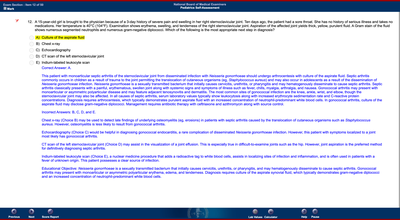
What is the most appropriate next step in diagnosis for septic arthritis in this patient?
- Culture of the aspirate fluid This patient likely has monoarticular septic arthritis due to Neisseria gonorrhoeae infection, which requires arthrocentesis with culture for diagnosis.
-
What is the educational objective regarding Neisseria gonorrhoeae?
- Neisseria gonorrhoeae is a sexually transmitted bacterium.
- It can cause cervicitis, urethritis, or pharyngitis.
- It may disseminate hematogenously to cause septic arthritis.
- Gonococcal arthritis presents with monoarticular or asymmetric polyarticular symptoms.
-
What does the culture of aspirate synovial fluid typically demonstrate in diagnosis?
- Gram-negative diplococci
- Increased concentration of neutrophil-predominant white blood cells
-
What is the most appropriate next step in diagnosis for the presented case?
Refer to the image for details:
-
What is the characteristic of Beckwith-Wiedemann syndrome?
- Above average birth weight
- Macrosomia
- Macroglossia
- Visceromegaly
- Renal malformations
- Omphalocele
- Increased risk for malignancy (e.g., Wilms tumor, hepatoblastoma)
-
What is the common condition associated with Beckwith-Wiedemann syndrome?
Neonatal hyperinsulinemic hypoglycemia affects as many as half of the children with Beckwith-Wiedemann syndrome.
-
What is the most appropriate next step in diagnosis for the 9-year-old girl?
Measurement of serum urea nitrogen and creatinine concentrations is the most appropriate next step in diagnosis.
-
What is the educational objective regarding chronic vesicoureteral reflux?
Chronic vesicoureteral reflux predisposes patients to recurrent pyelonephritis, leading to scarring of renal parenchyma and chronic kidney disease.
-
What should be measured to assess kidney function in patients?
- Serum urea nitrogen
- Creatinine concentrations
-
What is the main educational objective regarding kidney function assessment?
To understand the importance of serum urea nitrogen and creatinine in evaluating renal health.
-
What is the most appropriate next step in diagnosis for a child with suspected Meckel diverticulum?
Meckel scan (technetium 99m pertechnetate scan) is used to confirm a Meckel diverticulum, which can cause painless gastrointestinal bleeding and iron deficiency anemia.
-
What is a Meckel diverticulum?
A Meckel diverticulum is a small diverticulum projecting from the terminal ileum that may contain ectopic gastric mucosa, leading to gastrointestinal bleeding.
-
What is the most appropriate treatment for carbon monoxide poisoning?
Administration of 100% oxygen regardless of pulse oximetry readings. If neurologic symptoms are present, hyperbaric oxygen therapy may be indicated.
-
What are the symptoms of carbon monoxide poisoning?
- Headache
- Loss of consciousness
- Dizziness
- Vomiting
- Fatigue
- Severe cases: seizures, dysrhythmias, coma, death
-
-
What is the education objective regarding clonidine overdose treatment?
To understand the use of Naloxone in clonidine overdose cases.
-
What is the treatment for carbon monoxide (CO) poisoning?
- 100% oxygen administration
- Hyperbaric oxygen therapy if neurologic symptoms are present
-
What is the key educational objective regarding carbon monoxide (CO)?
CO has an affinity for hemoglobin that is hundreds of times greater than that of oxygen, readily displacing oxygen from heme.
-
What is the correct treatment for a 4-year-old boy with confusion, headache, weakness, and dyspnea after exposure to a space heater?
Administration of 100% oxygen is the correct treatment.
-
What is the education objective regarding oxygen treatment?
100% oxygen can be critical in treating carbon monoxide poisoning.
-
What is the most likely cause of this patient's findings?
Graves disease is caused by TSH receptor autoantibodies that activate the TSH receptor, leading to hyperthyroidism and an enlarged thyroid gland. Symptoms include weight loss, palpitations, and exophthalmos.
-
What is Graves disease?
An autoimmune hyperthyroid condition caused by thyroid-stimulating antibodies that activate the TSH receptor.
-
What are common symptoms of Graves disease?
- Weight loss
- Insomnia
- Palpitations
- Heat intolerance
- Warm skin
- Tremor
- Diaphoresis
- Pretibial myxedema
-
What is a key feature of thyroid eye disease in Graves disease?
Characterized by exophthalmos, lid lag, and restrictive strabismus.
-
What is the likely cause of Graves disease?
Thyroid-stimulating antibodies activating the TSH receptor.
-
What is the most appropriate next step in management for a newborn with peripheral cyanosis and minimal movement?
- Tactile stimulation
- Oxygen therapy
-
What is the educational objective regarding neonatal resuscitation?
Many neonates require assistance with the initiation of spontaneous respirations. Tactile stimulation and oxygen therapy are noninvasive and decrease neonatal morbidity and mortality.
-
What is the underlying cause of bruising and thrombocytopenia in a newborn with a fleshy mass and a bruit over the liver?
Hemangioma - Associated with Kasabach-Merritt syndrome - Causes consumptive coagulopathy - Leads to thrombocytopenia and mucocutaneous bleeding
-
What is the educational objective regarding Kasabach-Merritt syndrome?
Kasabach-Merritt syndrome is a consumptive coagulopathy caused by large vascular neoplasms that trap platelets and activate fibrinogen and fibrinolysis. It's associated with hemangiomas present at or shortly after birth.
-
What is the first-line treatment for tinea capitis?
Oral antifungal therapy, usually griseofulvin or terbinafine.
-
What happens when a significant inflammatory response occurs in tinea capitis?
A kerion develops, which is a boggy and swollen lesion.
-
What is the educational objective regarding tinea capitis?
Tinea capitis is a fungal infection common in children; it requires oral antifungal treatment and examination of close contacts.
-
What is the most appropriate next step in diagnosis for a child with suspected duodenal hematoma after blunt abdominal trauma?
CT scan of the abdomen
A CT scan is the initial imaging of choice to evaluate for duodenal or pancreatic injury, which may show hematoma, perforation, or laceration.
-
What educational objective is associated with duodenal hematoma after blunt abdominal trauma in children?
A duodenal hematoma can occur after blunt abdominal trauma in children. The initial imaging of choice to evaluate for injury is a CT scan of the abdomen.
-
What is the most likely diagnosis for a newborn with respiratory distress and seizures?
Group B streptococcal sepsis
Neonatal sepsis is categorized by the time from birth. Early-onset sepsis occurs within 72 hours, presenting with lethargy, seizures, and respiratory distress. Common pathogens include Streptococcus agalactiae and E. coli. Treatment involves broad-spectrum antibiotics.
-
What are the common causes of early neonatal sepsis?
- Streptococcus agalactiae (group B)
- E. coli
- L. monocytogenes
-
-
What x-ray findings are consistent with bacterial infection in neonates?
- Bandemia
- Diffuse infiltrates
-
What is the most likely diagnosis for the 18-month-old boy with symptoms of cough, pallor, and dark red urine?
Hemolytic uremic syndrome (HUS) is typically associated with infection from enterohemorrhagic Escherichia coli O157:H7, presenting with bloody diarrhea, microangiopathic hemolytic anemia, thrombocytopenia, and acute kidney injury.
-
What is the educational objective regarding HUS?
HUS is typically associated with infection from enterohemorrhagic E. coli O157:H7 due to Shiga toxin, presenting with bloody diarrhea, microangiopathic hemolytic anemia, thrombocytopenia, and acute renal failure.
-
What is the most likely explanation for this patient's anemia?
Thalassemia minor - Asymptomatic child with mild anemia - Microcytosis - Low red cell distribution width (RDW) - Southeast Asian heritage - Characterized by decreased synthesis of globin chains - No treatment required as anemia is usually not severe.
-
What is the correct answer for the child's anemia diagnosis?
Iron deficiency is the correct answer, considering the child's symptoms and heritage.
-
What is the educational objective regarding thalassemia minor?
Thalassemia minor results from mutations in globin alleles, leading to mild microcytic anemia with a low RDW and normal leukocyte and platelet counts. Hemoglobin electrophoresis helps distinguish it.
-
What is the most likely diagnosis for the 17-year-old girl with irregular menses, hirsutism, and hyperpigmented plaques?
Type 2 diabetes mellitus - Associated with insulin resistance - Presents with polydipsia and polyuria - Requires hemoglobin A1c ≥ 6.5% or fasting glucose ≥ 126 mg/dL
-
What are the key features of Polycystic Ovarian Syndrome (PCOS)?
- Irregular menses
- Infertility
- Hirsutism
- Acne
- Increased body weight
- Requires 2 of: oligo/anovulation, polycystic ovaries, signs of hyperandrogenism
-
What is the most likely diagnosis for the 7-month-old girl with oral thrush and Pneumocystis pneumonia?
HIV infection acquired via vertical transmission during the perinatal period.
-
What is the most likely diagnosis for a patient with oral thrush, diffuse lymphadenopathy, splenomegaly, and Pneumocystis pneumonia?
HIV infection acquired via vertical transmission in the perinatal period.
-
What should be included in the initial evaluation for suspected pediatric HIV?
Measurement of HIV viral load with concomitant testing for mutations.
-
What should be started for a patient once HIV infection is confirmed?
Antiretroviral therapy should be initiated.
-
What is the educational objective regarding pediatric HIV/AIDS?
Pediatric HIV/AIDS should be suspected in patients presenting with recurrent infections.
-
What are the AIDS-defining illnesses mentioned?
- Disseminated mycobacterial tuberculosis infection
- Nonmycobacterial tuberculosis infection
- Pneumocystis jiroveci infection
-
What is required for treatment of bacterial pneumonia or AIDS-defining illnesses?
Treatment for the presenting infection and initiation of antiretroviral therapy is required.
-
What is the next step in evaluating a patient with unexplained exertional syncope?
Obtain an ECG to assess for underlying cardiac defects.
-
What does an ECG typically show in patients with hypertrophic cardiomyopathy?
- Left ventricular hypertrophy
- Non-specific T wave abnormalities
- Deep, narrow, symmetric Q waves
-
What is a characteristic feature of exertional syncope related to cardiac conditions?
It can indicate conditions like hypertrophic cardiomyopathy or long QT syndrome.
-
What should be advised for a patient after an episode of exertional syncope?
Advise not to participate in exercise until a complete evaluation is done.
-
What is the correct answer for the management of a previously healthy 16-year-old girl who fell and appeared unconscious for 15 seconds?
The correct answer is to perform an electrocardiogram (ECG) to rule out cardiac arrhythmia as the cause of syncope.
-
What is the education objective regarding the management of syncope in adolescents?
The education objective is to understand that ECG is crucial in evaluating syncopal episodes in adolescents to identify potential cardiac issues.
-
What are the characteristics of opioid overdoses?
- Miosis
- Altered mental status
- Respiratory depression
- Decreased respiratory rate
- Apnea
- Hypoxia
-
What is the emergency treatment for opioid overdose?
Naloxone is a short-acting opioid receptor antagonist that reverses respiratory depression caused by opioid overdose.
-
What is the most likely diagnosis for a 14-year-old girl with right knee pain after jumping or running?
Patellofemoral instability is caused by an anatomical defect leading to excessive movement of the patella, worsened by activities putting weight on a flexed knee. Treatment includes activity modification and physical therapy to strengthen surrounding muscles.
-
What is the correct answer for the diagnosis of a 10-year-old girl with knee pain after volleyball?
Legg-Calvé-Perthes disease
-
What is the education objective regarding knee pain in children?
To recognize the signs of Legg-Calvé-Perthes disease and differentiate it from other conditions.
-
What is a common cause of anterior knee pain in adolescents?
Patellofemoral instability is caused by an anatomical defect leading to excessive movement of the patella, exacerbated by activities like running and jumping. Treatment includes activity modification and physical therapy to strengthen surrounding muscles.
-
What is the mainstay of treatment for patellofemoral instability?
The mainstay of treatment is activity modification and physical therapy to strengthen muscles and improve limb balance.
-
What are the symptoms of patellofemoral instability?
Symptoms include anterior knee pain, tenderness to palpation, and increased sliding of the patella during passive movement.
-
What is the educational objective regarding patellofemoral instability?
Patellofemoral instability is a common cause of anterior knee pain, exacerbated by load-bearing activities like running and jumping. Physical therapy and activity modification are key treatments.
-
What is the most likely acid-base disorder in a 1-day-old newborn with tachypnea and cyanosis?
Mixed respiratory and anion-gap metabolic acidosis. The pH is less than 7.35 with decreased HCO3. Anion gap is increased to 24, likely due to lactic acidosis from hypoxemia.
-
What does the patient's arterial blood gas evaluation indicate?
Mixed respiratory and anion-gap metabolic acidosis. Metabolic acidosis is indicated by a pH < 7.35 with decreased HCO3. Anion gap is increased to 24, indicating unmeasured anions contributing to acidity, likely due to lactic acidosis from inadequate organ perfusion.
-
What is the educational objective regarding metabolic acidosis?
Metabolic acidosis is indicated by a pH < 7.35 with decreased HCO3-. Calculate the anion gap to determine potential causes of acidosis. Use the Winters formula to assess if compensation is adequate or if a second acid-base disturbance is present.
-
What is the management for an unruptured corpus luteum cyst?
Observation and supportive therapy are appropriate unless the cyst is suspicious for malignancy or causing persistent symptoms.
-
What are potential complications of a corpus luteum cyst?
Cyst rupture and ovarian torsion are potential complications.
-
What is the educational objective regarding corpus luteum cysts?
A corpus luteum cyst may be asymptomatic or cause unilateral abdominopelvic pain if large. Management is typically observation unless complications arise.
-
What is the most likely cause of the patient's syncopal episode?
Breath-holding episodes are common in children, triggered by stress. They involve crying, breath-holding, cyanosis, muscle rigidity, shaking, and loss of consciousness. These episodes usually remit spontaneously. Physicians should check for iron deficiency anemia, often associated with breath-holding episodes.
-
What is the educational objective related to breath-holding episodes?
Breath-holding episodes in infants and toddlers arise from stress-induced autonomic dysfunction. They present with a sequence of breath-holding, acute cyanosis, muscle shaking, atonia, and loss of consciousness after crying. Stress-related triggers and cyanosis differentiate them from seizures.
-
What is the pathogenesis of the eye pain in the case of the 6-year-old boy?
Loss of corneal epithelium describes a corneal abrasion from debris scattered into the eye. Symptoms include pain, conjunctival injection, tearing, and foreign body sensation. Visual acuity may be diminished if the abrasion involves the visual axis.
-
What is the treatment for corneal abrasions?
Treatment includes irrigation to clear debris, analgesia, and prophylactic ophthalmic antibiotic ointment to prevent infection.
-
What are the diagnostic methods for corneal abrasions?
Corneal abrasions are diagnosed on gross examination or with fluorescein stain and blacklight, revealing an epithelial defect visible as concentrated fluorescein.
-
What is the cause of pertussis?
Pertussis is caused by an infection from Bordetella pertussis. It leads to severe paroxysmal coughing, cyanosis, and may be followed by syncope, emesis, or apnea.
-
What is the preventive measure for pertussis?
Pertussis can be prevented with immunization in the form of acellular pertussis (DTaP), typically given at 2 months of age.
-
What is the correct answer for the diagnosis of a previously healthy 1-month-old girl with cough and difficulty breathing?
The diagnosis is Bronchiolitis.
-
What is the education objective for understanding bronchiolitis in infants?
Recognize symptoms and understand management of Bronchiolitis in infants.
-
What is the recommended age for administering the HPV vaccine?
The HPV vaccine should be administered at age 11 to 12 years for optimal immune response.
-
What is the educational objective regarding HPV vaccination?
HPV vaccination is recommended for all patients at age 11 to 12 years to prevent cervical and anogenital cancer.
-
What is the significance of HPV vaccination in terms of public health?
HPV vaccines significantly decrease the incidence of HPV and protect against HPV-related malignancies.
-
What is the likely change in cardiac output for a patient with severe anemia due to sickle cell disease?
Increased. Cardiac output must rise to maintain oxygen delivery despite low hemoglobin levels.
-
What is the educational objective regarding peripheral oxygen delivery in severe anemia?
Peripheral oxygen delivery depends on both arterial hemoglobin concentration and cardiac output. In severe anemia, cardiac output increases to compensate for low hemoglobin.
-
What is the most likely diagnosis for the 8-year-old girl with meningococcemia?
Complement system immunodeficiency is the most likely diagnosis due to recurrent infections with Neisseria species, leading to increased susceptibility through failure to form the membrane attack complex (MAC).
-
What is the educational objective regarding complement deficiencies?
Deficiency of the terminal complement proteins prevents the formation of the membrane attack complex (MAC), leading to increased susceptibility to infections, particularly with Neisseria species.
-
What is the role of the MAC in the complement cascade?
The MAC (Membrane Attack Complex) forms a pore in the membrane of pathogenic organisms, leading to their destruction.
-
What does deficiency in the MAC predispose individuals to?
Recurrent and invasive infections with Neisseria species.
-
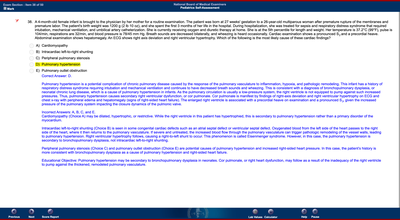
What is the most likely cause of the cardiac findings in the infant?
Pulmonary hypertension is a potential complication of chronic pulmonary disease due to inflammation, hypoxia, and remodeling. It causes right ventricular dysfunction, evident by right-axis deviation and hypertrophy on ECG, precordial heave, and pronounced S2 due to increased pulmonary pressure.
-
What is the educational objective regarding pulmonary hypertension in neonates?
Pulmonary hypertension may be secondary to bronchopulmonary dysplasia in neonates. This can lead to cor pulmonale, or right heart dysfunction, as a consequence of increased pressure in the pulmonary system.
-
What is the main issue with the right ventricle in pulmonary vasculature remodeling?
Inadequacy of the right ventricle to pump against the thickened, remodeled pulmonary vasculature.
-
-
What can lead to abnormal and heavy uterine bleeding?
Anovulation can lead to abnormal and heavy uterine bleeding. A luteal phase progesterone concentration that is below the cutoff value is indicative of anovulation.
-
What happens during the follicular phase of the menstrual cycle?
The follicular phase begins with menses. FSH and LH concentrations increase, stimulating the developing follicle, which produces estrogen for endometrial proliferation.
-
What occurs after ovulation in the menstrual cycle?
After ovulation, the luteal phase begins as the corpus luteum forms, secreting progesterone to maintain the endometrial lining, starting the secretory phase.
-
What happens if no implantation occurs after ovulation?
If no implantation occurs, the corpus luteum degrades, leading to decreased estrogen and progesterone concentrations, causing menstruation.
-
What is a common side effect of ACE inhibitors like enalapril?
- Cough
- Angioedema
- Hyperkalemia due to aldosterone suppression
-
What is the educational objective regarding ACE inhibitors?
ACE inhibitors are first-line agents for hypertension and suppress aldosterone, leading to sodium retention and potassium excretion suppression, potentially causing hyperkalemia.
-
What is the most likely complication for the newborn with asplenia?
Sepsis due to the lack of spleen function, increasing risk for infections with encapsulated bacteria and parasites.
-
What is the role of the spleen in immunity?
The spleen removes opsonized pathogens, infected cells, and damaged erythrocytes, and houses antibody-producing B lymphocytes.
-
What is the most appropriate next step in the management of the 12-year-old girl with decreased urine output?
Intravenous administration of calcium chloride
-
What is the correct answer for the management of the patient with high-grade fever and decreased urine output?
B) Intravenous administration of calcium chloride
-
-
What is the correct next step in management for severe hyperkalemia?
Intravenous administration of calcium chloride is the next step to stabilize the cardiac membrane.
-
What is the educational objective regarding acute renal failure?
Acute renal failure can lead to hypertension and hyperkalemia. Severe hyperkalemia requires emergency administration of calcium to stabilize the myocardial membrane.
-
What are the effects of salicylate poisoning?
- Respiratory alkalosis from hyperventilation
- Delayed anion-gap metabolic acidosis
- Increased lactate and ketoacids production
- Symptoms: hyperventilation, gastrointestinal upset, hyperthermia, tinnitus, agitation, delirium, hallucinations
- Management: systemic alkalinization with sodium bicarbonate infusion
-
What is the educational objective regarding salicylate toxicity?
Salicylate toxicity can present with: - Hyperventilation - Gastrointestinal upset - Hyperthermia - Tinnitus - Agitation - Delirium - Hallucinations It causes early respiratory alkalosis followed by delayed anion-gap metabolic acidosis.
-
What is the most appropriate next step in the management of a suspected urethral injury?
Retrograde urethrography evaluates for urethral injury by injecting contrast to check for discontinuity.
-
What is the educational objective regarding urethral injuries?
Urethral injuries can occur from straddle injuries (anterior urethra) or pelvic fractures (posterior urethra). Retrograde urethrography permits evaluation of the urethra as a source of hematuria.
-
What should physicians advise when families inquire about discontinuing evidence-based treatment for children?
Physicians should advise families to continue evidence-based treatment while investigating the naturopathic treatment options.
-
What is the educational objective regarding life-saving treatments for children?
Physicians should deliver life-saving treatments to children who lack decisional capacity and collaborate with families on treatment plans.
-
What is the naturopathic treatment approach in this case?
The physician collaborates with the family to develop a treatment plan that aligns with their values and is in the patient's best interest.
-
What is the education objective for the physician in this context?
To ensure the treatment plan respects the family's values and prioritizes the patient's best interest.
-
What is the characteristic of Spontaneous Bacterial Peritonitis (SBP)?
SBP is characterized by bacterial infection of ascitic fluid without an obvious source of infection. It is common in patients with nephrotic syndrome or cirrhosis.
-
What are the common bacteria causing SBP?
Commonly caused by Escherichia coli and Klebsiella species.
-
How is SBP diagnosed?
Diagnosis is confirmed with paracentesis showing bacterial growth or >250 neutrophils/µL in ascitic fluid.
-
What is the treatment for SBP?
Treatment includes supportive care and intravenous broad-spectrum antibiotics.
-
What is the educational objective regarding SBP?
SBP is a significant cause of mortality in patients with nephrotic syndrome and cirrhosis. Diagnosis is confirmed with paracentesis.
-
What is the most appropriate management for a 2-week-old girl with increased TSH and maternal propylthiouracil use?
Repeat measurement of serum thyroxine (T4) and TSH concentrations.