Sign up to unlock more features
- Save this deck to your account
- Study flashcards with spaced repetition
- Export to Anki (.apkg) or PDF
- Process documents up to 100 pages
- Images extracted from PDFs and documents
- Better text extraction from your PDFs and documents
- Better flashcards with our more advanced AI model
What intrinsic drive primarily determines how much food a person ingests?
What determines the type of food a person preferentially seeks?
Which teeth provide cutting and which provide grinding during mastication?
What maximum force can jaw muscles produce on incisors and molars during chewing?
Which nerve motor branch innervates most chewing muscles and where is chewing controlled?
Describe the basic chewing reflex sequence that produces rhythmic chewing.
Name three reasons chewing is important for digestion.
List the three general stages of swallowing (deglutition).
Why is swallowing a complicated mechanism in relation to respiration?
How can the provided stomach diagram be used when studying food propulsion and mixing?
What action of the tongue propels a food bolus into the pharynx?
What happens to swallowing after the bolus enters the pharynx?
What happens during the pharyngeal stage of swallowing?
How does the soft palate contribute to swallowing?
What is the role of the palatopharyngeal folds during swallowing?
Which actions prevent food from entering the trachea during swallowing?
What changes occur at the upper esophageal sphincter during swallowing?
How does pharyngeal muscle contraction propel the bolus into the esophagus?
Which sensory nerves initiate the pharyngeal swallowing reflex and where do they project?
Where are the most sensitive tactile areas for initiating the pharyngeal stage located?
Where are the neuronal areas that constitute the swallowing (deglutition) center located?
Which cranial nerves transmit the motor impulses from the swallowing center to the pharynx and upper esophagus?
Is the pharyngeal stage of swallowing voluntary or reflexive?
How is the pharyngeal swallowing reflex usually initiated?
What effect does the pharyngeal stage of swallowing have on respiration?
How long does the entire pharyngeal stage of swallowing usually take?
Is the sequence and timing of the swallowing reflex variable between swallows?
What happens to respiration during swallowing?
What are the two types of esophageal peristalsis?
What is primary peristalsis in the esophagus?
How does gravity affect transit of swallowed food when upright?
What triggers secondary peristalsis in the esophagus?
Which muscles control the upper third of the esophagus and how are they activated?
How is the lower two-thirds of the esophagus controlled?
What happens to esophageal peristalsis after vagus nerve cut and why can food still pass?
What is receptive relaxation of the stomach during swallowing?
What is the normal intraluminal pressure of the lower esophageal (gastroesophageal) sphincter?
What occurs at the lower esophageal sphincter when a peristaltic swallowing wave arrives?
What is achalasia in relation to the lower esophageal sphincter?
Describe the acidity and enzyme content of stomach secretions.
Which part of the esophageal mucosa resists gastric secretions best?
How does the tonic constriction of the lower esophageal sphincter (LES) protect the esophagus?
What valvelike mechanism helps prevent esophageal reflux at the distal esophagus?
What are the three main motor functions of the stomach?
How is food arranged inside the stomach after entering (orientation of newest vs oldest)?
What reflex reduces gastric wall tone to allow stomach storage when food stretches the stomach?
What is the relaxed stomach volume limit for accommodation during storage?
Where are gastric glands that secrete digestive juices located in the stomach body?
What initiates the stomach's peristaltic mixing waves and how often do they occur?
Where do mixing waves begin and toward where do they move?
How do peristaltic constrictor rings in the antrum contribute to propulsion?
Why does each peristaltic wave expel only a few milliliters into the duodenum?
What is 'retropulsion' and what role does it play in gastric mixing?
What is chyme and what determines its fluidity?
What are hunger contractions and when do they occur?
How long can a continuing tetanic contraction sometimes last?
In whom are hunger contractions most intense?
What factor greatly increases hunger contractions related to blood chemistry?
What are hunger pangs and where are they felt?
When do hunger pangs usually begin after the last ingestion of food?
How do hunger pangs change in people in a state of starvation?
What promotes stomach emptying?
What opposes passage of chyme at the pylorus during stomach emptying?
What is the 'pyloric pump' in stomach physiology?
When do stomach contractions become intense and cause emptying?
How much pressure can the intense peristaltic contractions generate compared with usual mixing waves?
What is the structural difference of the pylorus compared to earlier portions of the antrum?
How does the pyloric sphincter behave most of the time?
How does stomach food volume affect the rate of emptying?
What effect does the hormone gastrin have on stomach emptying?
Which intestinal region provides the most potent signals to inhibit stomach emptying?
What reflexes are initiated when food enters the duodenum?
What are the three neural pathways mediating enterogastric inhibition from the duodenum to the stomach?
What are the two main effects of enterogastric inhibitory reflexes on stomach motility?
Name five types of duodenal factors that can initiate enterogastric inhibitory reflexes.
How quickly can enterogastric inhibitory reflexes become strongly activated in response to irritants or acids?
At what duodenal chyme pH do enterogastric reflexes frequently block further release of acidic stomach contents?
Why does the enterogastric reflex block further acidic stomach emptying when duodenal pH is very low?
Which chyme components especially elicit inhibitory enterogastric reflexes?
What duodenal stimulus is the most potent trigger for release of hormones that inhibit gastric emptying?
Which hormone from the jejunal mucosa is the most potent inhibitor of stomach motility and pyloric pump?
How do hormones released from the upper intestine inhibit gastric emptying?
Name two other intestinal hormones that can inhibit stomach emptying besides CCK.
What mainly stimulates release of secretin from the duodenal mucosa?
What is the primary physiological effect of GIP at normal concentrations?
List duodenal conditions that slow gastric emptying via inhibitory feedback.
Which stomach factors moderately influence rate of gastric emptying?
Into what two functional categories are small intestine movements commonly divided?
What triggers segmentation contractions in the small intestine?
Describe the appearance produced by segmentation contractions in the small intestine.
How do successive segmentation contractions change location along the intestine?
At what rate do segmentation contractions 'chop' chyme and what is the purpose?
What generates the basic electrical rhythm that controls intestinal segmentation contractions?
What is the typical maximum frequency of segmentation contractions in the duodenum and proximal jejunum?
What is the usual maximum frequency of contractions in the terminal ileum?
How does blocking enteric excitatory activity with atropine affect segmentation contractions?
What is the normal velocity range of peristaltic waves in the small intestine?
How far do typical peristaltic waves in the small intestine travel before dying out?
What is the average net forward movement rate of chyme along the small intestine?
How long does passage of chyme from the pylorus to the ileocecal valve normally take?
Which nervous reflex increases small intestinal peristalsis after a meal?
Name hormones that enhance small intestinal motility according to the text.
Which hormones inhibit small intestinal motility according to the text?
What triggers the gastroileal reflex that forces chyme through the ileocecal valve?
Do segmentation movements contribute to propulsion in the small intestine?
What is a 'peristaltic rush' as described in the text?
What is the peristaltic rush in the small intestine?
Which neural mechanisms initiate the peristaltic rush?
What effect does the peristaltic rush have on the small intestine contents?
What action does the muscularis mucosae produce on the intestinal mucosa?
How do muscle fibers of the villi affect lymph flow?
How do mucosal folds affect absorption in the small intestine?
What triggers mucosal and villous contractions in the small intestine?
How does the ileocecal valve prevent backflow from the colon to the small intestine?
What reverse pressure can the ileocecal valve usually resist?
What is the ileocecal sphincter and where is it located?
What are the two principal functions of the colon?
Which half of the colon is primarily responsible for absorption and which for storage?
How much chyme normally empties into the cecum each day?
What effect does resistance at the ileocecal valve have on chyme in the ileum?
What is the gastroileal reflex effect immediately after a meal?
How does cecal distension or irritation affect the ileocecal sphincter and ileal peristalsis?
Through which pathways are reflexes from the cecum to the ileocecal sphincter and ileum mediated?
What are haustrations and how are they produced in the colon?
Describe the timing and movement characteristics of a typical haustration.
How is fecal material processed against the large-intestine mucosa to allow absorption?
How much fecal volume is typically expelled daily after colonic absorption?
What term does the text use for propulsive movements in the colon?
What produces most propulsion in the cecum and ascending colon?
How long can haustral contractions take to move chyme from the ileocecal valve through the colon?
When do mass movements in the colon typically occur each day?
Describe the sequence of events in a colonic mass movement.
What triggers the gastrocolic and duodenocolic reflexes that facilitate mass movements after meals?
Through which pathway are the gastrocolic and duodenocolic reflexes almost certainly transmitted?
What prevents continual dribble of fecal matter through the anus?
How is the external anal sphincter controlled?
What initiates the intrinsic defecation reflex in the rectum?
What happens to the internal anal sphincter as the peristaltic wave approaches the anus during defecation?
How can irritation of the colon mucosa affect mass movements?
What is the typical strength of the intrinsic myenteric defecation reflex when acting alone?
Which secondary reflex usually fortifies the intrinsic defecation reflex to cause effective defecation?
Describe the afferent-efferent pathway of the parasympathetic defecation reflex from rectal stimulation.
What two main effects do parasympathetic signals have to intensify defecation?
What additional voluntary action is required along with sphincter relaxation for defecation to occur?
What reflex actions accompany defecation signals entering the spinal cord?
How does pelvic floor movement aid evacuation during defecation?
How can defecation reflexes be voluntarily activated?
How effective are purposely activated defecation reflexes compared with natural reflexes?
What consequence can occur from frequently inhibiting natural defecation reflexes?
How do defecation reflexes behave in newborns and some people with transected spinal cords?
What is the peritoneointestinal reflex and its effect on intestinal activity?
What do the renointestinal and vesicointestinal reflexes do?
What region of the large bowel can be emptied by the reflexes described?
Flashcards in this deck (153)
-
ingestion hunger
-
ingestion appetite
-
Which teeth provide cutting and which provide grinding during mastication?
- Incisors: cutting
- Molars: grinding
mastication teeth -
What maximum force can jaw muscles produce on incisors and molars during chewing?
- Incisors: 55 pounds
- Molars: 200 pounds
mastication forces -
Which nerve motor branch innervates most chewing muscles and where is chewing controlled?
- Motor branch of cranial nerve V (trigeminal); control by brain stem nuclei
mastication neuroanatomy -
Describe the basic chewing reflex sequence that produces rhythmic chewing.
- Bolus in mouth → reflex inhibition of jaw muscles → jaw drops → stretch reflex → rebound contraction → jaw closes and compresses bolus → inhibition repeats
mastication reflex -
Name three reasons chewing is important for digestion.
- Breaks cellulose membranes of fruits/vegetables
- Increases surface area for enzymes
- Prevents GI tract excoriation and eases stomach emptying
mastication digestion -
List the three general stages of swallowing (deglutition).
- Voluntary stage
- Pharyngeal stage (involuntary)
- Esophageal stage (involuntary)
swallowing deglutition -
Why is swallowing a complicated mechanism in relation to respiration?
- Pharynx also serves respiration, so it must function as a food tract only for a few seconds without compromising breathing
swallowing respiration -
How can the provided stomach diagram be used when studying food propulsion and mixing?
- Use the diagram as an illustration of gastric anatomy and regions involved in mixing and emptying
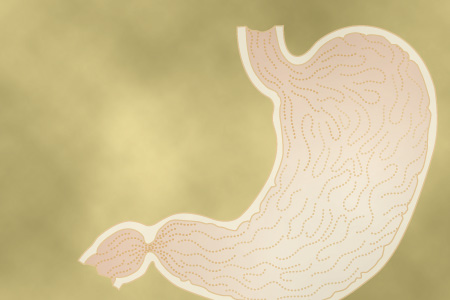
stomach diagram - Use the diagram as an illustration of gastric anatomy and regions involved in mixing and emptying
-
What action of the tongue propels a food bolus into the pharynx?
- The tongue presses upward and backward against the palate, propelling the bolus into the pharynx.
swallowing mastication physiology -
What happens to swallowing after the bolus enters the pharynx?
- Swallowing becomes entirely or almost entirely automatic and ordinarily cannot be stopped.
swallowing reflex physiology -
What happens during the pharyngeal stage of swallowing?
- Trachea is closed
- Esophagus is opened
- A fast peristaltic wave forces the bolus into the upper esophagus
- Entire process occurs in less than 2 seconds
swallowing pharynx -
How does the soft palate contribute to swallowing?
- Soft palate is pulled upward to close the posterior nares and prevent reflux into the nasal cavities
swallowing softpalate -
What is the role of the palatopharyngeal folds during swallowing?
- Palatopharyngeal folds are pulled medially to form a sagittal slit that selectively allows well-masticated food into the posterior pharynx
swallowing palatopharyngeal -
Which actions prevent food from entering the trachea during swallowing?
- Tight approximation of the vocal cords plus epiglottis swinging backward over the laryngeal opening prevent food entry into the trachea
swallowing larynx -
What changes occur at the upper esophageal sphincter during swallowing?
- Upper esophageal (pharyngoesophageal) sphincter relaxes as the larynx is pulled upward, allowing food to enter the upper esophagus
esophagus sphincter -
How does pharyngeal muscle contraction propel the bolus into the esophagus?
- Entire pharyngeal muscular wall contracts starting superiorly then spreading downward, producing peristalsis that propels the bolus into the esophagus
pharynx peristalsis -
Which sensory nerves initiate the pharyngeal swallowing reflex and where do they project?
- Sensory portions of the trigeminal and glossopharyngeal nerves transmit impulses to the medulla oblongata, into or near the tractus solitarius
nervous swallowing -
Where are the most sensitive tactile areas for initiating the pharyngeal stage located?
- The most sensitive tactile areas lie in a ring around the pharyngeal opening, with greatest sensitivity on the tonsillar pillars
sensory pharynx -
Where are the neuronal areas that constitute the swallowing (deglutition) center located?
- In the reticular substance of the medulla and the lower portion of the pons
anatomy swallowing -
Which cranial nerves transmit the motor impulses from the swallowing center to the pharynx and upper esophagus?
- Fifth (V)
- Ninth (IX)
- Tenth (X)
- Twelfth (XII)
- Also a few superior cervical nerves
neuroanatomy cranialnerves -
physiology swallowing
-
How is the pharyngeal swallowing reflex usually initiated?
- By voluntary movement of food into the back of the mouth, which excites involuntary pharyngeal sensory receptors
physiology reflex -
What effect does the pharyngeal stage of swallowing have on respiration?
- It momentarily interrupts respiration
physiology respiration -
How long does the entire pharyngeal stage of swallowing usually take?
- Usually occurs in less than 6 seconds
physiology timing -
Is the sequence and timing of the swallowing reflex variable between swallows?
- No — the sequence is the same and the timing of the entire cycle remains constant from one swallow to the next
physiology consistency -
What happens to respiration during swallowing?
The swallowing center inhibits the medullary respiratory center, briefly halting respiration for a fraction of the respiratory cycle.
swallowing respiration -
esophagus peristalsis
-
What is primary peristalsis in the esophagus?
Continuation of the peristaltic wave that begins in the pharynx and spreads into the esophagus, passing to the stomach in about 8–10 seconds.
primary peristalsis -
How does gravity affect transit of swallowed food when upright?
Gravity helps transmit food to the lower esophagus faster than the peristaltic wave, about 5–8 seconds.
gravity transit -
What triggers secondary peristalsis in the esophagus?
Distention of the esophagus by retained food, producing waves until the esophagus is emptied.
secondary peristalsis -
Which muscles control the upper third of the esophagus and how are they activated?
Striated muscle in the pharyngeal wall and upper third of the esophagus; controlled by skeletal nerve impulses from glossopharyngeal and vagus nerves.
muscle upperesophagus -
How is the lower two-thirds of the esophagus controlled?
Smooth muscle controlled strongly by vagus nerves acting via the esophageal myenteric nervous system.
muscle loweresophagus -
What happens to esophageal peristalsis after vagus nerve cut and why can food still pass?
After vagal cuts the myenteric plexus becomes excitable and generates strong secondary peristaltic waves, allowing food to pass despite loss of brain stem swallowing reflexes.
vagus myenteric -
What is receptive relaxation of the stomach during swallowing?
A wave of relaxation via myenteric inhibitory neurons precedes the esophageal peristaltic wave, relaxing the stomach and duodenum to receive food.
receptive stomach -
What is the normal intraluminal pressure of the lower esophageal (gastroesophageal) sphincter?
About 30 mm Hg of tonic constriction at the lower esophageal sphincter.
les pressure -
What occurs at the lower esophageal sphincter when a peristaltic swallowing wave arrives?
Receptive relaxation of the lower esophageal sphincter occurs ahead of the peristaltic wave, allowing easy propulsion of swallowed food into the stomach.
les relaxation -
What is achalasia in relation to the lower esophageal sphincter?
A condition in which the lower esophageal sphincter rarely fails to relax satisfactorily, causing impaired relaxation.
esophagus pathology -
Describe the acidity and enzyme content of stomach secretions.
Stomach secretions are highly acidic and contain many proteolytic enzymes.
stomach secretion -
Which part of the esophageal mucosa resists gastric secretions best?
The lower one-eighth of the esophagus is the part capable of resisting the digestive action of gastric secretions better than the rest.
esophagus mucosa -
How does the tonic constriction of the lower esophageal sphincter (LES) protect the esophagus?
Tonic constriction of the LES helps prevent significant reflux of stomach contents into the esophagus except under abnormal conditions.
les reflux -
What valvelike mechanism helps prevent esophageal reflux at the distal esophagus?
A short portion of the esophagus that extends slightly into the stomach forms a valvelike closure that caves inward with increased intra-abdominal pressure, preventing reflux.
reflux mechanics -
What are the three main motor functions of the stomach?
- Storage of large quantities of food
- Mixing food with gastric secretions into chyme
- Slow emptying of chyme into the small intestine at a suitable rate
stomach motility -
How is food arranged inside the stomach after entering (orientation of newest vs oldest)?
- Food forms concentric circles
- Newest food lies closest to the esophageal opening
- Oldest food lies nearest the outer wall of the stomach
stomach storage -
What reflex reduces gastric wall tone to allow stomach storage when food stretches the stomach?
- The 'vagovagal reflex' from the stomach to the brain stem and back reduces tone
reflex vagus -
What is the relaxed stomach volume limit for accommodation during storage?
- About 0.8 to 1.5 liters in the completely relaxed stomach
stomach volume -
Where are gastric glands that secrete digestive juices located in the stomach body?
- Present in almost the entire wall of the body of the stomach except along a narrow strip on the lesser curvature
gastric anatomy -
What initiates the stomach's peristaltic mixing waves and how often do they occur?
- Initiated by the gut wall basic electrical rhythm ('slow waves')
- Occur about once every 15 to 20 seconds
electrical motility -
Where do mixing waves begin and toward where do they move?
- Begin in the mid to upper portions of the stomach wall
- Move toward the antrum
mixing peristalsis -
How do peristaltic constrictor rings in the antrum contribute to propulsion?
- They become more intense in the antrum and provide powerful peristaltic action potential-driven constrictor rings that force antral contents toward the pylorus
antrum propulsion -
Why does each peristaltic wave expel only a few milliliters into the duodenum?
- The pyloric opening is small so only a few milliliters or less pass with each wave; pyloric muscle often contracts and further impedes emptying
pylorus emptying -
What is 'retropulsion' and what role does it play in gastric mixing?
- 'Retropulsion' is squeezing of antral contents upstream through the peristaltic ring toward the body
- It is an important mixing mechanism in the stomach
retropulsion mixing -
What is chyme and what determines its fluidity?
- Chyme is the thoroughly mixed stomach contents that pass down the gut (murky semifluid or paste)
- Fluidity depends on amounts of food, water, stomach secretions, and degree of digestion
chyme digestion -
What are hunger contractions and when do they occur?
- Intense rhythmic peristaltic contractions in the body of the stomach
- Often occur when the stomach has been empty for several hours or more
hunger contractions -
muscle contraction
-
In whom are hunger contractions most intense?
- Young, healthy people
- People with high gastrointestinal tonus
hunger physiology -
What factor greatly increases hunger contractions related to blood chemistry?
Lower than normal blood sugar levels
hunger metabolism -
hunger symptoms
-
When do hunger pangs usually begin after the last ingestion of food?
12 to 24 hours after the last ingestion of food
hunger timing -
How do hunger pangs change in people in a state of starvation?
They reach greatest intensity in 3 to 4 days and then gradually weaken in succeeding days
hunger starvation -
stomach emptying
-
What opposes passage of chyme at the pylorus during stomach emptying?
Varying degrees of resistance to passage of chyme at the pylorus
stomach pylorus -
What is the 'pyloric pump' in stomach physiology?
- The pyloric pump is the pumping action produced by strong peristaltic waves that force chyme from the stomach into the duodenum.
stomach pyloric -
When do stomach contractions become intense and cause emptying?
- For about 20% of the time while food is in the stomach, contractions become intense beginning in midstomach and spreading caudally, causing stomach emptying.
motility peristalsis -
How much pressure can the intense peristaltic contractions generate compared with usual mixing waves?
- Intense peristaltic contractions often create 50 to 70 centimeters of water pressure, about six times as powerful as usual mixing waves.
pressure peristalsis -
What is the structural difference of the pylorus compared to earlier portions of the antrum?
- The pyloric circular muscle thickness becomes 50% to 100% greater than in earlier portions of the stomach antrum.
anatomy pylorus -
How does the pyloric sphincter behave most of the time?
- The pyloric sphincter remains slightly tonically contracted almost all the time, though it is usually open enough for fluids to empty easily.
pyloric sphincter -
How does stomach food volume affect the rate of emptying?
- Increased food volume promotes increased emptying by stretching the stomach wall, which elicits local myenteric reflexes that accentuate the pyloric pump and inhibit the pylorus.
regulation volume -
What effect does the hormone gastrin have on stomach emptying?
- Gastrin has mild to moderate stimulatory effects on gastric motor functions and seems to enhance activity of the pyloric pump, thus promoting stomach emptying.
hormone gastrin -
Which intestinal region provides the most potent signals to inhibit stomach emptying?
- The duodenum provides far more potent signals to inhibit stomach emptying than the stomach, controlling emptying to match digestion and absorption rates.
duodenum regulation -
What reflexes are initiated when food enters the duodenum?
- Multiple enterogastric nervous reflexes are initiated from the duodenal wall that pass back to the stomach to slow or stop stomach emptying when duodenal chyme volume is excessive.
enterogastric reflex -
What are the three neural pathways mediating enterogastric inhibition from the duodenum to the stomach?
- Enteric nervous system in the gut wall
- Extrinsic nerves via prevertebral sympathetic ganglia and inhibitory sympathetic fibers
- Vagus nerves to the brain stem that reduce vagal excitatory signals
physiology gi neuro -
What are the two main effects of enterogastric inhibitory reflexes on stomach motility?
- Strong inhibition of the pyloric pump propulsive contractions
- Increased tone of the pyloric sphincter
physiology stomach motility -
Name five types of duodenal factors that can initiate enterogastric inhibitory reflexes.
- Duodenal distention
- Irritation of the duodenal mucosa
- Acidity of duodenal chyme
- Osmolality of the chyme
- Breakdown products of chyme (especially protein breakdown products)
duodenum feedback gi -
How quickly can enterogastric inhibitory reflexes become strongly activated in response to irritants or acids?
- Often in as little as 30 seconds
timing physiology gi -
At what duodenal chyme pH do enterogastric reflexes frequently block further release of acidic stomach contents?
- When duodenal chyme pH falls below about 3.5 to 4
ph duodenum regulation -
Why does the enterogastric reflex block further acidic stomach emptying when duodenal pH is very low?
- To prevent more acid entering the duodenum until the chyme can be neutralized by pancreatic and other secretions
function protection gi -
Which chyme components especially elicit inhibitory enterogastric reflexes?
- Breakdown products of proteins and, perhaps to a lesser extent, of fats
nutrients duodenum feedback -
What duodenal stimulus is the most potent trigger for release of hormones that inhibit gastric emptying?
Fats entering the duodenum
gi hormones -
Which hormone from the jejunal mucosa is the most potent inhibitor of stomach motility and pyloric pump?
Cholecystokinin (CCK)
cck gi -
How do hormones released from the upper intestine inhibit gastric emptying?
They travel via the blood to the stomach, inhibit the pyloric pump, and increase pyloric sphincter contraction
physiology feedback -
Name two other intestinal hormones that can inhibit stomach emptying besides CCK.
- Secretin
- Glucose-dependent insulinotropic peptide (GIP)
hormones gi -
What mainly stimulates release of secretin from the duodenal mucosa?
Gastric acid entering the duodenum
secretin gi -
What is the primary physiological effect of GIP at normal concentrations?
Stimulation of insulin secretion by the pancreas
gip endocrine -
List duodenal conditions that slow gastric emptying via inhibitory feedback.
- Too much chyme in the small intestine
- Excessively acidic chyme
- Chyme with too much unprocessed protein or fat
- Hypotonic or hypertonic chyme
- Irritating chyme
regulation gi -
Which stomach factors moderately influence rate of gastric emptying?
- Degree of stomach filling
- Excitatory effect of gastrin on peristalsis
stomach gastrin -
Into what two functional categories are small intestine movements commonly divided?
- Mixing contractions (segmentation)
- Propulsive contractions (peristalsis)
motility smallintestine -
What triggers segmentation contractions in the small intestine?
Stretching of the intestinal wall when the lumen becomes distended with chyme
physiology intestine -
Describe the appearance produced by segmentation contractions in the small intestine.
The intestine is divided into spaced segments that look like a chain of sausages
physiology motility -
How do successive segmentation contractions change location along the intestine?
As one set relaxes, a new set often begins mainly at new points between the previous contractions
physiology motility -
At what rate do segmentation contractions 'chop' chyme and what is the purpose?
They chop chyme two to three times per minute to promote progressive mixing with intestinal secretions
physiology digestion -
What generates the basic electrical rhythm that controls intestinal segmentation contractions?
The electrical slow waves of the intestinal wall (basic electrical rhythm).
physiology intestinal -
What is the typical maximum frequency of segmentation contractions in the duodenum and proximal jejunum?
About 12 contractions per minute (maximum under extreme stimulation).
motility smallintestine -
What is the usual maximum frequency of contractions in the terminal ileum?
Usually eight to nine contractions per minute.
motility ileum -
How does blocking enteric excitatory activity with atropine affect segmentation contractions?
Segmentation contractions become exceedingly weak when enteric excitatory activity is blocked by atropine.
pharmacology enteric -
What is the normal velocity range of peristaltic waves in the small intestine?
Approximately 0.5 to 2.0 cm/sec, faster proximally and slower terminally.
peristalsis velocity -
How far do typical peristaltic waves in the small intestine travel before dying out?
They usually die out after traveling only 3 to 5 cm and rarely farther than 10 cm.
peristalsis distance -
What is the average net forward movement rate of chyme along the small intestine?
About 1 cm per minute.
transit smallintestine -
How long does passage of chyme from the pylorus to the ileocecal valve normally take?
Approximately 3 to 5 hours.
transit time -
Which nervous reflex increases small intestinal peristalsis after a meal?
The gastroenteric reflex initiated by stomach distention and conducted mainly through the myenteric plexus.
reflex gastroenteric -
Name hormones that enhance small intestinal motility according to the text.
- Gastrin
- CCK
- Insulin
- Motilin
- Serotonin
hormones motility -
hormones inhibition
-
What triggers the gastroileal reflex that forces chyme through the ileocecal valve?
Eating another meal increases the gastroileal reflex, intensifying ileal peristalsis and forcing chyme into the cecum.
reflex ileocecal -
Do segmentation movements contribute to propulsion in the small intestine?
Yes; they often travel ~1 cm analward during each event and help propel chyme down the intestine.
segmentation propulsion -
What is a 'peristaltic rush' as described in the text?
A powerful, rapid peristalsis caused by intense irritation of the intestinal mucosa (e.g., severe infectious diarrhea).
peristalsis pathology -
What is the peristaltic rush in the small intestine?
A powerful series of peristaltic contractions that travel long distances in the small intestine within minutes, sweeping intestinal contents into the colon.
motility smallintestine -
Which neural mechanisms initiate the peristaltic rush?
It is initiated partly by autonomic nervous system and brain stem reflexes and partly by intrinsic enhancement of myenteric plexus reflexes.
neuro motility -
What effect does the peristaltic rush have on the small intestine contents?
It sweeps chyme into the colon, relieving the small intestine of irritative chyme and excessive distention.
physiology motility -
What action does the muscularis mucosae produce on the intestinal mucosa?
It can cause short folds to appear in the intestinal mucosa.
histology mucosa -
How do muscle fibers of the villi affect lymph flow?
Intermittent contraction of villous muscle fibers 'milk' the villi so lymph flows from central lacteals into the lymphatic system.
lymphatics villi -
How do mucosal folds affect absorption in the small intestine?
Mucosal folds increase the surface area exposed to chyme, thereby increasing absorption.
absorption anatomy -
What triggers mucosal and villous contractions in the small intestine?
They are initiated mainly by local nervous reflexes in the submucosal nerve plexus in response to chyme in the small intestine.
neuro mucosa -
How does the ileocecal valve prevent backflow from the colon to the small intestine?
The valve protrudes into the cecal lumen and is forcefully closed when excess cecal pressure pushes backward against its lips.
anatomy ileocecal -
What reverse pressure can the ileocecal valve usually resist?
The valve usually can resist reverse pressure of at least 50 to 60 centimeters of water.
physiology ileocecal -
What is the ileocecal sphincter and where is it located?
A thickened circular muscle in the ileal wall several centimeters upstream from the ileocecal valve.
anatomy sphincter -
What are the two principal functions of the colon?
- Absorption of water and electrolytes to form solid feces
- Storage of fecal matter until expulsion
colon physiology -
Which half of the colon is primarily responsible for absorption and which for storage?
- Proximal half: absorption
- Distal half: storage
colon anatomy -
ileocecal quantities
-
What effect does resistance at the ileocecal valve have on chyme in the ileum?
- Prolongs stay of chyme in the ileum, facilitating absorption
ileocecal absorption -
What is the gastroileal reflex effect immediately after a meal?
- Intensifies ileal peristalsis and promotes emptying of ileal contents into the cecum
reflexes ileum -
How does cecal distension or irritation affect the ileocecal sphincter and ileal peristalsis?
- Cecal distension/irritation intensifies ileocecal sphincter contraction and inhibits ileal peristalsis, delaying emptying
cecum reflexes -
Through which pathways are reflexes from the cecum to the ileocecal sphincter and ileum mediated?
- Myenteric plexus in the gut wall and extrinsic autonomic nerves, especially prevertebral sympathetic ganglia
neural reflexes -
What are haustrations and how are they produced in the colon?
- Haustrations: baglike sacs formed when circular muscle contracts in ~2.5 cm segments while teniae coli longitudinal strips contract, causing outward bulging
haustration motility -
Describe the timing and movement characteristics of a typical haustration.
- Timing: peaks in ~30 seconds, disappears over the next 60 seconds; may slowly move toward the anus providing minor forward propulsion
haustration dynamics -
How is fecal material processed against the large-intestine mucosa to allow absorption?
Fecal material is gradually exposed to the mucosal surface of the large intestine (like spading the earth), allowing progressive absorption of fluid and dissolved substances.
colon absorption -
How much fecal volume is typically expelled daily after colonic absorption?
About 80 to 200 ml of feces are expelled each day.
colon physiology -
What term does the text use for propulsive movements in the colon?
Propulsive movements are called 'Mass Movements.'
motility colon -
What produces most propulsion in the cecum and ascending colon?
Slow but persistent haustral contractions that move chyme over 8 to 15 hours.
colon motility -
How long can haustral contractions take to move chyme from the ileocecal valve through the colon?
As many as 8 to 15 hours.
colon timing -
When do mass movements in the colon typically occur each day?
Usually only one to three times each day, often about 15 minutes during the first hour after breakfast.
massmovement colon -
Describe the sequence of events in a colonic mass movement.
A constrictive ring forms (often in transverse colon), distal 20+ cm lose haustrations and contract as a unit, contraction increases for ~30 seconds, then relaxes over 2–3 minutes.
massmovement physiology -
What triggers the gastrocolic and duodenocolic reflexes that facilitate mass movements after meals?
Distention of the stomach and duodenum.
reflex gastrocolic -
Through which pathway are the gastrocolic and duodenocolic reflexes almost certainly transmitted?
By way of the autonomic nervous system (they occur little or not at all when extrinsic autonomic nerves to the colon are removed).
reflex autonomic -
What prevents continual dribble of fecal matter through the anus?
Tonic constriction of the internal anal sphincter (circular smooth muscle) and the external anal sphincter (striated voluntary muscle).
anatomy sphincter -
How is the external anal sphincter controlled?
By nerve fibers in the pudendal nerve, part of the somatic nervous system, under voluntary or subconscious control.
sphincter neuro -
What initiates the intrinsic defecation reflex in the rectum?
Distention of the rectal wall when feces enter, triggering afferent signals in the myenteric plexus that start peristaltic waves.
defecation reflex -
What happens to the internal anal sphincter as the peristaltic wave approaches the anus during defecation?
The internal anal sphincter is relaxed by inhibitory signals from the myenteric plexus.
defecation physiology -
How can irritation of the colon mucosa affect mass movements?
Irritation can initiate intense mass movements that may persist almost all the time (e.g., ulcerative colitis).
pathology colon -
What is the typical strength of the intrinsic myenteric defecation reflex when acting alone?
The intrinsic myenteric defecation reflex is relatively weak when functioning by itself.
physiology defecation -
Which secondary reflex usually fortifies the intrinsic defecation reflex to cause effective defecation?
The parasympathetic defecation reflex involving the sacral spinal segments.
physiology parasympathetic -
Describe the afferent-efferent pathway of the parasympathetic defecation reflex from rectal stimulation.
- Afferent signals travel from rectal nerve endings into the spinal cord
- Reflex signals return via pelvic parasympathetic nerves to descending colon, sigmoid, rectum, and anus
neuroanatomy reflex -
What two main effects do parasympathetic signals have to intensify defecation?
- Greatly intensify peristaltic waves
- Relax the internal anal sphincter
physiology mechanism -
What additional voluntary action is required along with sphincter relaxation for defecation to occur?
Conscious, voluntary relaxation of the external anal sphincter is required for defecation.
physiology volition -
What reflex actions accompany defecation signals entering the spinal cord?
- Deep breath
- Closure of the glottis
- Contraction of abdominal wall muscles
- Pelvic floor relaxation downward and outward
defecation reflexes -
How does pelvic floor movement aid evacuation during defecation?
The pelvic floor relaxes downward and pulls outward on the anal ring to evaginate the feces.
pelvic defecation -
How can defecation reflexes be voluntarily activated?
By taking a deep breath to move the diaphragm downward and then contracting the abdominal muscles to increase abdominal pressure and force fecal contents into the rectum.
voluntary defecation -
How effective are purposely activated defecation reflexes compared with natural reflexes?
Reflexes initiated purposely are almost never as effective as natural reflexes.
efficacy defecation -
What consequence can occur from frequently inhibiting natural defecation reflexes?
People who too often inhibit their natural reflexes are likely to become severely constipated.
constipation behavior -
How do defecation reflexes behave in newborns and some people with transected spinal cords?
They cause automatic emptying of the lower bowel at inconvenient times because of lack of conscious control of the external anal sphincter.
newborns spinalcord -
What is the peritoneointestinal reflex and its effect on intestinal activity?
Irritation of the peritoneum strongly inhibits the excitatory enteric nerves and can cause intestinal paralysis.
peritoneum reflex -
What do the renointestinal and vesicointestinal reflexes do?
They inhibit intestinal activity as a result of kidney irritation (renointestinal) or bladder irritation (vesicointestinal).
reflex autonomic -
What region of the large bowel can be emptied by the reflexes described?
They can be effective in emptying the large bowel all the way from the splenic flexure of the colon to the anus.
colon defecation
Overview
- This chapter explains how the alimentary tract propels and mixes food and how nervous and hormonal mechanisms time these activities for optimal digestion and absorption.
Ingestion: mastication and swallowing
Mastication (chewing)
- Function: break food into small particles, increase surface area, disrupt cellulose, protect GI mucosa, ease gastric emptying.
- Anatomy & force: incisors cut, molars grind; biting force up to about 55 pounds (incisors) and 200 pounds (molars).
- Control: mostly motor branch of CN V and brainstem nuclei; higher centers (hypothalamus, cortex) can modulate chewing.
- Chewing reflex: bolus → reflex inhibition (jaw drop) → stretch reflex → rebound contraction; repeats to produce rhythmic chewing.
Swallowing (deglutition): three stages
- Voluntary oral stage — tongue pushes bolus posteriorly; usually the last conscious step.
- Pharyngeal stage (involuntary) — rapid sequence of events that protects airway and opens esophagus:
- soft palate elevates (closes nasopharynx), palatopharyngeal folds narrow the passage;
- vocal cords approximate and larynx elevates; epiglottis swings back to protect airway;
- upper esophageal sphincter (UES) relaxes and pharyngeal peristalsis drives bolus into esophagus.
- This stage is very fast (typically ~1–2 s) and briefly inhibits respiration.
-
Esophageal stage (involuntary) — peristalsis transports bolus to stomach.
-
Neural control: sensory input from tonsillar pillars and pharynx via CN V and IX to medulla (tractus solitarius); the swallowing center in medulla and lower pons issues motor output via CN V, IX, X, XII and cervical nerves.
Esophagus
- Peristalsis types:
- Primary peristalsis — continuation of pharyngeal wave; reaches stomach in ~8–10 s (upright posture can shorten this to 5–8 s due to gravity).
- Secondary peristalsis — triggered by esophageal distension; mediated by myenteric plexus and vagal reflexes.
- Muscle types: upper third = striated (somatic innervation), lower two-thirds = smooth (vagal + myenteric control).
- Lower esophageal sphincter (LES): tonic constriction normally with intraluminal pressure around \(30\ \text{mmHg}\); relaxes (receptive relaxation) ahead of incoming peristaltic wave.
- Anti-reflux mechanisms: LES tone and anatomic valvelike entry of distal esophagus into stomach help prevent gastric reflux.
Stomach: motor functions and rhythms
Main functions
- Storage of ingested food (orad stomach), mixing with gastric secretions to form chyme, and regulated emptying into the duodenum.
Anatomy note (illustration)
Alt text: Diagram of human stomach showing fundus, body, antrum, pylorus.
Electrical and contractile behavior
- Basic electrical rhythm (slow waves): drives mixing/mild peristalsis every ~15–20 s in the stomach wall.
- Mixing / retropulsion: strong antral contractions force chyme toward pylorus but pyloric aperture limits outflow, so most contents are pushed back (retropulsion), producing effective grinding and mixing.
- Chyme: semifluid mixture of food + gastric secretions ready for controlled emptying.
- Hunger contractions: intense rhythmic peristalsis when stomach empty for many hours; can produce hunger pangs.
Stomach emptying mechanisms
- Pyloric pump: intermittent intense peristaltic waves (20% of time while food present) that can generate high pressures (50–70 cm H2O equivalent in text) to push small amounts through the pylorus.
- Pyloric sphincter: thicker circular muscle at gastric outlet; normally tonically contracted but relaxes during peristaltic waves to allow small boluses of chyme to pass.
Regulation of gastric emptying
- Gastric factors that promote emptying:
- increased gastric volume triggers local myenteric reflexes and a vagovagal relaxation permitting stronger antral contractions;
- gastrin (from antral G cells) mildly enhances antral motility and the pyloric pump.
- Duodenal inhibitory controls (stronger):
- enterogastric reflexes via (1) enteric plexus, (2) sympathetic pathways, and (3) vagal afferents to brainstem inhibit pyloric pump and increase pyloric tone when duodenal conditions are unfavorable.
- monitored duodenal signals: distension, mucosal irritation, low pH (acid), abnormal osmolality, and presence of unprocessed proteins/fats.
- acidic chyme (pH < ~3.5–4) rapidly triggers inhibition to allow neutralization.
- Hormonal feedback:
- CCK (cholecystokinin) — potent inhibitor of gastric emptying, released in response to fats in the duodenum/jejunum; increases pyloric tone and suppresses antral pumping.
-
Secretin and GIP (gastric inhibitory peptide/glucose-dependent insulinotropic peptide) can also reduce motility (GIP primarily potentiates insulin secretion).
-
Net principle: duodenal feedback (neural + hormonal) adjusts gastric emptying so the small intestine receives chyme at a manageable rate for digestion/absorption.
Small intestine movements
Mixing: segmentation
- Segmentation contractions chop and mix chyme several times per minute, enhancing contact with mucosa and digestive secretions.
- Frequency limit: set by slow-wave frequency (up to about \(12\ \text{min}^{-1}\) in proximal small intestine; ~8–9/min in terminal ileum).
- Dependence on enteric tone: atropine (antimuscarinic) markedly reduces segmentation, showing need for myenteric excitatory input.
Propulsion: peristalsis
- Normal peristalsis: weak, short-traveling waves (3–10 cm) move chyme slowly; net transit pylorus → ileocecal valve ~3–5 hours.
- Control: gastroenteric reflex (from stomach distension), local stretch, vagal/myenteric inputs, and modulatory hormones (gastrin, CCK, motilin, insulin, serotonin ↑ motility; secretin, glucagon ↓ motility).
- Peristaltic rush: powerful, long-distance peristalsis triggered by severe mucosal irritation (e.g., infectious diarrhea) to clear contents rapidly.
Villi and mucosal muscle
- Muscularis mucosae and villus muscle fibers create local folds and rhythmic villus movements that increase absorptive area and pump lymph from lacteals.
Ileocecal valve and control of ileal emptying
- Valve mechanics: ileocecal valve projects into cecum and resists retrograde flow; can withstand reverse pressures of about \(50\) to \(60\ \text{cm H}_2\text{O}\).
- Ileocecal sphincter: mildly tonically contracted; gastroileal reflex after a meal intensifies ileal peristalsis and promotes emptying.
- Cecal feedback: cecal distension or irritation strengthens ileocecal sphincter contraction and inhibits ileal peristalsis to slow filling of cecum.
Colon: mixing and propulsion
- Primary roles: absorb water/electrolytes and store feces until defecation.
- Haustrations (mixing): sequential circular and longitudinal (teniae coli) contractions form sacculations (haustra); material is exposed to mucosa for absorption over many hours.
- Mass movements (propulsive): occasional powerful contractions (1–3 times/day, often after meals) that sweep fecal material over long colon segments and often trigger the urge to defecate.
- Transit: slow—moving chyme through colon to become semisolid feces can take many hours (proximal colon 8–15 h plus variable distal storage).
Defecation reflexes and sphincters
- Anal sphincters:
- internal anal sphincter — smooth muscle, tonic contraction (autonomic control);
- external anal sphincter — striated muscle under voluntary control via pudendal nerve.
- Reflexes initiating defecation:
- intrinsic (enteric) reflex: rectal distension → local peristalsis and internal sphincter relaxation (weak alone);
- parasympathetic spinal reflex (pelvic nerves) amplifies peristalsis and internal sphincter relaxation to produce effective defecation.
- Voluntary contributions: Valsalva-like maneuvers (breath-hold, increased abdominal pressure) and conscious external sphincter relaxation assist evacuation; inhibiting natural reflexes habitually can lead to constipation.
- Spinal cord injury/newborns: loss of external control can cause automatic defecation.
Other inhibitory reflexes
- Peritoneointestinal reflex: peritoneal irritation → strong inhibition of GI motility (can cause paralytic ileus).
- Renointestinal and vesicointestinal reflexes: kidney or bladder irritation can inhibit intestinal activity.
Key timings and numbers (quick reference)
- Pharyngeal swallowing stage: ~1–2 s; briefly halts respiration.
- Primary esophageal peristalsis: ~8–10 s pharynx → stomach (5–8 s if upright).
- Small intestinal transit (pylorus → ileocecal): ~3–5 hours.
- Segmentation frequency: up to \(12\ \text{min}^{-1}\) proximally; \(8\)–\(9\ \text{min}^{-1}\) in terminal ileum.
- Ileal emptying to cecum: typically 1500–2000 ml/day.
- Ileocecal reverse pressure resistance: about \(50\)–\(60\ \text{cm H}_2\text{O}\).
- Mass movements: occur 1–3 times/day, often postprandial.
Clinical correlations / takeaways
- Dysfunction examples: achalasia (failed LES relaxation), gastroesophageal reflux (LES incompetence), gastroparesis (impaired gastric emptying), ileus (peritoneal inhibition), diarrhea (peristaltic rush), constipation (impaired reflex/voluntary control).
- Therapeutic targets: modify neural reflexes or hormones (e.g., prokinetics, anticholinergics, CCK/secretin modulators) to treat motility disorders.
Summary
- GI propulsion and mixing are tightly coordinated by local enteric circuits, extrinsic autonomic reflexes, and circulating hormones to optimize digestion and absorption while protecting the airway and preventing reflux.