Sign up to unlock more features
- Save this deck to your account
- Study flashcards with spaced repetition
- Export to Anki (.apkg) or PDF
- Process documents up to 100 pages
- Images extracted from PDFs and documents
- Better text extraction from your PDFs and documents
- Better flashcards with our more advanced AI model
What perspective does ecology provide within biology?
What does biological understanding aim to know about organisms?
Name examples of organizational levels mentioned that organisms can behave as.
Besides organismal diversity, what other kind of diversity is mentioned in biology textbooks?
What particular aspect of ecology does this unit study critically?
How is 'modern' biology euphemistically described in the text?
What role does ecology play in unifying different areas of biological information?
Who is known as the 'Father of Ecology' in India?
When was Ramdeo Misra born?
In which year did Ramdeo Misra obtain his Ph.D. in Ecology?
Under which advisor did Ramdeo Misra complete his Ph.D.?
From which university did Ramdeo Misra receive his Ph.D.?
Where did Ramdeo Misra establish teaching and research in ecology in India?
Name one research area Ramdeo Misra contributed to.
Name another research area Ramdeo Misra worked on.
What major educational contribution did Ramdeo Misra make for ecology in India?
Approximately how many scholars obtained Ph.D. under Ramdeo Misra's supervision?
Name one fellowship or award received by Ramdeo Misra.
Name another fellowship or award received by Ramdeo Misra.
Which prestigious environmental award did Ramdeo Misra receive?
Which national committee did Ramdeo Misra's efforts help establish in 1972?
Which government ministry's later establishment was paved by the 1972 committee Misra helped form?
Show a portrait of Ramdeo Misra (supplementary image).
What are some levels of biological organisation used to study living systems?
What two types of scientific questions can be asked at each level of biological organisation?
Give an example contrasting a 'how' and a 'why' question about a bird singing.
List three example ecological 'why' questions mentioned in the text.
How does the text suggest you approach observing nature to generate scientific questions?
What ecological theme might a close-up photograph of a white flowering plant with a small insect represent?
What is ecology?
What are the four levels of biological organisation in ecology?
How is a population defined in ecology?
Give three examples of populations mentioned in the text.
How is per capita birth rate calculated in the lotus example?
How is death rate calculated in the fruitfly example?
What population attribute describes the proportion of males and females?
What is an age pyramid and what does its shape indicate?
Why is population ecology important in evolution?
Flashcards in this deck (38)
-
What perspective does ecology provide within biology?
Ecology provides a holistic perspective to biology.
ecology definition -
What does biological understanding aim to know about organisms?
How organisms, while remaining individuals, interact with other organisms and physical habitats as groups.
ecology interactions -
Name examples of organizational levels mentioned that organisms can behave as.
- population
- community
- ecosystem
- biosphere
organization levels -
Besides organismal diversity, what other kind of diversity is mentioned in biology textbooks?
Diversity of content in biology textbooks, such as presentation as botany, zoology and microbiology or as classical and modern (molecular) biology.
diversity education -
What particular aspect of ecology does this unit study critically?
Anthropogenic environmental degradation and the socio-political issues it has raised.
conservation anthropogenic -
How is 'modern' biology euphemistically described in the text?
Modern biology is described as a euphemism for molecular aspects of biology.
terminology molecular -
What role does ecology play in unifying different areas of biological information?
Ecology weaves different areas of biological information into a unifying principle.
ecology unification -
ecology biography india
-
biography dates
-
education dates
-
education mentorship
-
education institutions
-
Where did Ramdeo Misra establish teaching and research in ecology in India?
- Department of Botany, Banaras Hindu University, Varanasi
ecology institutions bhu -
research ecology
-
Name another research area Ramdeo Misra worked on.
- Productivity and nutrient cycling in tropical forest and grassland ecosystems
research ecosystems -
What major educational contribution did Ramdeo Misra make for ecology in India?
- Formulated the first postgraduate course in ecology in India
education ecology -
education mentorship
-
Name one fellowship or award received by Ramdeo Misra.
- Fellowship of the Indian National Science Academy
honors awards -
Name another fellowship or award received by Ramdeo Misra.
- Fellowship of the World Academy of Arts and Science
honors awards -
Which prestigious environmental award did Ramdeo Misra receive?
- Sanjay Gandhi Award in Environment and Ecology
awards environment -
Which national committee did Ramdeo Misra's efforts help establish in 1972?
- National Committee for Environmental Planning and Coordination
policy environment -
Which government ministry's later establishment was paved by the 1972 committee Misra helped form?
- Ministry of Environment and Forests (established 1984)
policy government -
media portrait misra
-
What are some levels of biological organisation used to study living systems?
- Macromolecules
- Cells
- Tissues
- Organs
- Individual organisms
- Population
- Communities
- Ecosystems
- Biomes
ecology organisation -
What two types of scientific questions can be asked at each level of biological organisation?
- 'How' questions (seek the mechanism)
- 'Why' questions (seek the significance)
method questions -
Give an example contrasting a 'how' and a 'why' question about a bird singing.
- How: operation of the voice box and vibrating bone produce the song
- Why: the bird sings to communicate with its mate during breeding season
example behaviour -
List three example ecological 'why' questions mentioned in the text.
- Why are night-blooming flowers generally white?
- Why does cactus have so many thorns?
- Why does the chick spures recognise her own mother?
examples ecology -
How does the text suggest you approach observing nature to generate scientific questions?
Observe nature with a scientific frame of mind to generate both 'how' and 'why' questions about processes you see.
observation method -
What ecological theme might a close-up photograph of a white flowering plant with a small insect represent?
It may represent biodiversity or a specific ecological subject; see image:
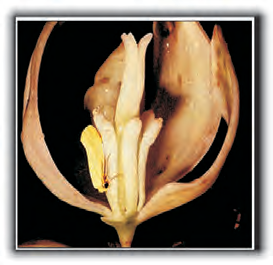 image biodiversity
 -
What is ecology?
Ecology is the study of interactions among organisms and between organisms and their physical (abiotic) environment.
ecology definition -
What are the four levels of biological organisation in ecology?
- Organisms
- Populations
- Communities
- Biomes
ecology levels -
How is a population defined in ecology?
A population is a group of individuals of the same species living in a well defined geographical area that share or compete for similar resources and can potentially interbreed.
population definition -
Give three examples of populations mentioned in the text.
- Cormorants in a wetland
- Rats in an abandoned dwelling
- Teak trees in a forest tract
population examples -
How is per capita birth rate calculated in the lotus example?
Birth rate = 8 new plants / 20 original plants = 0.4 offspring per lotus per year.
population birth-rate -
How is death rate calculated in the fruitfly example?
Death rate = 4 deaths / 40 fruitflies = 0.1 individuals per fruitfly per week.
population death-rate -
What population attribute describes the proportion of males and females?
Sex ratio describes the proportion of sexes in a population (for example, 60% females and 40% males).
population sex-ratio -
What is an age pyramid and what does its shape indicate?
An age pyramid plots age distribution of a population and its shape reflects whether the population is growing, stable, or declining.
population age-structure -
Why is population ecology important in evolution?
Population ecology links ecology to population genetics and evolution because natural selection operates at the population level to evolve traits.
population evolution
UNIT X — Ecology
Overview
- Ecology studies interactions among organisms and between organisms and their abiotic environment.
- Levels of biological organization: macromolecules → cells → tissues → organs → organisms → populations → communities → ecosystems → biomes → biosphere.
- This unit emphasizes population-level ecology, links to evolution, and human impacts on the environment.
Notable ecologist: Ramdeo Misra
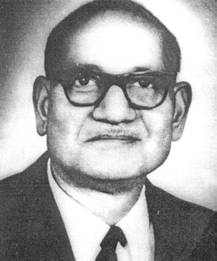
- Indian pioneer of ecology; established ecology teaching and research at Banaras Hindu University.
- Key contributions: tropical succession, population responses, productivity and nutrient cycling in tropical ecosystems.
- Influenced national environmental policy and training of many ecologists.
Chapter 11 — Organisms and Populations
11.1 Populations — definition and scope
- A population is a group of individuals of the same species occupying a defined area, sharing resources, and potentially interbreeding.
- Populations may arise from sexual or asexual reproduction (for ecological study both count as populations).
- Examples: all cormorants in a wetland, teak trees in a forest patch, bacteria in a culture plate.
- Population ecology bridges ecology with population genetics and evolution because natural selection acts at the population level.
Proximate vs ultimate questions
- Proximate (how) questions ask mechanisms (e.g., how a bird produces song: anatomy/physiology).
- Ultimate (why) questions ask significance/adaptive value (e.g., why the bird sings: mate attraction or territory).
11.1.1 Population attributes (key measurable features)
- Population size (N): total number of individuals in the population.
- Birth rate (per capita): births per individual in a time interval. General formula:
\(b = \frac{B}{N}\)
Example: if 8 new lotus plants appear in a pond with 20 plants, then
\(b = \frac{8}{20} = 0.4\)
(0.4 offspring per lotus per year, if the interval is one year).
- Death rate (per capita): deaths per individual in a time interval. General formula:
\(d = \frac{D}{N}\)
Example: if 4 fruitflies die out of 40 in one week,
\(d = \frac{4}{40} = 0.1\)
(0.1 deaths per fruitfly per week).
-
Sex ratio: proportion of males to females in the population (e.g., 60% female : 40% male).
-
Age structure (age distribution / age pyramid):
- Shows percentage of individuals in each age class (often separated by sex).
- Pyramid shape indicates growth status: expanding (broad base), stable (roughly uniform), or declining (narrow base).
Why these attributes matter
- Birth and death rates determine population growth or decline and feed into models of population dynamics.
- Sex ratio and age structure affect reproductive potential and future population trajectories.
- Patterns at the population level help explain evolutionary change via natural selection.
Human relevance and conservation context
- Ecology provides a framework to study anthropogenic environmental degradation and its socio-political consequences.
- Understanding population dynamics is crucial for conservation planning, resource management, and predicting species responses to disturbance.
Quick study checklist
- Know the definition of population and examples of population-level study.
- Be able to compute per capita birth and death rates using \(b = \frac{B}{N}\) and \(d = \frac{D}{N}\).
- Interpret shapes of age pyramids (growing, stable, declining).
- Distinguish proximate (how) vs ultimate (why) ecological questions.
- Remember Ramdeo Misra's role in establishing ecology in India and his research themes.