Sign up to unlock more features
- Save this deck to your account
- Study flashcards with spaced repetition
- Export to Anki (.apkg) or PDF
- Process documents up to 100 pages
- Images extracted from PDFs and documents
- Better text extraction from your PDFs and documents
- Better flashcards with our more advanced AI model
The basic units of structure and function in the human body are _______.
The study of the functions of body parts is called _______.
Homeostasis is the maintenance of a stable internal environment in the body through processes like _______.
The hierarchy of organization in the body includes atoms, molecules, cells, tissues, organs, and _______.
Anatomy is the study of _______.
The subdivisions of anatomy include: - _______ - _______ - _______.
Gross or macroscopic anatomy includes _______, _______, and _______.
Microscopic anatomy includes _______ and _______.
Developmental anatomy includes the study of _______.
Physiology is the study of the _______ of the body.
The study of the larger structures of the body is known as _______.
Microscopic anatomy is the study of structures that can be observed only with the use of a _______ or other _______.
A microscopic view of glandular tissue shows circular structures with _______.
The image shows a person looking into a _______.
Physiology is defined as the study of the _______ of those _______.
The standard _______ includes the body being erect, feet slightly apart, and palms facing _______.
In the anatomical position, the body is _______ with feet slightly _______.
In the standard anatomical position, palms are facing _______.
The term _______ (anterior) refers to the direction that is _______ of the body; it is _______ something else.
The term _______ (posterior) indicates a direction that is _______ of the body; it is _______ something else.
The term _______ refers to the direction that is toward or at the body surface, while _______ refers to being away from the body surface and more internal
The definition of _______ is 'Toward or at the body surface', while the definition of _______ is 'Away from the body surface; more internal'.
The term _______ refers to being on _______ of the body.
The term _______ refers to being on the _______ of the body.
The two main regions of the human body are _______ and _______.
The _______ region consists of the _______ and _______.
The _______ region includes the _______ and _______.
In anatomical terminology, the human body can be divided into the _______ and _______ regions.
The term _______ refers to the region of the _______.
The _______ region is related to the _______.
The _______ region is located in the _______.
The term _______ refers to the region of the _______.
The _______ region is associated with the _______.
In anatomical terminology, the _______ includes the _______.
The _______ refers to the region that includes the _______.
The _______ region is known as the _______ area.
The _______ region refers to the _______ area.
The term _______ refers to the _______.
The _______ divides the body vertically into right and left parts.
The _______ divides the body vertically into anterior and posterior parts.
The _______ divides the body horizontally into superior and inferior parts.
The _______ lies on the midline of the body.
The two subdivisions of the _______ are the _______ and _______.
The _______ houses internal organs and includes the _______ and _______.
The _______ encases the _______, while the _______ encases the _______.
The _______ separates the thoracic cavity from the _______.
The thoracic cavity subdivisions include: - _______ - _______
The mediastinum contains the _______ and surrounds thoracic organs.
The pericardial cavity encloses the _______.
The abdominopelvic cavity subdivisions are: - _______ - _______
The abdominal cavity contains: - _______ - _______ - _______ - _______
The pelvic cavity contains the _______, _______, and _______.
The body cavities include the _______.
Other body cavities include: - _______ - _______ - _______ - _______.
The two types of serous membranes are _______ and _______.
The_______ serosa surrounds the _______.
The _______ serosa surrounds the _______.
The _______ serosa pertains to the _______.
The parietal serosa forms the _______ of the cavity, while the visceral serosa covers the _______.
The nine abdominal regions are divided by four planes, including the _______ and _______ regions.
In the nine abdominal regions, the region located below the umbilical region is the _______ or _______ region.
The abdominal organs located in the right hypochondriac region include the _______ and _______.
The _______ and _______ are located in the right iliac (inguinal) region.
The _______ and _______ are found in the abdominal regions.
The principle of complementarity states that _______.
Function always reflects _______.
What a structure can do depends on its specific _______.
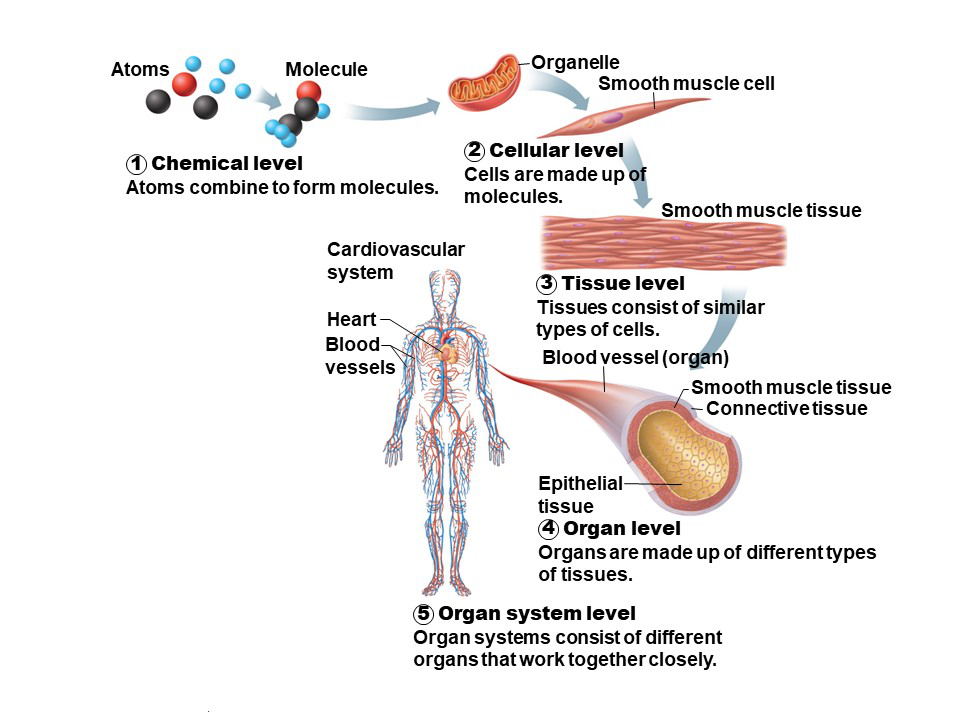
The levels of structural organization in the human body from smallest to largest are: _______, _______, _______, _______, _______, _______, _______.
At the cellular level, _______ form _______.
The cardiovascular system consists of the _______ and _______.
Tissues are groups of similar types of _______ that work together.
The _______ level is made up of different types of _______.
Organ systems consist of different _______ that work closely together.
The chemical level of biological organization includes _______ like _______ and _______ like _______.
The chemical level of the human body consists of both _______ and _______ molecules.
The smallest independently functioning unit of a living organism is a _______.
The four types of epithelial tissue include: - _______ - _______ - _______ - _______.
A tissue is a group of many similar cells that work together to perform a _______.
An _______ is an anatomically distinct structure of the body composed of _______.
The organizational levels of the human body begin with the _______ level, progressing to tissues, and then to _______.
An organ is composed of _______.
The illustration shows the human torso with major organs including the heart and lungs: 
An _______ is a group of _______ that work together to perform major functions or meet physiological needs of the body.
The human body contains the following organ systems: - _______ - _______ - _______ - _______ - _______ - _______ - _______ - _______ - _______ - _______ - _______.
The organizational levels of the human body include: - _______ - _______ - _______ - _______ - _______ - _______.
An _______ is a living being that has a _______ structure and can independently perform all physiological functions necessary for _______.
Homeostasis is the maintenance of a _______ despite continuous outside changes.
Homeostasis is described as a _______.
Homeostatic control involves continuous _______ and _______ of many factors. It is accomplished through the nervous and endocrine systems via _______ and _______.
The three components of homeostatic control mechanisms are: - _______ - _______ - _______.
The role of the _______ is to monitor the environment and respond to _______.
The _______ receives input from the receptor and determines the _______ at which the variable is maintained.
The _______ receives output from the control center and provides the means to respond, acting to reduce or enhance the _______.
In the process of _______, the response reduces or shuts off the original stimulus. An example is the regulation of _______.
The negative feedback mechanism for body temperature regulation involves which components? Stimulus, _______, _______, _______, and _______.
A diagram illustrating the negative feedback mechanisms for maintaining body temperature shows processes of _______ and _______.
In positive feedback, the response _______ or _______ the original stimulus.
Positive feedback usually controls _______ events, such as enhancement of labor contractions by _______.
Platelet plug formation is an example of positive feedback in _______.
The process of blood clotting involves a cascade effect where _______ adhere to the injury site and release _______.
A disturbance of homeostasis can increase the risk of _______.
Homeostatic imbalance contributes to changes associated with _______.
Homeostatic imbalance may allow destructive _______ to take over, such as in _______.
The process of breaking larger, more complex substances into smaller, simpler molecules is called _______.
When smaller, simpler molecules combine into larger, more complex substances, this process is known as _______.
One necessary life function involves maintaining _______ between internal and external environments, accomplished by the _______ and _______.
Movement in the body, known as _______, includes movement of body parts through _______ and movement of substances through _______ and _______.
The ability to sense and respond to stimuli is called _______. An example includes the _______ and the _______.
In digestion, there are two main processes: _______ of ingested foodstuffs and _______ of simple molecules into the blood.
Metabolism involves all chemical reactions that occur in body cells, including _______ and _______.
Excretion is the removal of wastes from metabolism and digestion, such as _______, _______, and _______.
Necessary life functions include _______ for cellular division and production of offspring.
Growth refers to an increase in size of a _______ or of an _______.
Survival needs include essential nutrients like _______, _______, _______, _______, and _______.
Oxygen is crucial for _______ during the production of _______.
The most abundant chemical in the body is _______.
Normal body temperature affects the rate of _______.
Appropriate atmospheric pressure is necessary for adequate _______ and gas exchange in the _______.
Flashcards in this deck (118)
-
anatomy physiology biology
-
physiology studies
-
Homeostasis is the maintenance of a stable internal environment in the body through processes like feedback mechanisms.
anatomy physiology homeostasis -
The hierarchy of organization in the body includes atoms, molecules, cells, tissues, organs, and systems.
anatomy organization -
anatomy definition
-
anatomy subdivisions
-
anatomy gross
-
anatomy microscopic
-
anatomy developmental
-
physiology biology
-
anatomy biology
-
Microscopic anatomy is the study of structures that can be observed only with the use of a microscope or other magnification devices.
anatomy microscopy -
anatomy histology
-
anatomy microscopy
-
biology physiology
-
The standard anatomical position includes the body being erect, feet slightly apart, and palms facing forward.
anatomy position reference -
anatomy position
-
anatomy position
-
The term ventral (anterior) refers to the direction that is toward or at the front of the body; it is in front of something else.
anatomy terminology -
The term dorsal (posterior) indicates a direction that is toward or at the back of the body; it is behind something else.
anatomy terminology -
The term superficial refers to the direction that is toward or at the body surface, while deep refers to being away from the body surface and more internal
anatomy directional_terms -
The definition of superficial is 'Toward or at the body surface', while the definition of deep is 'Away from the body surface; more internal'.
anatomy terminology -
anatomy terminology
-
anatomy terminology
-
anatomy terminology
-
anatomy regions
-
anatomy regions
-
anatomy terminology
-
anatomy terminology
-
anatomy terminology
-
anatomy terminology
-
anatomy terminology
-
anatomy terminology
-
anatomy terminology
-
anatomy terminology
-
anatomy terminology
-
anatomy terminology
-
anatomy terminology
-
anatomy planes
-
anatomy planes
-
anatomy planes
-
anatomy planes
-
anatomy body_cavities
-
The ventral cavity houses internal organs and includes the thoracic cavity and abdominopelvic cavity.
anatomy body_cavities -
anatomy body_cavities
-
anatomy body_cavities
-
anatomy thoracic_cavity
-
anatomy mediastinum
-
anatomy heart
-
anatomy abdominopelvic_cavity
-
anatomy abdominal_cavity
-
anatomy pelvic_cavity
-
anatomy body_cavities
-
Other body cavities include: - nasal cavity - orbital cavity - middle ear cavities - synovial cavities.
anatomy body_cavities -
anatomy serous_membranes
-
anatomy serous_membranes pericardial
-
anatomy serous_membranes pleural
-
anatomy serous_membranes peritoneal
-
The parietal serosa forms the outer wall of the cavity, while the visceral serosa covers the visceral organ.
anatomy serous_membranes -
The nine abdominal regions are divided by four planes, including the Right hypochondriac and Epigastric regions.
anatomy abdominal_regions medical -
In the nine abdominal regions, the region located below the umbilical region is the Hypogastric or pubic region.
anatomy regions -
anatomy abdominal_organs
-
anatomy abdominal_organs
-
anatomy colon
-
biology principles anatomy
-
biology anatomy function
-
biology anatomy form
-
The levels of structural organization in the human body from smallest to largest are: atoms, molecules, organelles, cells, tissues, organs, organ systems.
biology human_body organization -
biology cells tissue
-
biology systems cardiovascular
-
biology tissue cells
-
biology organs tissue
-
biology organ_systems organization
-
The chemical level of biological organization includes inorganic molecules like H2O and organic molecules like DNA.
biology chemistry human_body -
biology chemistry human_body
-
biology cells
-
The four types of epithelial tissue include: - stratified squamous epithelium - glandular epithelial tissue - simple cuboidal epithelium - pseudostratified columnar epithelium with cilia.
biology tissues epithelial -
biology tissue function
-
biology anatomy
-
The organizational levels of the human body begin with the cell level, progressing to tissues, and then to organs.
biology anatomy -
biology anatomy
-
anatomy illustration
-
An organ system is a group of organs that work together to perform major functions or meet physiological needs of the body.
biology human_anatomy -
The human body contains the following organ systems: - integumentary - skeletal - muscular - nervous - endocrine - cardiovascular - lymphatic - respiratory - digestive - urinary - reproductive.
biology human_body_systems -
The organizational levels of the human body include: - chemical - cellular - tissue - organ - system - organismal.
biology human_body organization -
An organism is a living being that has a cellular structure and can independently perform all physiological functions necessary for life.
biology definition organism -
Homeostasis is the maintenance of a relatively stable internal environment despite continuous outside changes.
biology homeostasis -
biology homeostasis
-
Homeostatic control involves continuous monitoring and regulation of many factors. It is accomplished through the nervous and endocrine systems via nerve impulses and hormones.
homeostasis control -
The three components of homeostatic control mechanisms are: - Receptor (sensor) - Control center - Effector.
biology homeostasis -
biology homeostasis
-
The control center receives input from the receptor and determines the set point at which the variable is maintained.
biology homeostasis -
The effector receives output from the control center and provides the means to respond, acting to reduce or enhance the stimulus.
biology homeostasis -
In the process of negative feedback, the response reduces or shuts off the original stimulus. An example is the regulation of body temperature.
biology homeostasis -
The negative feedback mechanism for body temperature regulation involves which components? Stimulus, Receptors, Control Center, Effectors, and Response.
biology homeostasis feedback -
A diagram illustrating the negative feedback mechanisms for maintaining body temperature shows processes of cooling and warming.
biology homeostasis -
biology homeostasis
-
Positive feedback usually controls infrequent events, such as enhancement of labor contractions by oxytocin.
biology homeostasis hormones -
biology homeostasis blood
-
The process of blood clotting involves a cascade effect where platelets adhere to the injury site and release chemicals.
biology homeostasis blood -
biology homeostasis disease
-
biology homeostasis aging
-
Homeostatic imbalance may allow destructive positive feedback mechanisms to take over, such as in heart failure.
biology homeostasis feedback -
The process of breaking larger, more complex substances into smaller, simpler molecules is called catabolism.
metabolism catabolism -
When smaller, simpler molecules combine into larger, more complex substances, this process is known as anabolism.
metabolism anabolism -
One necessary life function involves maintaining boundaries between internal and external environments, accomplished by the plasma membranes and skin.
biology life_functions anatomy -
Movement in the body, known as contractility, includes movement of body parts through skeletal muscle and movement of substances through cardiac and smooth muscle.
biology movement muscle_types -
The ability to sense and respond to stimuli is called responsiveness. An example includes the withdrawal reflex and the control of breathing rate.
biology life_functions responsiveness -
In digestion, there are two main processes: breakdown of ingested foodstuffs and absorption of simple molecules into the blood.
biology digestion life_functions -
Metabolism involves all chemical reactions that occur in body cells, including catabolism and anabolism.
biology metabolism -
Excretion is the removal of wastes from metabolism and digestion, such as urea, carbon dioxide, and feces.
biology excretion -
biology life_functions
-
biology growth
-
Survival needs include essential nutrients like carbohydrates, fats, proteins, minerals, and vitamins.
biology nutrition -
biology energy
-
biology survival water
-
biology temperature chemical_reactions
-
biology atmospheric_pressure lungs
Introduction to Anatomy & Physiology
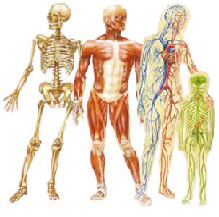
- Anatomy: The study of structure.
- Subdivisions:
- Gross or macroscopic (regional, surface, systemic)
- Microscopic (cytology, histology)
- Developmental (embryology)
- Physiology: The study of function of body structures.
Gross vs. Microscopic Anatomy
- Gross Anatomy: Larger structures of the body.
- Examples: Dissection practices.

- Microscopic Anatomy: Structures observable with a microscope.
- Example: Cellular structures.

Anatomical Position and Terminology
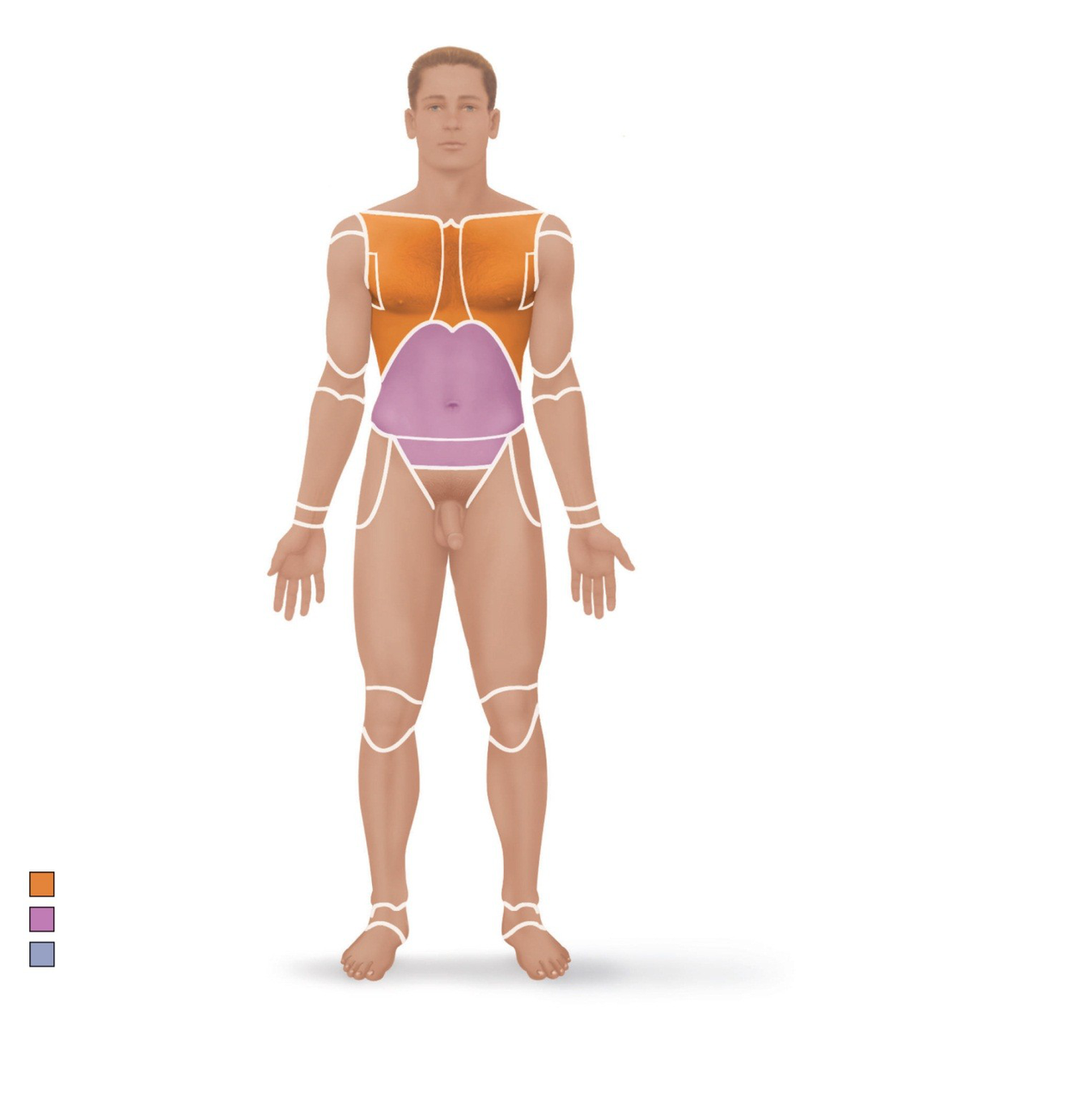
- Anatomical Position:
- Body erect, feet slightly apart, palms facing forward.
- Directional Terms:
- Superior: Toward the head.
- Inferior: Away from the head.
- Ventral (anterior): Front of the body.
- Dorsal (posterior): Back of the body.

Body Planes and Cavities
- Body Planes:
- Sagittal: Divides body vertically.
- Frontal (coronal): Divides into anterior and posterior parts.
- Transverse: Divides into superior and inferior parts.

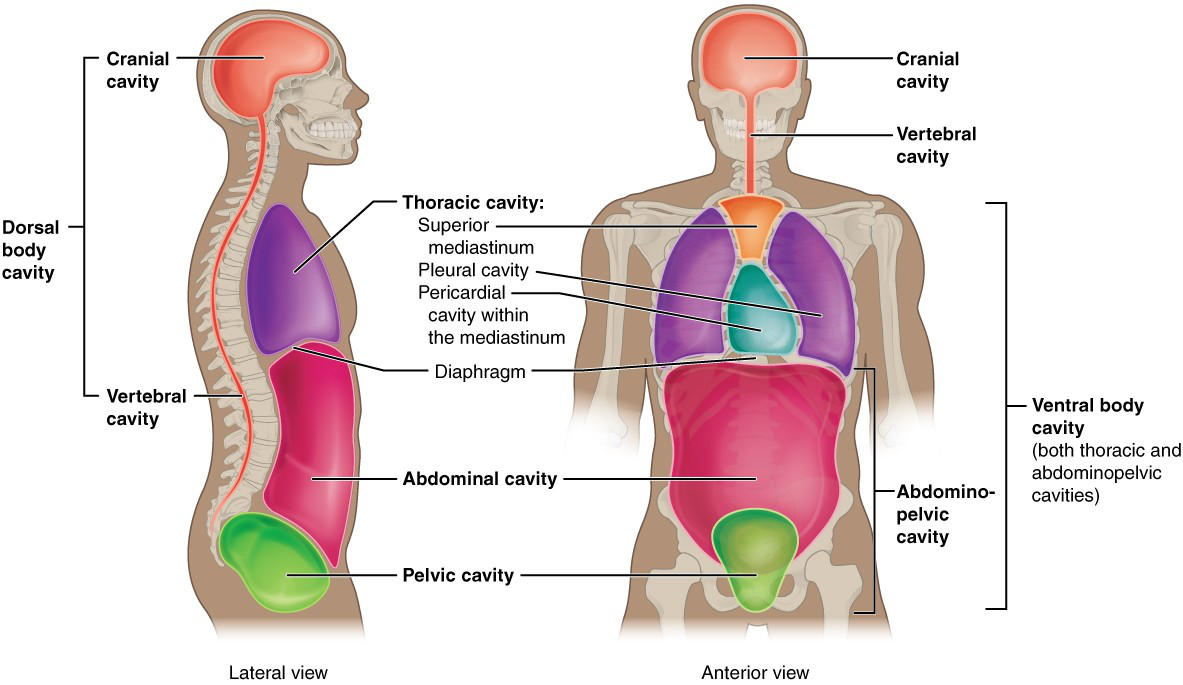
- Cavities:
- Dorsal cavity (cranial, vertebral).
- Ventral cavity (thoracic, abdominopelvic).
Serous Membranes and Abdominal Regions
- Serous Membranes: Parietal vs. Visceral.
- Parietal forms the cavity wall.
- Visceral covers organs inside.

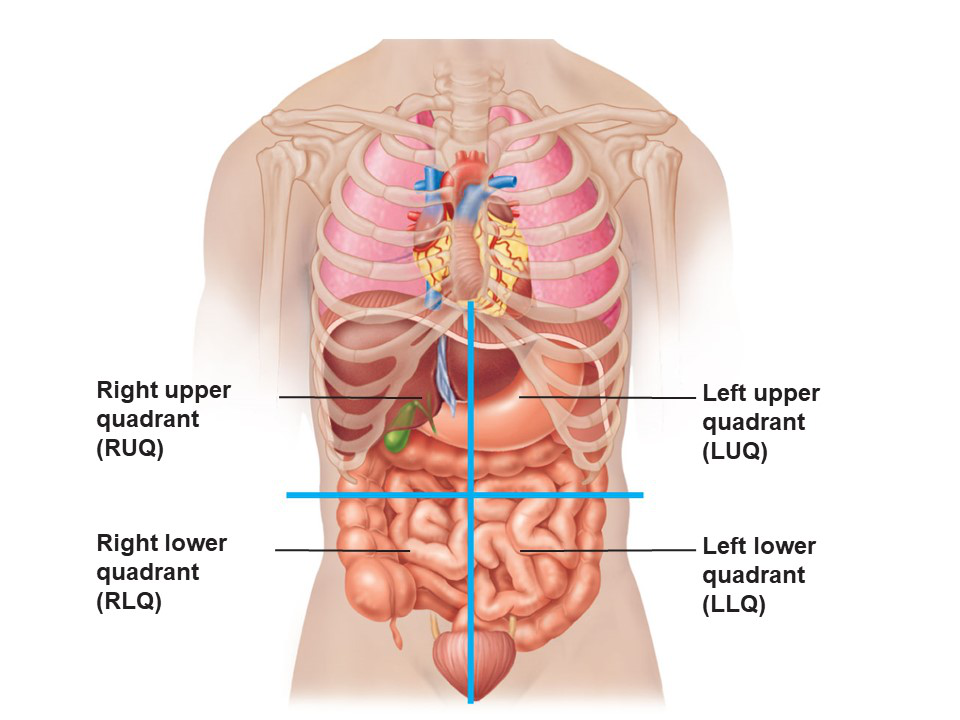
- Abdominal Quadrants:
- RUQ, LUQ, RLQ, LLQ.
Levels of Structural Organization
- Organizational Levels:
- Chemical → Cellular → Tissue → Organ → Organ System → Organism
Homeostasis
- Definition: Stable internal environment despite external changes.
- Feedback Mechanisms:
- Negative: Response reduces original stimulus (e.g., temperature regulation).
- Positive: Response enhances the stimulus (e.g., blood clotting).

Necessary Life Functions
- Functions:
- Metabolism: Catabolism and Anabolism.
- Responsiveness: Reaction to stimuli.
- Reproduction: Cellular division for growth or offspring.
- Excretion: Waste removal.

Survival Needs
- Factors:
- Nutrients, Oxygen, Water, Normal body temperature, Appropriate atmospheric pressure.